Kitchen Counter Height: Standard Dimensions, Size & Ergonomic Guide
I believe most people, including my former self, assumed that kitchen countertop heights are fixed and suitable for everyone. In reality, however, many kitchen countertops aren’t optimally designed. The ideal countertop height depends on how the kitchen is used, the user’s height, and the functional zones within the space.
If you frequently experience lower back pain, neck stiffness, or find yourself constantly raising your shoulders while cooking, the issue usually isn’t with you—it’s that your current counter height doesn’t match your body type. Today, we’ll explore how to find the right kitchen counter height for you, covering everything from industry standards to ergonomic principles.
Standard Dimensions for Kitchen Counter Height
According to the National Kitchen and Bath Association (NKBA) kitchen planning guidelines, the recommended standard kitchen countertop height is 36 inches, measured from the floor to the top of the countertop. This applies to most countertops and prep areas.
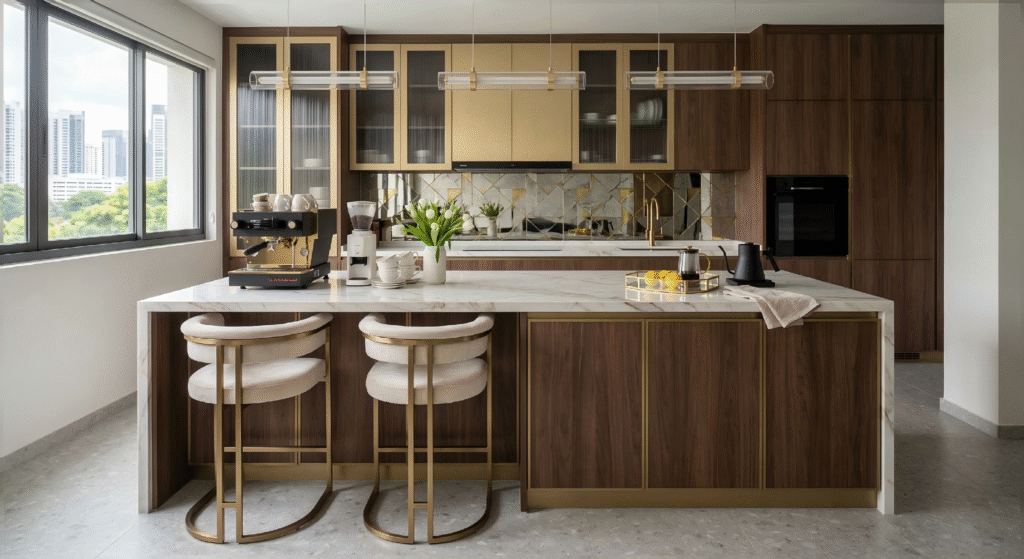
- Island or bar counter height: 42 inches, allowing for comfortable seated use.
- Seated prep counter or accessible countertop: 28-34 inches, accommodating wheelchair users or shorter individuals.
- ADA-compliant accessibility recommendation: Provide at least two distinct working heights per kitchen (one 28-36 inches, another 36-45 inches, approximately 91-114 cm).
These dimensions are derived from NKBA kitchen design standards and cabinet manufacturing guidelines to ensure comfort and usability. Heights exceeding these ranges without customization typically result in discomfort and fatigue during use.
Kitchen Counter Different Functional Zones: Heights and Depths
Modern kitchen design typically divides the kitchen into distinct functional zones. Each zone may require slightly different countertop heights and depths. Below are my recommendations based on industry data for your reference.
| Kitchen Zone | Recommended Height | Typical Depth | Purpose |
|---|---|---|---|
Food Preparation Area |
36 inches |
24 inches |
Standard cutting and meal preparation |
Cooking Area |
34–36 inches |
24 inches |
Comfortable access to cooktops |
Kitchen Island |
36–42 inches |
24–30 inches |
Social interaction and casual dining |
Baking Area |
30–34 inches |
24 inches |
Lower height for dough kneading |
Bar Counter |
42 inches |
18–24 inches |
Bar stools and entertainment |
How Much Does Kitchen Counter Height Customization Cost?
Adjusting or customizing kitchen countertop heights will impact the overall budget. Standard sizes are more affordable due to mass production, while custom solutions or material choices will alter the price.
Factors That Influence Kitchen Counter Cost
Adjusting or customizing kitchen countertop heights can impact the overall budget. Standard sizes are more affordable due to mass production, while custom solutions will affect pricing. Several factors influence the cost:
| Solution | Height Range | Est. Cost | Best For |
|---|---|---|---|
Standard |
36″ (Fixed) |
$150 – $400 / ft |
Average height, budget remodels |
Custom Base |
32″ – 40″ (Fixed) |
$500 – $1,200+ / ft |
Taller/shorter users, multi-level zones |
Thicker Top |
Adds 1″ – 2″ |
+$100 – $300 / ft |
Slight height increases on existing cabinets |
Adjustable Island |
28″ – 42″ (Dynamic) |
$3,000 – $8,000+ / unit |
Households with height differences |
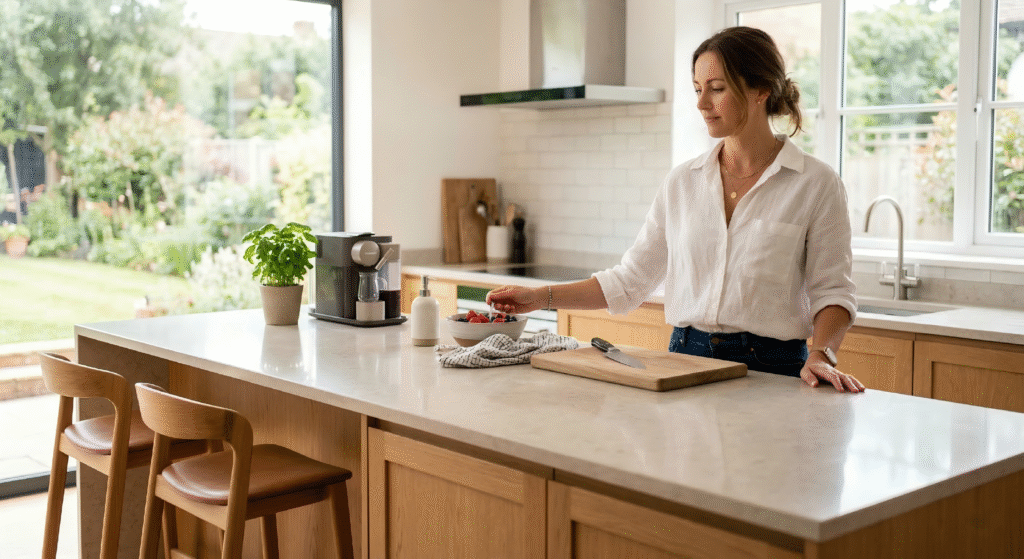
Ergonomic Kitchen Counter Height
The kitchen is one of the most physically demanding areas in the home. An improper countertop height can trigger compensatory movements in the body:
- Countertop too high: When chopping or cooking, you may unconsciously shrug your shoulders, causing your elbows to bend at an unnatural angle. Over time, this can lead to trapezius muscle tension, shoulder fatigue, and neck strain.
- Countertop too low: To reach the work surface, you must bend your spine, placing significant strain on your lower back. Even preparing a single meal can result in noticeable lower back muscle fatigue.
Kinetic Adjustable Islands
For households with significant height differences—for example, one person standing 1.60 meters tall and another 1.85 meters—a single fixed height proves impractical. Electric adjustable islands offer a flexible solution. Silent electric actuators are concealed within the island legs, allowing users to adjust the countertop to the perfect height with a simple button press—whether for standing prep work or seated dining. Custom designs for these adjustable countertops are also available through YOLODECO.
Neuroergonomics and Environmental Stress Reduction
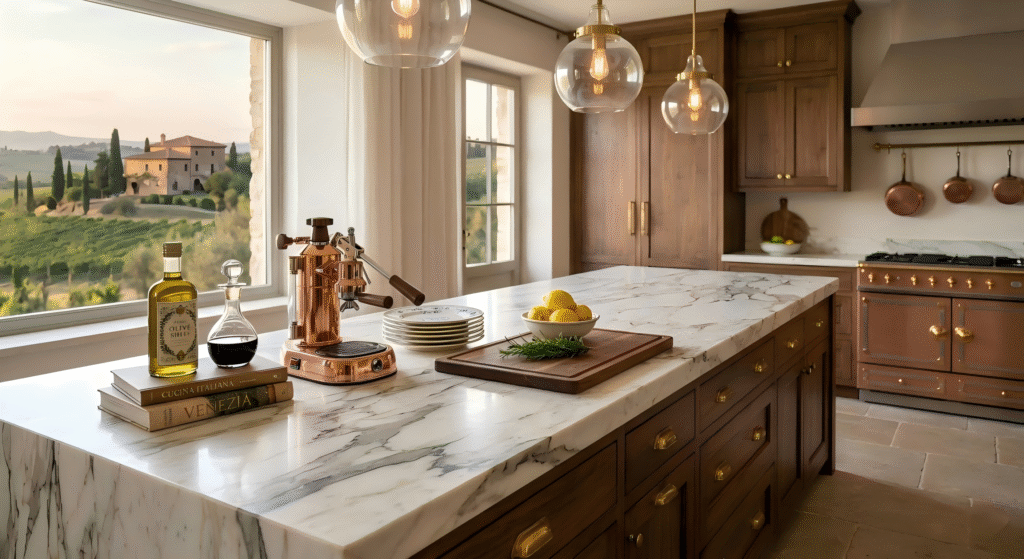
In the realm of high-end custom design, the concept of neuroergonomics is gaining increasing prominence. Physical discomfort, such as prolonged bending or shrugging, not only leads to muscle strain but also heightens cognitive load and psychological stress. Operating in a highly ergonomic kitchen with comfortable reach zones can reduce strain on the central nervous system.
How to Measure the Ideal Kitchen Counter Height
It’s simple — follow these steps:
- Stand naturally with arms relaxed at your sides.
- Measure the distance from the floor to the bend of your wrist or elbow, then subtract 4-6 inches.
- Test with a temporary countertop: for example, stack cardboard boxes or use a folding table, and conduct a day-long cooking or dining test.
- For island counters: Add 6 inches to the prep height for comfortable seated use.
Custom Solutions by YoloDeco: Our Unique Delivery Value
When it comes to meeting the high demand for customized kitchens, choosing YoloDeco means being able to leverage our strong supply chain system to gain an execution advantage. Our core advantage over local retailers or standard exporters:
Eliminating "Non-Standard" Markups
Vendors often charge a surcharge for non-standard heights, and YoloDeco offers one-on-one height adjustments utilizing a flexible production line that allows you to get customized ergonomic countertops at an affordable factory-direct price.
Cost-Effective Complex Designs
Complex designs such as “multi-level islands” or “motorized adjustable systems” are often expensive locally. As a team of professionals within the George Group, we have been able to significantly reduce the cost of high-end hardware and complex cabinet construction by purchasing on a large scale.
Precise Local Appliance Matching
Size mismatch is a common risk in cross-border orders. We offer a closed-loop service that includes free 3D design. Before production, we will double-check your required specifications to ensure that the height of the customized cabinets will fit perfectly with your equipment.
Conclusion
Don’t settle for so-called “standard” kitchens to save money. An improper countertop height can lead to daily aches and frustrations. I always recommend customization—whether it’s an adjustable-height island or varying counter heights across different zones. Spending an extra $500 to $2,000 upfront can prevent unnecessary discomfort. Trust me, your body will thank you for choosing the right height.
Ready to design your perfect kitchen? Contact our team for a free ergonomic assessment.
FAQ
A: Yes. If the required adjustment is small, you can choose a thicker stone when replacing the countertop (e.g., upgrading from 1.5 inches to 2.5 inches). Alternatively, if your cabinets have adjustable legs, you can raise the legs and install a taller toe kick board.
A: A multi-level counter design is recommended. For instance, set the washing zone (which requires a higher surface) to suit the taller person, and set the prep or cooking zone to suit the shorter person. If the budget allows, a kinetic adjustable island is a highly effective solution.
A: Actions like kneading dough or rolling out pastries require you to use your upper body weight to apply downward force. If the counter is too high, your arm leverage is restricted, which can cause wrist pain. Lowering the counter (to 30-32 inches) allows your body weight to transfer more efficiently to the dough.
A:For taller individuals, slightly higher counters can improve comfort and reduce the need to bend forward during food preparation.
Don't know how to contact us?
Choosing countertops as well? We supply marble, quartz, and granite countertops cut to your kitchen layout — shipped together with your cabinets.