How to Choose High-Quality Wood Veneer Cabinets
In modern whole-home design, where homeowners seek to preserve the warm, natural texture of wood while avoiding the physical drawbacks of solid wood—such as warping—wood veneer cabinets have emerged as the top value-for-money solution.
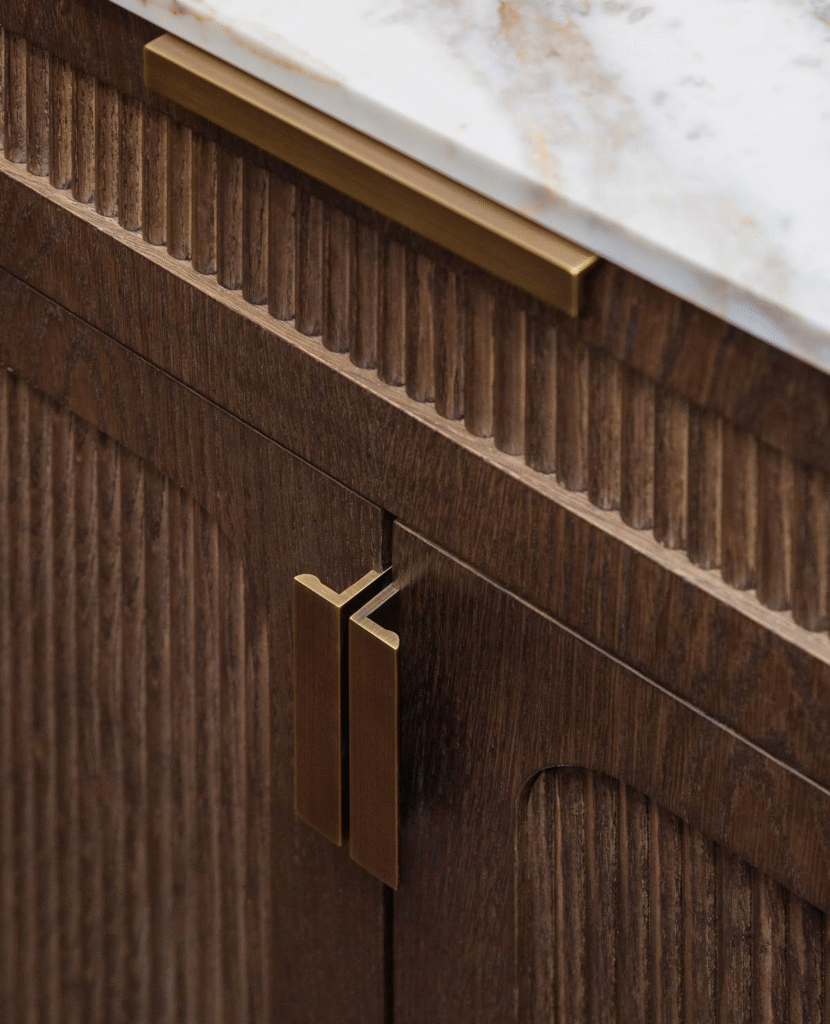
Selecting high-quality wood-veneer cabinets is a systematic process that involves evaluating wood stability, manufacturing techniques, environmental standards, and overall home style. In this article, we will provide an in-depth analysis of the selection criteria for wood-veneer cabinets from the perspectives of supply chain experts and customization specialists.
What Are Wood Veneer Cabinets?
Wood-veneer cabinets are not made from solid wood but are constructed by bonding a thin layer of natural wood veneer to an engineered core using lamination technology. This construction not only preserves the natural texture and grain of rare wood species but also fundamentally addresses the physical challenges associated with solid wood—such as cracking and warping caused by expansion and contraction due to changes in humidity.
What Are the Different Wood Veneer Cut Types?
Different cutting methods preserve distinct wood grain patterns. For buyers, the cutting method directly determines the final visual appearance and material utilization:
| Cut Type | Cutting Method | Grain Pattern | Common Applications |
|---|---|---|---|
Plain Sawn |
Sliced parallel to the log growth rings |
Cathedral grain pattern |
Traditional and farmhouse cabinet doors |
Quarter Cut |
Cut perpendicular to the growth rings |
Straight grain, stable structure |
Modern minimalist and commercial projects |
Rift Cut |
Cut at a 30–45° angle to the wood rays |
Clean linear grain |
White oak kitchens and minimalist interiors |
Rotary Cut |
Log is rotary-peeled on a lathe |
Wide continuous grain pattern |
Large wall panels and feature surfaces |
5 Common Types of Wood Veneers
Different tree species have distinct colors and grain patterns. In a cross-category, integrated whole-home design, selecting the right wood species is the first step in setting the tone for the space:
- Cherry: Over time and with exposure to light, the color gradually deepens, developing a warm reddish-brown hue. With its fine grain, it is a staple in classic American and vintage styles.
- Maple: Featuring light tones and a smooth grain, it absorbs paint and stain exceptionally well. In modern projects requiring custom colors, maple veneer serves as a reliable base.
- Walnut: With its deep tones and rich texture, walnut exudes a sense of luxury. In high-end whole-home customization, extensive use of walnut veneer can instantly elevate a space’s perceived value.
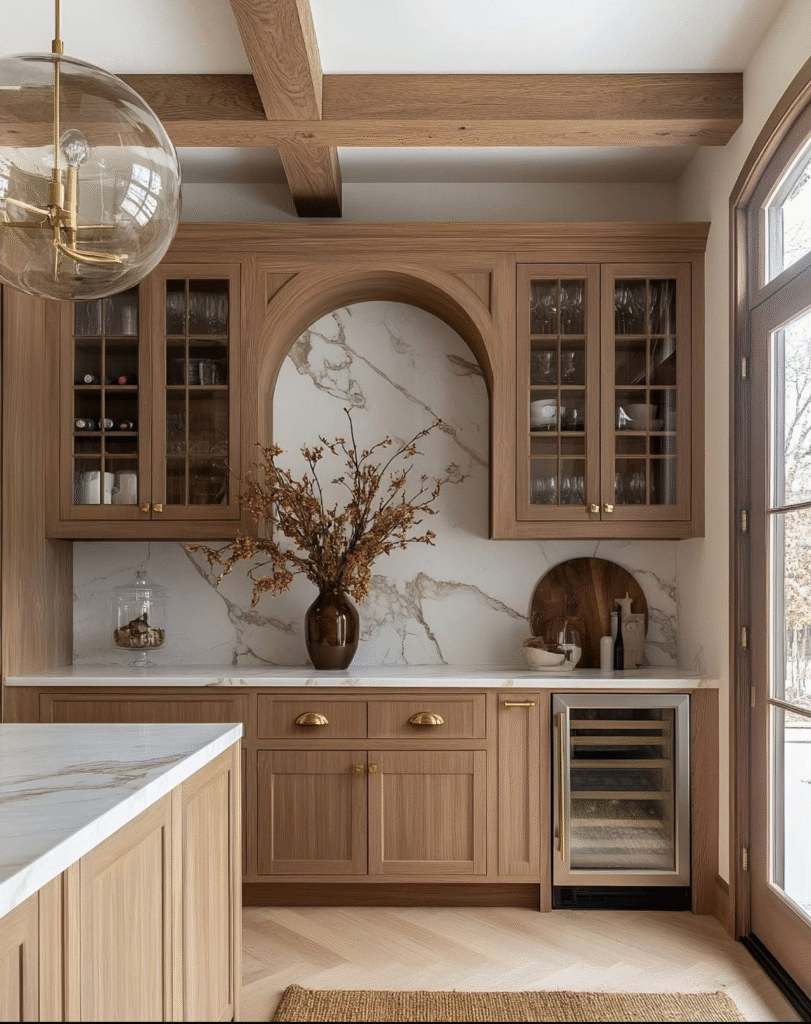
- White Oak: Characterized by a distinctive straight grain and exceptional durability, with tones ranging from cool gray to light brown. It is currently highly sought after in minimalist, Scandinavian, and high-end residential designs.
- Hickory: Features a striking textural contrast and a wide color spectrum, ranging from light white to deep brown, exuding rustic charm. It is ideal for adding distinctive accents to specific areas of a space.
The Advantages of Wood Veneer Cabinets
Compared to other materials, wood-veneer cabinets offer a range of comprehensive advantages in real-world project implementation:
Durability
Cabinetry with wood veneer performs better than solid wood panels of the same size in terms of resistance to warping. The key reason for this is that the core material counteracts the natural shrinkage of the wood. Under conditions of a 10°C temperature fluctuation and a 30% change in humidity, the warping rate of high-quality wood veneer can be kept within 0.2%, whereas that of solid wood panels may reach 0.8–1.2%.
Highly customizable
- Staining: Can be precisely matched to Pantone or NCS color codes, ideal for brand chains or whole-home color schemes
- Finish: Matte (5–10% gloss), Satin (30–40%), and High-Gloss (70%+) finishes are all available upon request
- Grain Matching: Book Match (mirror-symmetrical), Slip Match (repeating pattern), and Random Match (natural random pattern)
Cost Advantage
Using the North American cabinet market in 2024–2025 as an example, the unit price for solid-wood cabinet doors (such as White Oak) is approximately $18–$35 per square foot, while the unit price for wood-veneer cabinet doors of the same species is approximately $8–$15 per square foot. In whole-home customization projects, the total cost savings from using wood veneer can reach 40–55%.
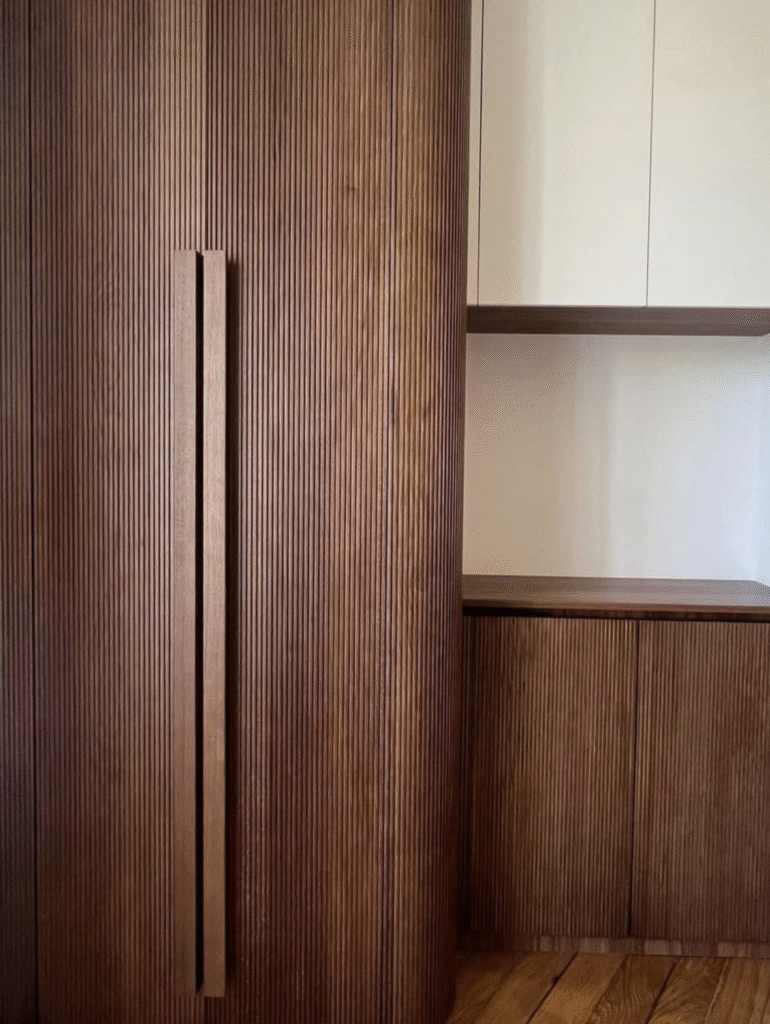
Wood veneers are also graded
Grade AA
- Virtually no knots, mineral lines, or color variations
- Grain match ≥95%
- Suitable for visible surfaces (door panels, drawer fronts, open cabinets)
Grade A (Select Grade)
- Minimal knots ≤2mm permitted, no more than 3 per sheet
- Natural color transitions with no visible joint lines
- Suitable for semi-visible surfaces such as side panels and interior shelves
Grade B (Standard Grade)
- Filled knots and slight mineral streaks are permitted
- Color variations are within acceptable limits
- Suitable for cabinet interiors and back panels
Grade C (Economy Grade)
- Open defects may be repaired; significant variations in color and grain
- Suitable for secondary surfaces covered with opaque paint
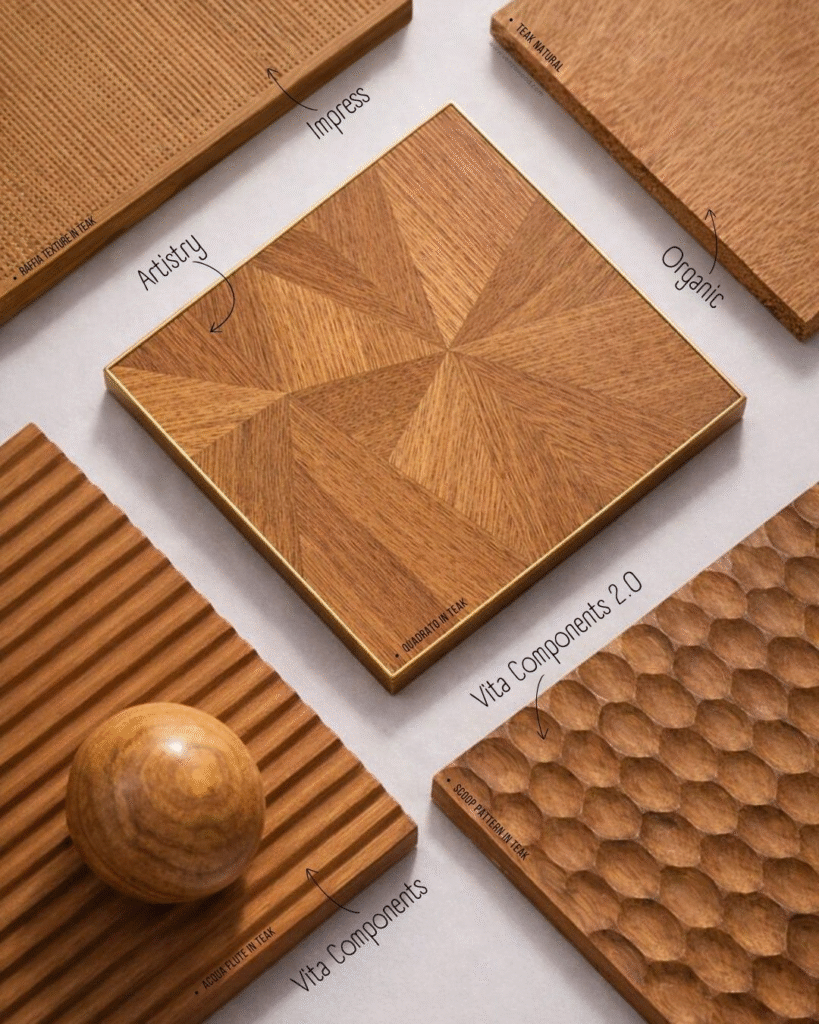
Wood Veneer Cabinets vs Solid Wood: What’s the Difference?
Many customers are torn between the two options at the start of the customization process. Based on our practical experience with installation and post-installation maintenance, we have summarized the differences in the following three areas:
Maintenance and Renovation
Although it is commonly believed that solid wood can be sanded multiple times, thoroughly stripping, sanding, and refinishing it is labor-intensive and costly. In contrast, thanks to their modular product system, Wood Veneer Cabinets can be efficiently and cost-effectively refurbished by simply replacing the veneer door panels when damage occurs or a complete style overhaul is needed.
Crack Resistance and Warp Prevention
Because solid wood retains the natural breathing properties of timber, it requires a highly stable environment in terms of temperature and humidity. In regions with significant temperature fluctuations, solid wood door panels are prone to warping and cracking. Cabinetry with wood veneers, however, leverages the stress-balancing properties of its composite structure, resulting in superior performance.
A visual treat at a great value
Obtaining a set of solid wood cabinets with consistent grain patterns and no color variations requires a significant investment of time and money to select the right logs. In contrast, wood veneers, produced through slicing and marquetry techniques, can reproduce the beautiful natural grain patterns found in nature at a more reasonable cost.
FAQ
Q1:Are wood veneer cabinets eco-friendly?
A: It is very eco-friendly. From a resource-utilization perspective, a single log can yield hundreds of square meters of veneer, significantly improving wood utilization. As for the finished product, as long as you choose low-formaldehyde substrates and non-toxic, eco-friendly finishes that meet international environmental standards (such as CARB Phase 2 or EPA TSCA Title VI certification), wood-veneer cabinets fully meet high standards for indoor health.
Q2: What is the lifespan of wood veneer cabinets?
A: With proper maintenance and if not exposed to prolonged water damage, a set of wood-veneer cabinets manufactured by a professional factory with expert edge-banding can easily last 15 to 20 years, or even longer. Their durability depends largely on the abrasion-resistance rating of the surface coating.
Q3: What are the disadvantages of wood veneer cabinets?
A: The main limitation is that the surface veneer is relatively thin (typically no more than 2 mm). If it is deeply scratched by an extremely sharp object, the underlying substrate may be exposed, making repairs slightly more difficult than with superficial scratches. In addition, prolonged exposure to direct, intense UV light may cause the natural veneer to fade slightly. This requires careful planning of window treatments and lighting angles during the overall interior design process.