2026 Expert Guide: Key Factors Affecting Bathroom Vanity Height
In 2026 bathroom renovation trends, we’ve noticed homeowners moving away from traditional designs and prioritizing ergonomics and comfort. Have you ever experienced back pain while washing your face? Or felt water constantly running down your elbows? This isn’t usually your fault—it’s likely due to an improperly sized bathroom vanity. Today, as a bathroom specialist, I’ll share the key factors you need to know before purchasing a vanity.
What is the Standard Bathroom Vanity Height in 2026?
For decades, the traditional standard height ranged from 30 to 32 inches. This was based on average heights in the past and was often designed for child-friendly use. However, by 2026, the definition of “standard” has changed:
Comfort Height: The current industry standard has been raised to 36 inches. This aligns with the height of standard kitchen countertops. For most adults, this means no more bending over to wash hands, reducing strain on the lower back.
Expert Advice: Unless you’re designing a children’s bathroom, 36 inches is the new standard for 2026.
What Factors Affect Bathroom Vanity Height?
Height is not an isolated figure; it is closely tied to the bathroom’s width, depth, and structure.
What if it's too wide?
Width depends on wall space, but it affects how height is perceived. If a vanity exceeds 72 inches wide while maintaining the traditional 30-inch height, it appears visually flat, squat, and disproportionate. Increasing the height to 36 inches balances this horizontal stretch, making the vanity appear more substantial and harmonious.
What if it's too deep?
The standard vanity depth is 21 inches.
Deep and low: If the vanity depth exceeds 21 inches but the height is below 30 inches, you’ll need to lean forward and bend significantly to reach the faucet. This is one of the main causes of discomfort during use.
Deep and tall: For shorter individuals, an overly deep and tall vanity may force you to reach too high, causing water to run down your sleeves. You need to find a balance that allows you to comfortably reach the water flow.
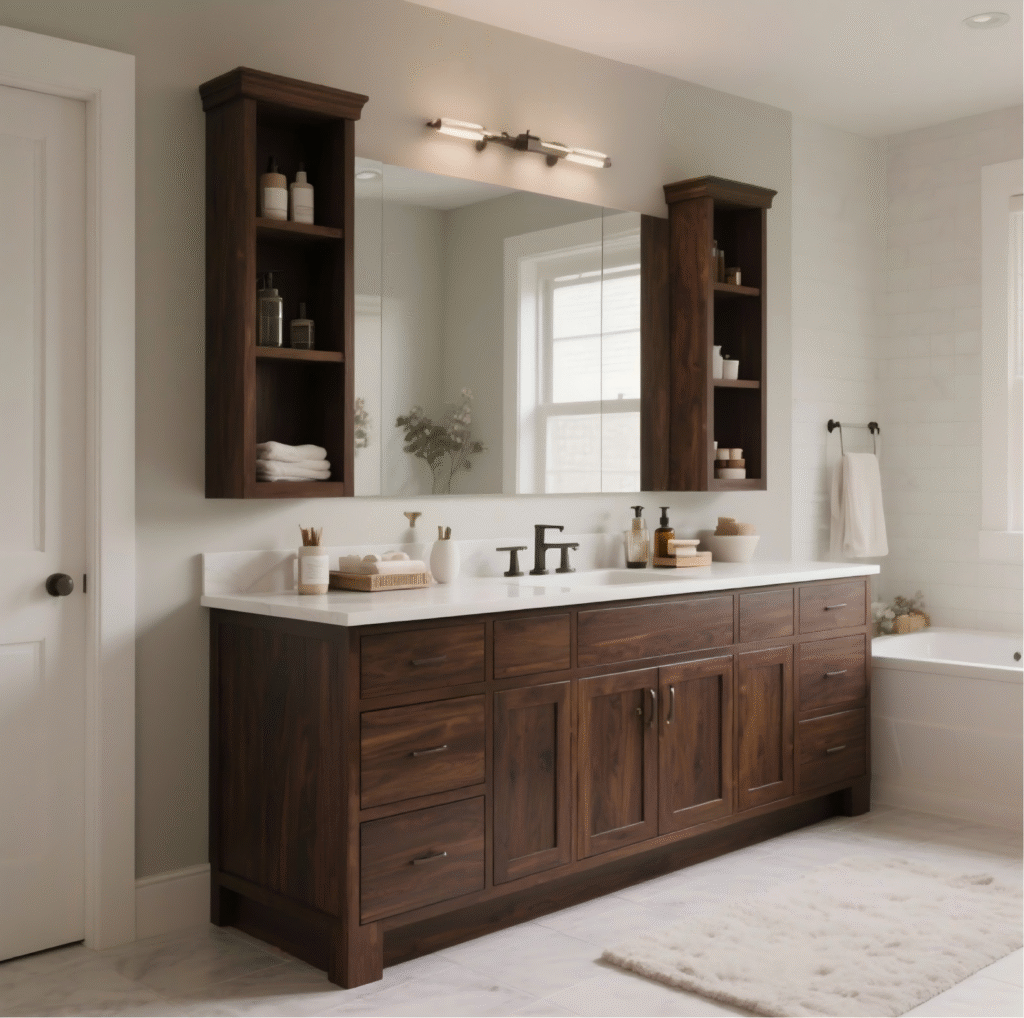
Cabinet Dimensions: Big or Small?
Big Cabinets: Taller cabinets (36 inches) offer more vertical storage space, allowing for additional drawer layers or higher shelves to conveniently store cleaning supplies.
Small Cabinets: In space-constrained bathrooms, tall, bulky cabinets can feel visually and functionally uncomfortable. In such cases, a wall-mounted vanity may be a better choice. It frees up floor space, alleviates a cramped feel, and can be installed at any desired height.
Plumbing and Outlets
This is a common issue in renovations. If you’re remodeling an older home, raising a vanity from 30 inches to 36 inches may mean the trap inside the wall is positioned too low. You might need to reposition the plumbing upward or cut a new back panel for the vanity. Elevating the vanity also requires raising the mirror. Check for wall sconces or GFCI outlets to ensure the new dimensions are suitable.
How to Choose the Right Bathroom Vanity Height?
Don’t blindly follow trends; make decisions based on your own circumstances. Let me guide you through choosing the right bathroom vanity height for your needs.
Based on User Groups
Adult Households: A 36-inch height is recommended. This is the most comfortable size for modern adults, offering both aesthetic appeal and practicality.
Families with children: To provide children with an appropriate bathroom vanity height, consider lowering the master bedroom vanity to 30 inches. However, since children grow quickly, a 36-inch vanity paired with a step stool may be the most efficient solution.
Function and Sink Types
Undermount sink: The sink sits beneath the countertop surface. Cabinet height equals the final working height. Opting for 36 inches is a solid choice, accommodating layouts even in tight spaces.
Overmount sink: The sink sits above the countertop, adding 4 to 6 inches in height. When selecting cabinets, pay attention to the layout height; otherwise, the finished height may be unsatisfactory.
Cost: Material Pricing
Price Considerations: Purchasing a ready-made vanity in 30, 32, or 36 inches is the most cost-effective option. However, some clients I’ve encountered have opted for smaller vanities to save on material costs, ultimately resulting in a subpar user experience.
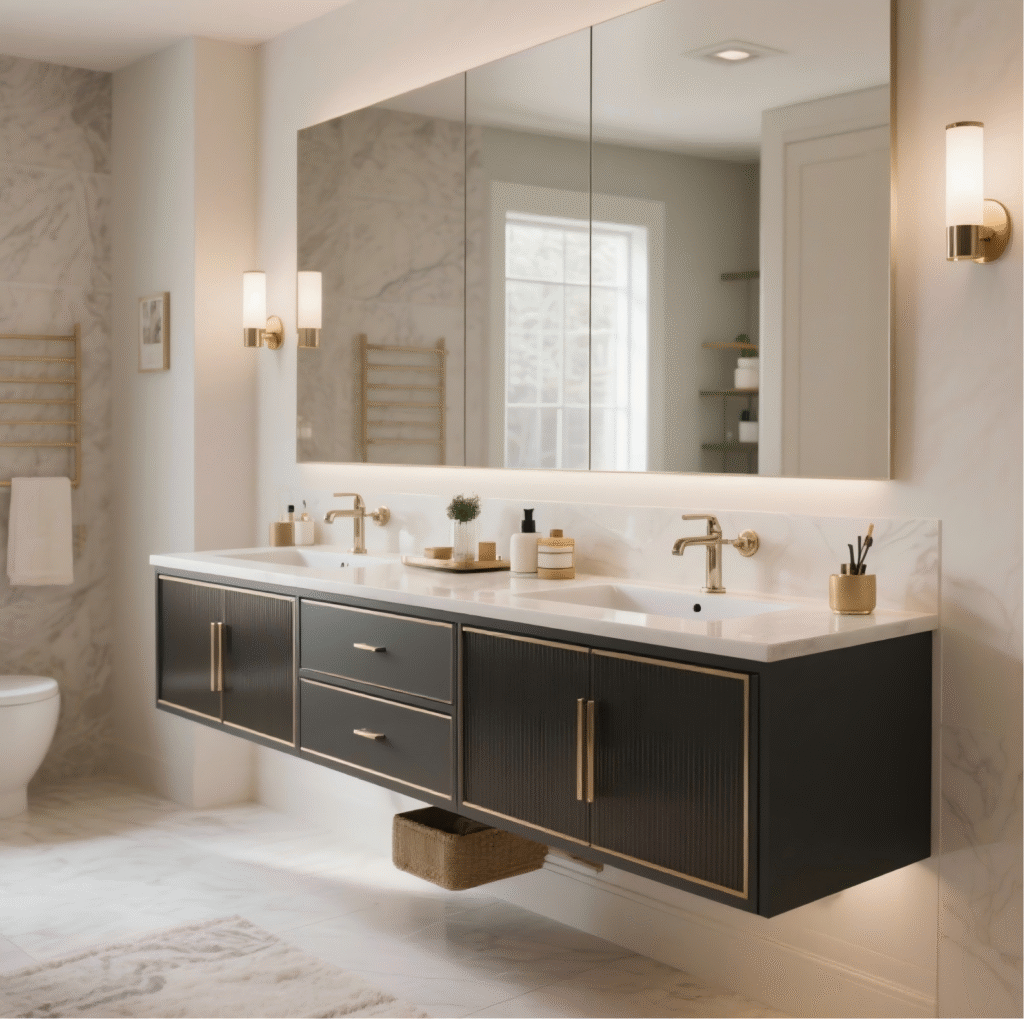
How Installation Style Affects Height Flexibility
Beyond dimensions, your chosen installation method may impact future usability.
Floor-Mounted — Fixed and Final
This traditional installation places the cabinet directly on the floor. However, it imposes height restrictions, as the height is predetermined at the factory, typically fixed at 34 inches or 36 inches.
Expert Tip: No height adjustment is possible. If you find the height too low after purchase, the only option is to build a bulky wooden platform underneath. Always confirm the total height (including countertop) before ordering.
Wall-Mounted—Floating
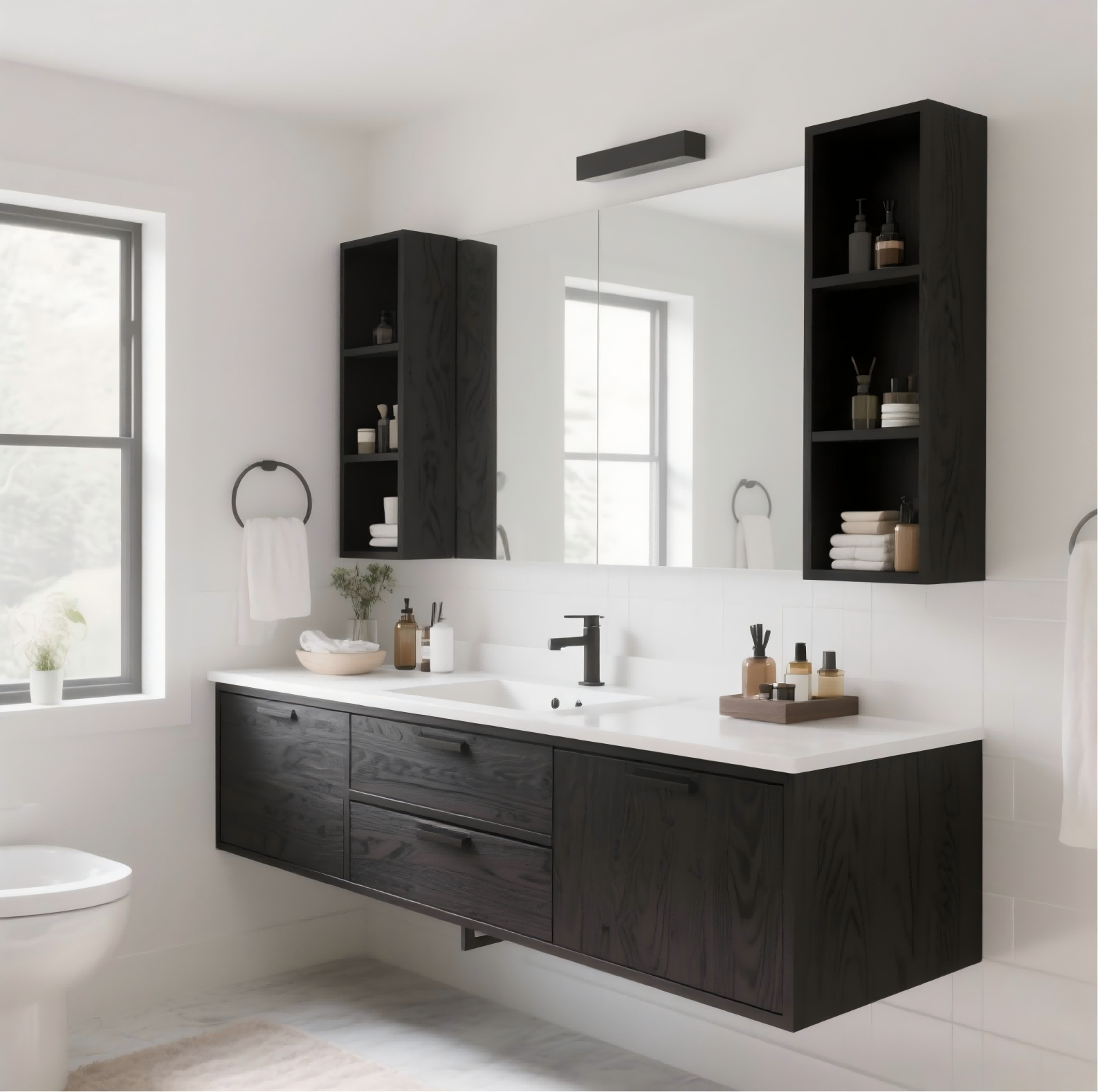
The preferred choice for modern 2026 design is wall-mounted. Cabinets are bolted directly to the wall, leaving open space below for maximum space utilization.
Height Advantage: This is the most flexible option. Even with cabinet boxes as low as 22 inches tall, you can install them at any height that best suits your needs.
Expert Tip: Whether you’re 6’4“ or 5’2”, you can customize the installation height. Just ensure an 8-10 inch gap below for easy cleaning and visual balance.
FAQ
A: If your vanity is in good condition but too low, the most stable method is to construct a new wooden box (platform) underneath the existing cabinet and cover it with a new toe kick, or install furniture legs if the structure allows. Alternatively, replacing a thin countertop with a thicker built-up stone edge can add over an inch of height, but remember that any significant elevation will likely require you to extend the plumbing pipes inside the wall to reach the sink.
A: Historically, bathroom vanities were lower (30-32 inches), but in the 2026 market, the answer is increasingly yes. The modern “Comfort Height” vanity is exactly 36 inches, which is identical to the standard kitchen counter height; this shift occurred because homeowners realized that the ergonomic benefits of a higher surface for food prep also apply to brushing teeth, significantly reducing back strain.
A: Yes, the listed standard height (like 36 inches) almost always refers to the total distance from the finished floor to the top surface of the countertop. If you are purchasing a cabinet base separately, you must calculate your final height by adding the thickness of your specific countertop material (usually 1.25 inches) or the full height of a vessel sink (4-6 inches) to ensure the final rim isn’t uncomfortably high.
A: “Comfort Height” is a specific industry term referring to vanities that stand 36 inches tall to match kitchen ergonomics, whereas the traditional “Standard Height” typically ranges from 30 to 32 inches. Comfort Height is designed to reduce back strain for adults and has largely become the default for master bathroom renovations in 2026, while the lower Standard Height is now mostly reserved for dedicated children’s bathrooms or older homes.