Cream Kitchen Cabinets in 2026: Trends, Pros, Lighting Effects & Buying Guide
For years, pure white kitchens have reigned supreme in home design. They’re clean, bright, and safe. But as we step into 2026, a shift is underway toward cream-colored cabinets. There’s a reason cream cabinets have gained popularity. They capture the bright, airy feel of white kitchens while avoiding the coldness often associated with all-white spaces. But the rise of cream has a more scientific basis too. This guide covers everything you need to know about this year’s hottest kitchen trend.
What Are Cream Kitchen Cabinets?
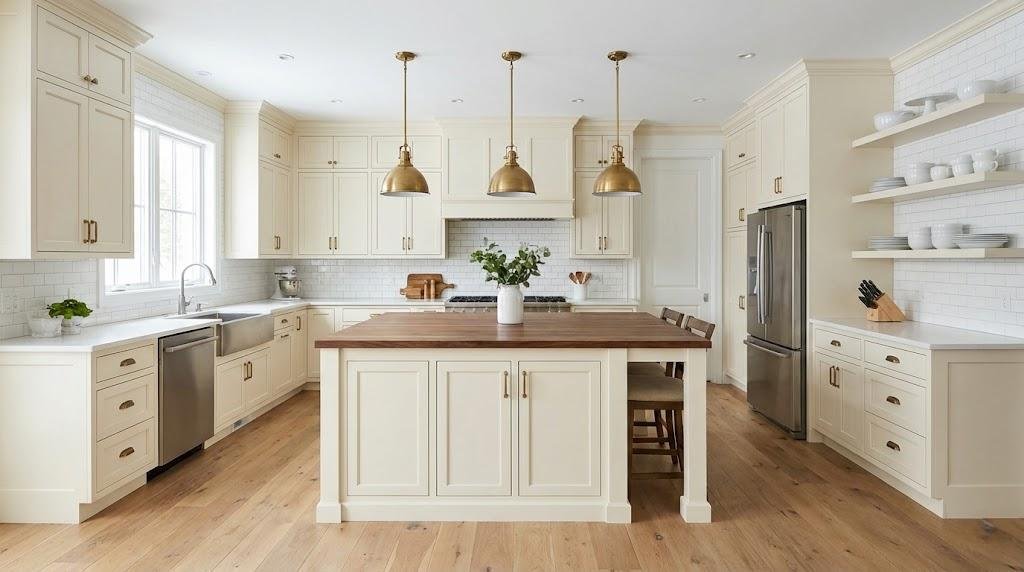
Cream-colored cabinets refer to those featuring a warm off-white hue that falls between pure white and light beige. Unlike pure white cabinets, cream cabinets feature subtle yellow, beige, or neutral undertones that soften visual contrast and reduce glare, making them particularly suitable for bright or highly reflective kitchens. As a result, cream cabinets are better suited for kitchens requiring extensive daily use, offering both practicality and visual appeal.
One key reason for the growing popularity of cream-colored cabinets is their practicality compared to pure white finishes. In daily use, cream tones effectively conceal light dust, water spots, and stains better than high light reflectance value (LRV) pure white surfaces, while maintaining a bright and clean visual appearance.
Cream Cabinets & Light Interaction: A Visual Contrast
Choosing cream-colored cabinets is less about selecting a single hue and more about understanding how materials, light, and underlying color values interact within an actual space.
Material & Finish
The finish you choose changes how the color feels.
- Matte: Absorbs light. This makes the cream color appear deeper and more earthy, resembling natural stone or clay. It conveys a sense of high-end sophistication and stability.
- Gloss: Reflects light. This makes the color appear cooler, shifting it closer to off-white. The color becomes more pronounced.
| Light Source | Color Temp | Visual Appearance of Cream | Evaluation | Remedy Advice |
|---|---|---|---|---|
Warm White |
2700K – 3000K |
Very warm. The yellow light enhances the warm tones, creating a buttery texture. |
Can look greasy or dated. |
Switch to 3500K or 4000K bulbs; add gray countertops to neutralize. |
Bright White |
3500K – 4000K |
The purest. Restores the natural warm tones of cream, without yellowing or greening. |
Top Recommendation. Visually comfortable and modern. |
No remedy needed; this is ideal. |
Daylight |
5000K – 6500K |
Cool / Grayish. The blue spectrum suppresses the warm tones, making cream look like dirty white. |
Harsh, can appear sickly gray-green. |
Must switch to lower Kelvin bulbs; introduce warm wood elements. |
Pro Tip: To ensure the best results for cream-colored paint finishes, use LED bulbs with a Color Rendering Index (CRI) of 90 or higher. This prevents the paint from appearing dull at night.
The Impact of Solid Wood Materials
The defining feature of cream-colored cabinets lies in their finish, yet the base material directly impacts their durability, grain clarity, paint performance, and long-term stability. Below is a practical comparison of several most commonly used materials for cream-colored cabinets.
| Material | Grain Texture | Paint Adhesion Stability | Long-Term Color Stability | Recommended Use for Cream Finish |
|---|---|---|---|---|
Fine, smooth grain |
Excellent |
Very stable |
Best for smooth, high-end painted cream cabinets | |
Open, linear grain |
Good |
Very stable |
Ideal if you want visible wood texture under cream | |
Bold, high contrast grain |
Moderate |
Stable |
Better for rustic cream looks, less for uniform modern finish | |
Smooth but naturally reddish |
Good |
Darkens over time |
Not ideal unless toned carefully to avoid undertone conflict |
Undertones and LRV
To avoid a kitchen that looks dark or dingy, you need to look at the LRV (Light Reflectance Value).
- The Sweet Spot: We recommend cream colors with an LRV of 70-85.
- The Science: Pure bright white (LRV >90) can cause Glare Fatigue—a strain on the eyes caused by excessive reflection. Cream (LRV 70-85) reflects enough light to keep the room bright but softens it enough to be restful for the eyes.
Style Compatibility Guide: From Modern to Classic
Cream cabinets are incredibly versatile. Here is how to style them for 2026 trends:
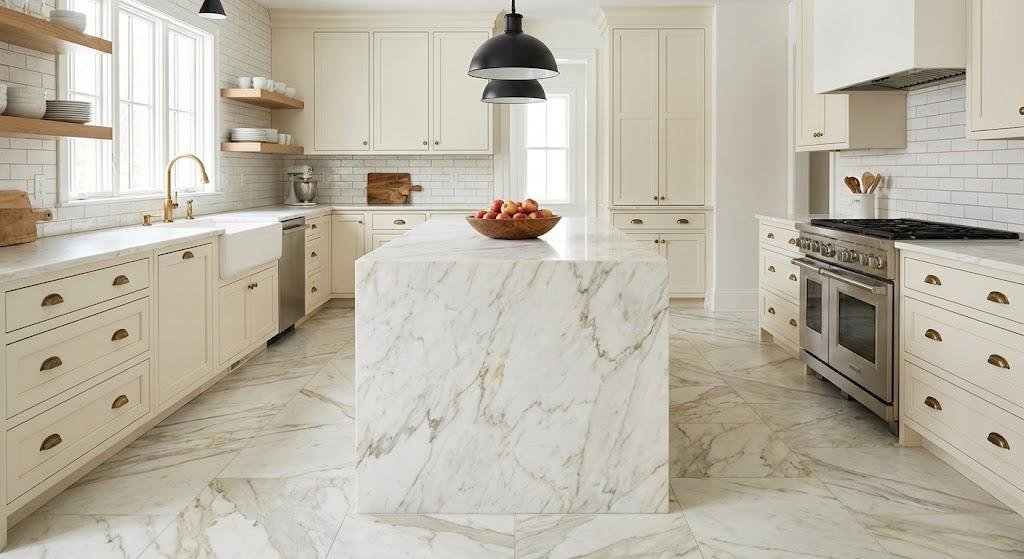
Modern Farmhouse
This style blends rustic charm with modern minimalism. Soft cream tones paired with high-contrast matte dark gold hardware create an understated luxury ambiance, while natural wood open shelving adds warmth. The overall aesthetic is cozy and comfortable, full of personality yet undeniably stylish.
Transitional
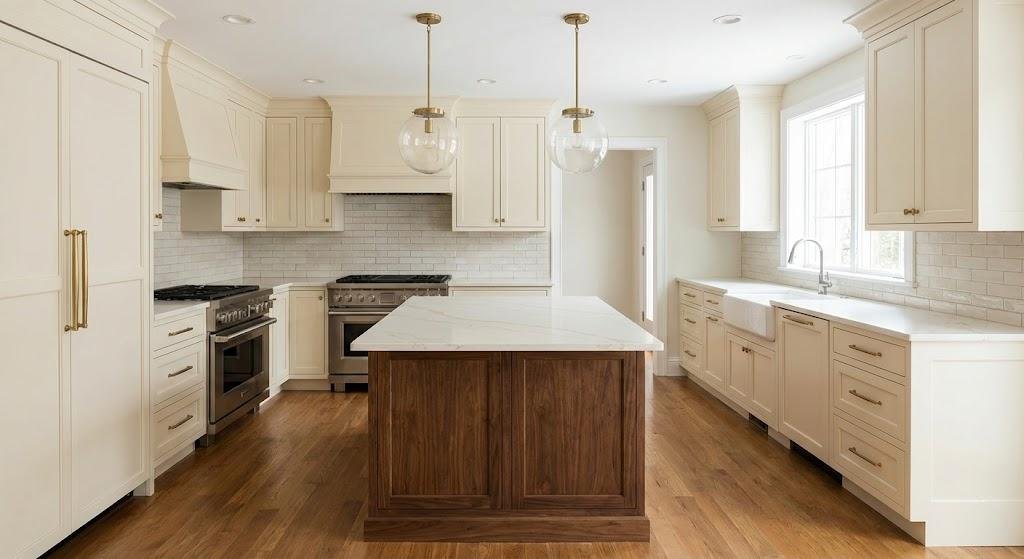
The most popular style in 2026 is this two-tone design that blends traditional and modern elements. Cream-colored cabinets paired with a richly textured walnut island create a visual focal point. This combination, enhanced by brass hardware, offers a warm and enduring appeal that seamlessly complements virtually any home architectural style.
Soft Contemporary
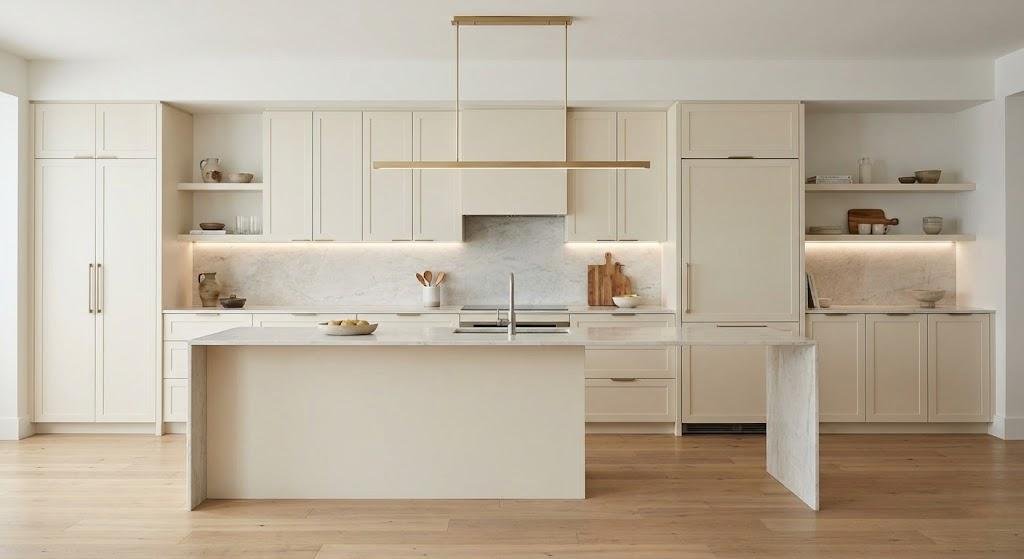
Creamy tones infuse this serene, luxurious aesthetic with contemporary flair. It creates a modern feel through warm ambiance. Slender Shaker-style cabinet doors and seamless stone backsplashes deliver a clean, crisp visual impact. Minimalist brass linear lighting adds a touch of warmth, resulting in an overall warm and fresh atmosphere.
Classic
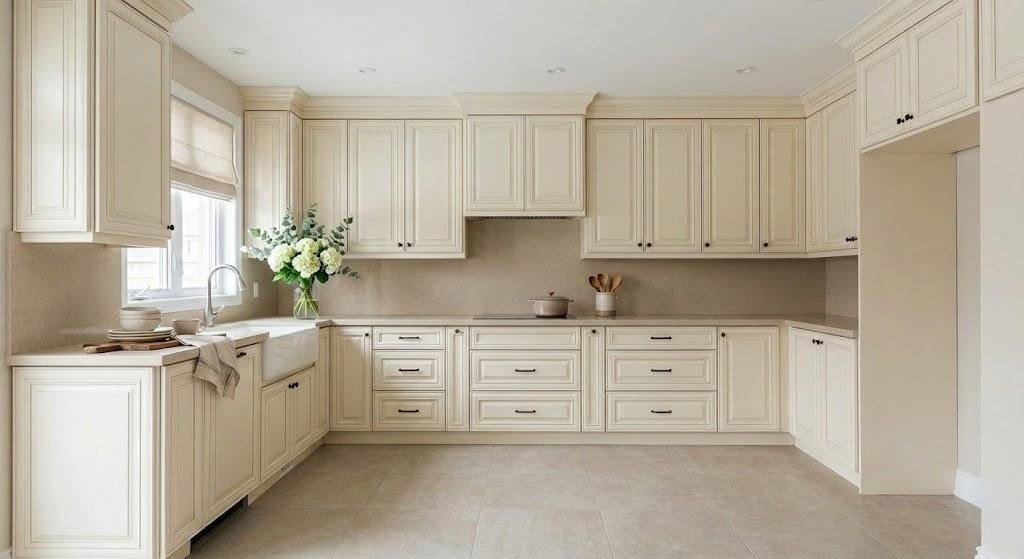
This style features a monochromatic palette of beige and cream tones, embodying timeless elegance. It emphasizes intricate details such as convex paneled doors, delicate crown molding, and furniture-style table legs. The goal is to create a cohesive visual effect that radiates an enduring “old-world” charm.
Maintenance & Cleaning of Cream Cabinets
A major reason for cream’s popularity is that it is surprisingly easier to live with than pure white. We compared Cream, Pure White, and Gray cabinets in real-life scenarios.
Visual Stain Attraction (Lower is Better)
| Stain Type | Cream | Pure White | Gray / Dark | Conclusion |
|---|---|---|---|---|
Dust / Lint |
⭐⭐ |
⭐⭐⭐ |
⭐⭐⭐⭐ |
Cream hides dust best because typical household dust is grayish-brown. |
Fingerprints |
⭐⭐ |
⭐⭐ |
⭐⭐⭐⭐⭐ |
Dark colors show oils the worst; light colors perform better. |
Food Splatters |
⭐⭐⭐⭐ |
⭐⭐⭐⭐⭐ |
⭐⭐ |
Colored liquids show on cream but slightly less than on bright white. |
Cleaning Agents & Methods Comparison
In real kitchen settings, we compared cream, pure white, and gray cabinets under task lighting and natural light conditions. Pure white surfaces show higher contrast with grease marks and fingerprints, especially under direct LED lighting. While gray cabinets effectively conceal dust, they are more prone to showing dried water spots. Cream finishes strike a balanced performance, reducing visual contrast without appearing dull or lifeless.
A major reason for cream’s popularity is that it is surprisingly easier to live with than pure white. We compared Cream, Pure White, and Gray cabinets in real-life scenarios.
- Recommended: Lukewarm water + mild dish soap + microfiber cloth.
- Reason: Alkaline cleaners damage the transparent coating, causing surface yellowing.
- Absolutely prohibited: Glass cleaners, bleach, or abrasive sponges.
- Consequences: Abrasives leave permanent shiny spots on the matte beige surface that cannot be repaired.
FAQ
A: They do not yellow inherently, but lighting choices can exaggerate warmth. Balanced lighting prevents this effect.
A: In practice, cream cabinets often appear cleaner longer than pure white due to reduced contrast with everyday smudges.
A: In many cases, yes. Cream reduces glare and visual fatigue in high-light environments.