Inset vs Overlay Cabinets: What's the Difference and Which Is Better in 2026?
When renovating your kitchen, choosing between inset and overlay cabinets is one of the most important decisions you’ll make. It not only affects the look of your kitchen but also directly impacts your budget, storage space, and the long-term durability of your cabinets.
The problem is that most articles simply provide a vague definition and leave it at that. This guide explains the differences between the two—price, appearance, durability, storage space, and style compatibility—so you can make the right choice. Whether you’re planning a full renovation or just exploring options, by the end of this guide, you’ll know which cabinet style is truly right for you.
What Are Inset Cabinets?
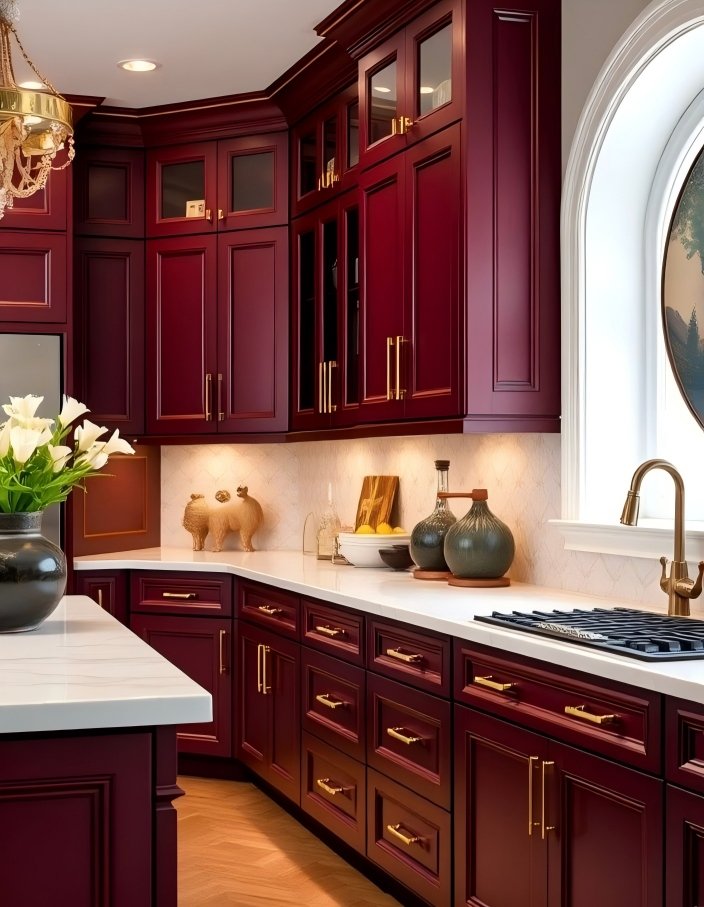
Built-in cabinets are a style of cabinetry in which the door panels and drawer fronts are set into the cabinet’s face frame, flush with it. When viewed from the front, you see the full frame around each door and drawer — the door panels are embedded into the frame, giving a clean and sophisticated look.
Beaded vs Non-Beaded Inset
There are two subtypes of inset cabinets:
- Beaded inset: A thin decorative bead line is milled along the inner edge of the cabinet face. This detail adds depth and dimension, evoking the charm of traditional craftsmanship.
- Non-beaded inset: The cabinet edges are clean and sharp, with crisp right angles. This style has a more modern appearance and is a common choice for transitional-style kitchens.
What Are Overlay Cabinets?
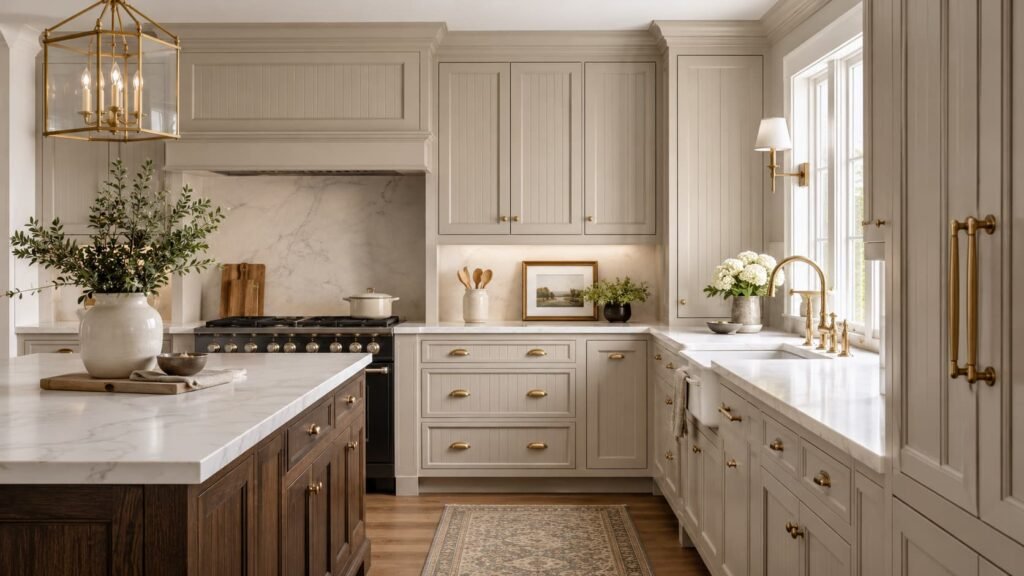
Overlay cabinets are the most common cabinet style in American kitchens. Instead of being recessed into the frame, the door and drawer fronts are mounted on top of the cabinet frame, overlapping it. There are two main types:
Full Overlay Cabinets
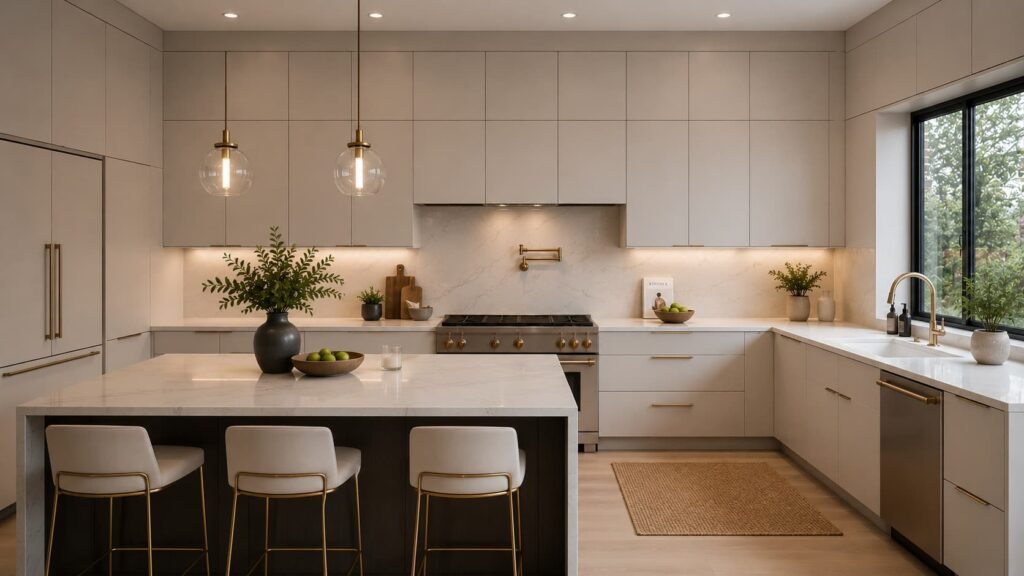
Full-coverage door panels nearly cover the entire cabinet face, leaving only a small gap between adjacent panels. This design creates a sleek, seamless look and reduces the visible frame. Full-coverage panels are the most popular option for contemporary and modern kitchens.
Partial Overlay Cabinets
Partial-overlay door panels cover only part of the face frame, leaving a visible edge between the door and the drawer. This is a classic American cabinet style—it’s affordable, offers a wide range of options, and is forgiving during installation.
Inset vs Overlay Cabinets: Key Differences Compared
This is the core comparison. The table below shows exactly how inset and overlay cabinets differ across every dimension that matters:
| Feature | Inset | Full Overlay | Partial Overlay |
|---|---|---|---|
Look & Feel |
Furniture-like, classic, refined |
Sleek, modern, seamless |
Traditional, familiar |
Cost |
Highest (+15–30%) |
Mid to high |
Most affordable |
Storage Space |
Slightly less (1–2″ per opening) |
Maximized |
Moderate |
Humidity Sensitivity |
High — doors can swell and stick |
Low |
Low |
Installation |
Hardest — requires perfect alignment |
Moderate |
Easiest |
Best Style Fit |
Traditional, transitional, Shaker |
Modern, contemporary |
Traditional, country |
Key Takeaway: Inset cabinets win on aesthetics but lose on cost, storage, and climate tolerance. Full overlay is the best all-around middle ground. Partial overlay is the budget-friendly workhorse.
Cost Comparison: How Much More Do Inset Cabinets Cost?
Price is the number one reason homeowners hesitate on inset cabinets. Here is what you can expect to pay in 2026:
| Tier | Inset Cabinets | Full Overlay | Partial Overlay |
|---|---|---|---|
Stock / Ready-to-Assemble |
$150–$300 / linear ft |
$100–$250 / linear ft |
$80–$200 / linear ft |
Semi-Custom |
$300–$600 / linear ft |
$200–$450 / linear ft |
$150–$350 / linear ft |
Full Custom |
$600–$1,200+ / linear ft |
$400–$900 / linear ft |
$300–$700 / linear ft |
Hidden Costs to Budget For
- Specialized Hardware: Built-in cabinets need specialized hinges (usually surface-mounted or concealed hinges), which cost more than standard cover hinges.
- Installation Labor Costs: Since built-in cabinets require careful alignment, installation takes more time and costs more. We suggest budgeting an extra 10–20% for installation.
- Seasonal Adjustments: Wood expands and contracts with changes in humidity. You might need to hire a carpenter to adjust the cabinet doors once or twice a year.
- Filler Strips and Modifications: Semi-custom built-in cabinet lines may require the installation of filler strips in non-standard openings, which can increase material and labor costs.
Pros and Cons of Inset Cabinets
The Pros
- Aesthetics: The flush appearance is something that overlay doors simply cannot replicate. Built-in cabinets make the kitchen look as though it were handcrafted by a master artisan.
- Timeless Appeal: Unlike some trendy finishes that quickly fall out of style, the built-in design has remained popular for centuries and shows no signs of fading from the fashion scene.
- Value: Real estate professionals unanimously list built-in cabinets as a premium feature that boosts a home’s perceived value.
- Style Versatility: Built-in cabinets can complement Shaker, traditional, transitional, and even modern styles—the key is choosing the right door style and finish.
The Cons
- Higher cost: 15–30% more expensive than comparable flush-mount cabinets, plus higher costs for hardware and installation.
- Sensitive to humidity: In humid climates, wooden cabinet doors may swell and stick. This is the most common complaint among owners of inset cabinets.
- Longer lead times: Precision manufacturing means longer wait times—typically 8–12 weeks, compared to just 4–6 weeks for overlay cabinets.
Pros and Cons of Overlay Cabinets
The Pros
- Value for money: You receive 80–90% of the visual appeal at 60–70% of the cost. Full-coverage doors, in particular, provide a look that closely mimics built-in cabinets without the high price tag.
- Storage space: Larger door openings make it easier to access items, and there are no frames to take up usable space.
- Adaptability: Overlay doors are less impacted by humidity changes, making them a safer option for coastal homes, older houses, and regions with notable seasonal temperature shifts.
- Easy Installation: Standard overlay is the most “forgiving” cabinet style—minor wall imperfections can be concealed by the overlapping door panels.
The Cons
- Less refined appearance: Even with a full overlay, the flush, built-in look of an inset isn’t achieved. The gap between the doors and the slight overlay on the frame are visible up close.
- Partial overlay appears outdated: The visible frame strips between doors seem builder-grade to many design-aware homeowners.
- Lower perceived value: In upscale real estate markets, overlay cabinets (especially partial ones) can indicate a less premium renovation.
Which Is Better for YOUR Kitchen?
There is no universal winner. The right choice depends on your budget, climate, style preferences, and how long you plan to stay in your home. Here is a decision framework:
Choose Inset Cabinets If You…
- Want a classic, transitional, or high-end traditional look
- Value craftsmanship and fine details above all
- Live in a climate-controlled home with stable humidity
- Plan to stay in this home 10+ years
- Have a flexible budget that allows a 15–30% premium
- Are building new construction (easier to ensure level walls/floors)
Choose Inset Cabinets If You…
- Want a great look without the premium price
- Need maximum storage in a small kitchen
- Prefer a modern or contemporary aesthetic
- Live in a high-humidity climate (coastal, tropical)
- Are renovating a rental property or planning to sell soon
- Want shorter lead times and wider brand availability
Best Inset Cabinet Brands Worth Considering
Not all cabinet brands offer inset construction. Here are the standout options across every budget:
| Budget Tier | Brand | Why It Stands Out |
|---|---|---|
Budget |
CliqStudios |
Online ordering, good inset door style selection |
Mid-Range |
KraftMaid |
Widely available, reliable quality |
Premium |
Plain & Fancy |
Handcrafted, exceptional fit & finish |
Ultra-Premium |
Wood-Mode |
Industry gold standard, lifetime warranty |
All-Rounder |
Full range from stock to custom, strong quality across every tier, best value for inset cabinets |
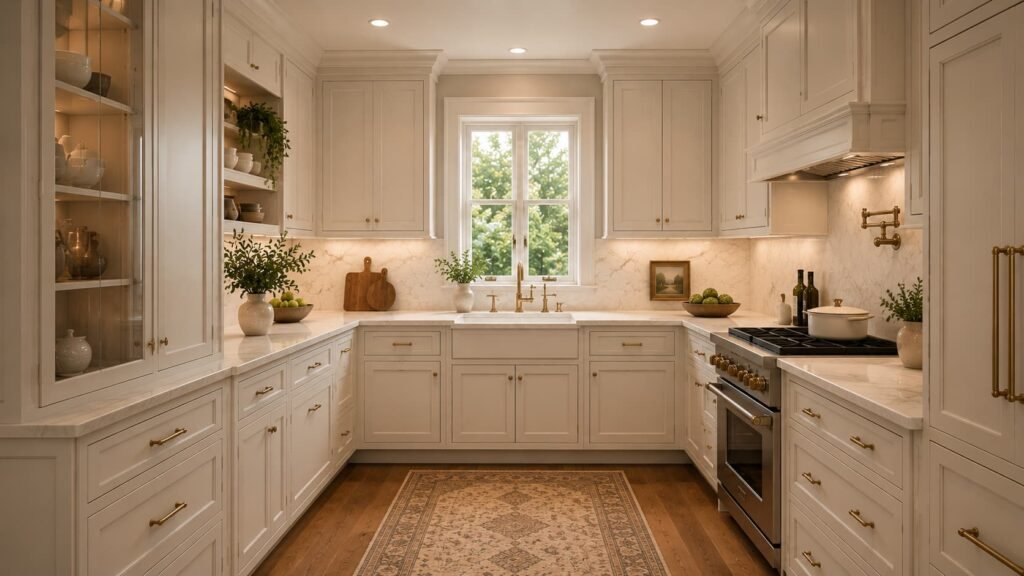
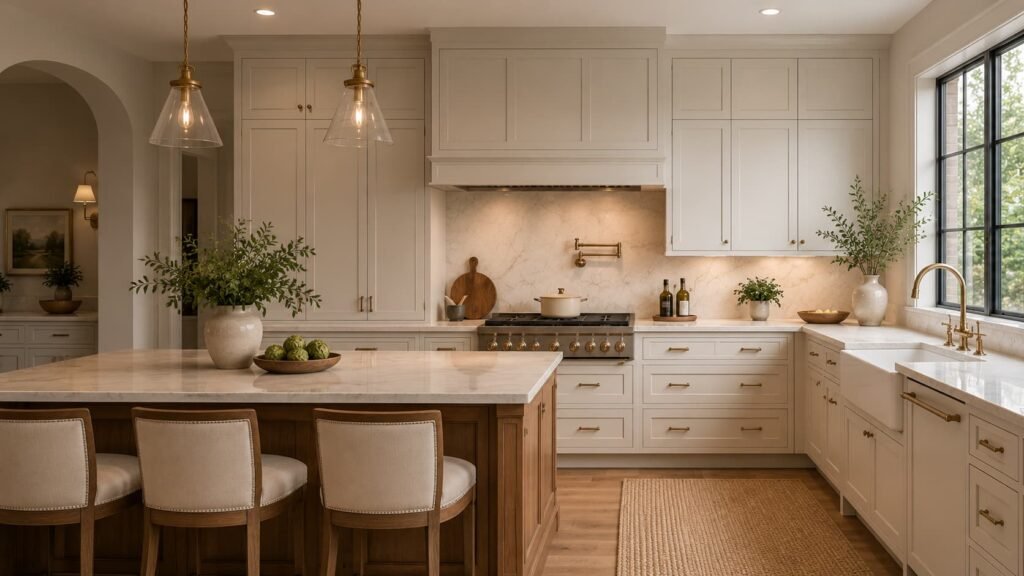
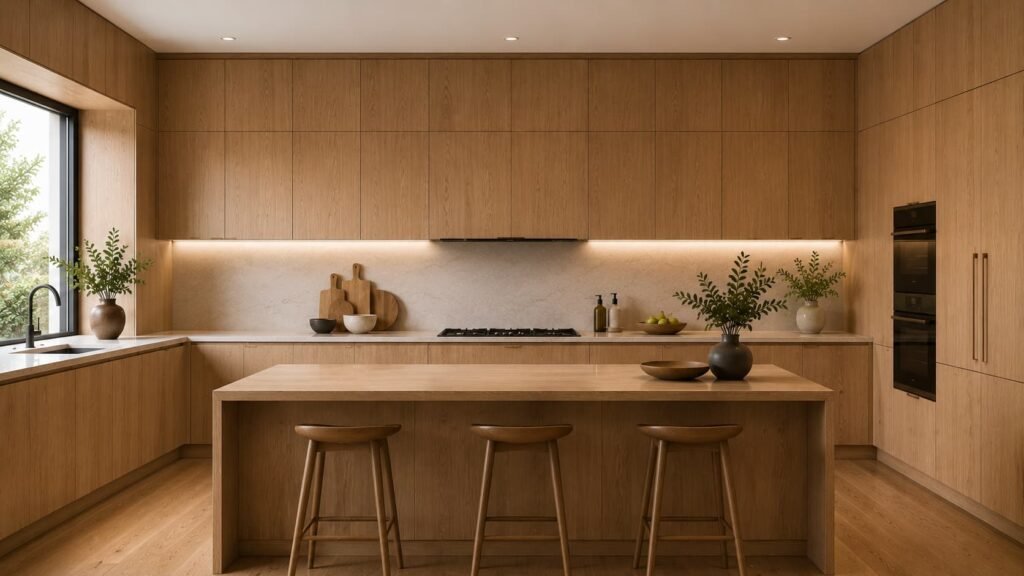
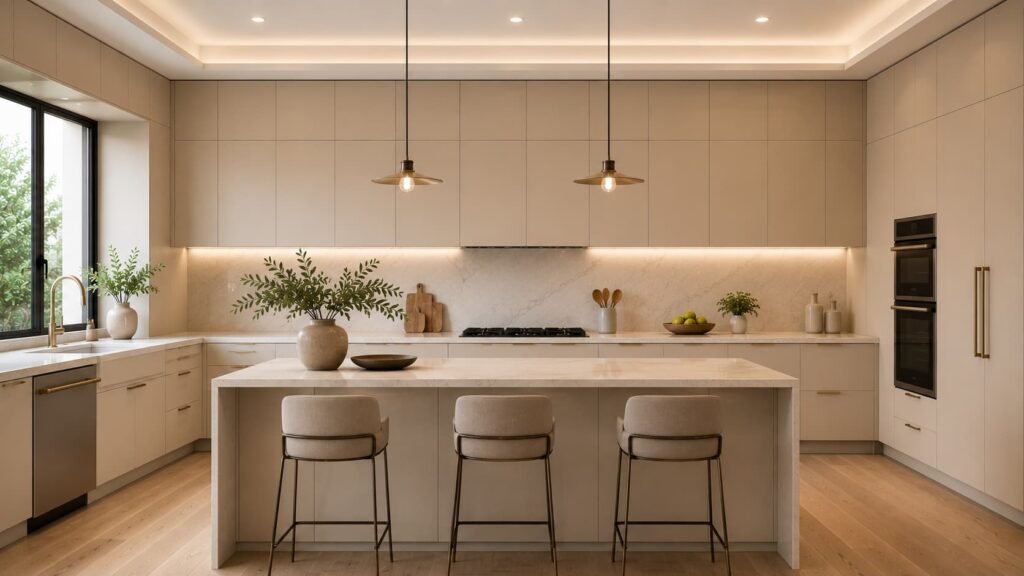
Inset vs Overlay Cabinets in Real Kitchens
Seeing real examples is the best way to decide. Here are kitchens using both styles:
Frequently Asked Questions
Are inset cabinets worth the extra cost?
Yes, if you value a furniture-like aesthetic and plan to stay long-term. They cost 15–30% more than an overlay. For tight budgets or rentals, an overlay is a better value.
Can you convert overlay cabinets to inset?
Technically yes, but it’s rarely practical. It involves new doors, hinges, and sometimes frame modifications. Replacing the cabinets completely is usually more cost-effective.
Do inset cabinets work in modern kitchens?
Yes. Pair them with flat-panel doors, minimal hardware, and clean colors like matte white or navy for a modern look.
Which is more durable, inset or overlay?
Both are equally durable due to quality materials. However, inset doors can swell and stick in humid climates, whereas overlay is more forgiving.
Ready to Choose Your Cabinet Style?
Download our free Kitchen Cabinet Style Guide with 50+ inspiration photos, a budget worksheet, and a step-by-step decision framework.