The Ultimate Guide to Wood Veneer Cabinets: Design, Durability & 2026 Trends
In today’s global market for high-end whole-home customization and building materials, wood veneer cabinets are experiencing significant growth. Industry data indicates that the global cabinet market reached $141 billion in 2025 and is projected to exceed $180.25 billion by 2030, with a compound annual growth rate (CAGR) of 5.03%. This guide provides an in-depth analysis of wood veneer cabinets from multiple perspectives, including core manufacturing processes, environmental compliance requirements, and design trends for 2026.
What Are Wood Veneer Cabinets?
Wood-veneered cabinets are a product that combines the aesthetic appeal of natural wood with the stability of modern engineered wood panels. The manufacturing process involves bonding high-quality natural hardwood veneers, ranging from 0.1 to 6 millimeters in thickness, to the surface of core materials such as MDF, particleboard, or moisture-resistant plywood using high-pressure hot-pressing technology.
- Core Construction of Wood-Veneer Cabinets: Natural hardwood veneers (such as oak, walnut, and maple) with a thickness of 0.1–6 mm are precisely peeled from logs using rotary cutting, flat-cutting, or quarter-sawn methods.
- Laminating Process: After being book-matched or slip-matched, the veneer is permanently bonded to a CARB Phase 2-compliant MDF or plywood substrate using low-VOC adhesives under high temperature and pressure, creating a stable “sandwich” structure.
- Key features of the 2026 upgrade: PUR hot-melt edge-banding technology combined with precision matching ensures seamless grain patterns and a natural texture, while eliminating the stress-related warping commonly found in solid wood.
Veneer Cabinets Pros and Cons
Understanding the details and underlying craftsmanship is essential for objectively assessing the quality of veneer cabinets.
Advantages
The advantages of wood-veneered cabinets lie primarily in their structural stability and manufacturing process.
- Life is often marked by fluctuations in humidity as dry and wet seasons alternate; the composite core structure of wood-veneered surfaces effectively resists the expansion, contraction, and warping caused by these environmental changes.
- For edge finishing, PUR hot-melt adhesive is used for edge banding. This cured PUR layer can withstand temperatures exceeding 150°C, provides excellent waterproofing, and achieves a nearly invisible “zero-bondline” finish.
- Significant cost savings: 40–60% cheaper than solid wood of the same grade, with the same luxurious appearance and virtually identical texture.
Limitations
Despite their many advantages, wood-faced cabinets still have physical limitations under certain extreme conditions.
- In high-humidity environments (>60% RH) combined with poor edge sealing: The MDF substrate absorbs moisture and swells, causing the veneer to bubble, crack, or delaminate.
- Prolonged exposure to direct UV light: Accelerated photo-oxidation of the wood veneer; without UV-protective window film, fading and surface cracking will occur within 2–3 years.
- Extremely low humidity (<30% RH): Fine cracks may appear on the surface of the veneer, and it cannot be sanded and refinished multiple times like solid wood.
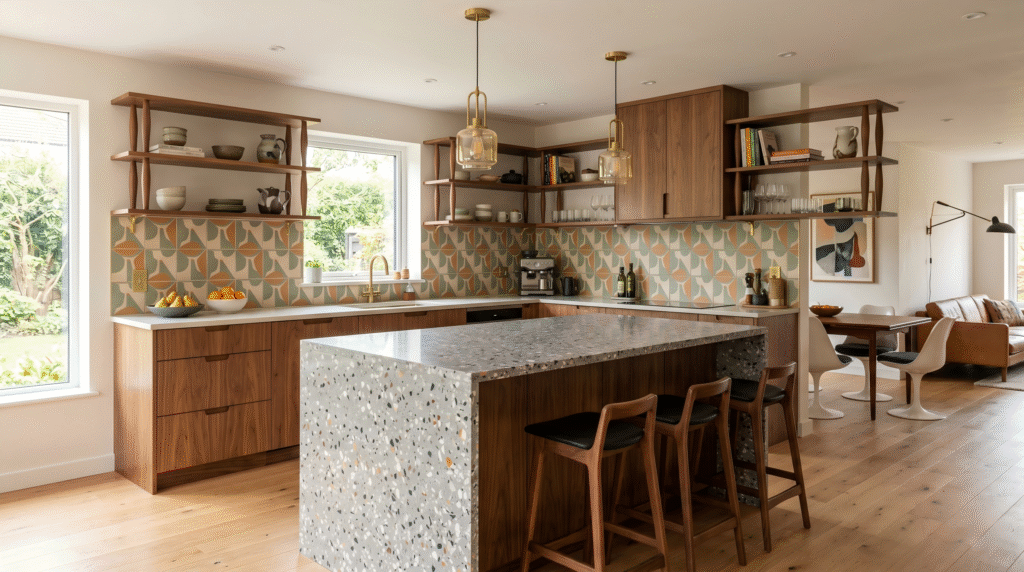
Why Wood Veneer is Redefining Kitchens
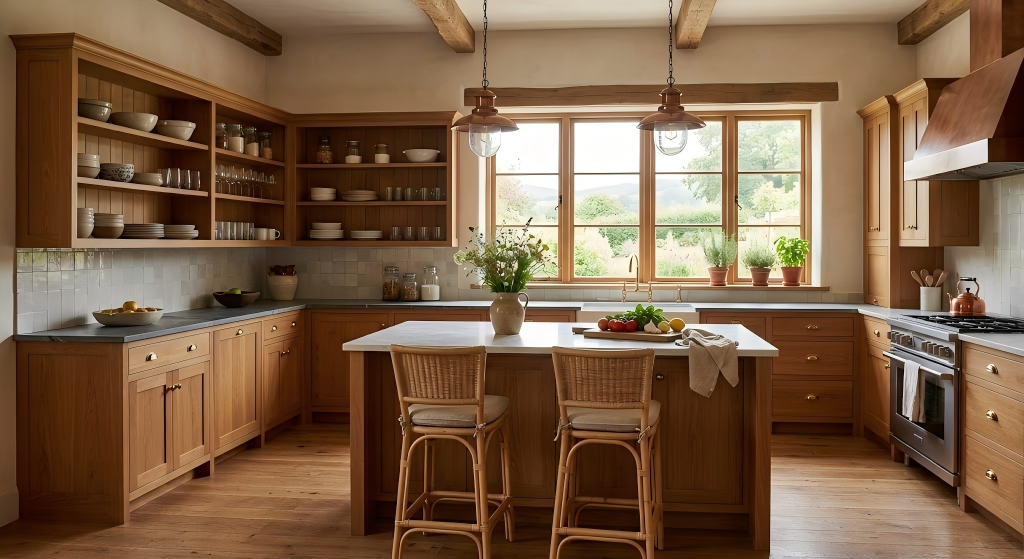
Modern kitchens are not merely functional spaces; they are also an expression of aesthetic sensibility. Wood-veneer cabinets strike the perfect balance between “design expression” and “constructional feasibility.”
Natural Texture with Controlled Consistency
- Wood veneer captures the natural grain of wood while creating a seamless, unified appearance over large areas through industrial splicing. It delivers a luxurious feel that appeals to both the eyes and the touch.
- To ensure visual consistency, high-end manufacturers implement a flitch tracking system, which strictly sequentially numbers and digitally maps the veneers cut from the same log to ensure the continuity of the wood grain across large-span spaces.
- At the same time, the use of engineered veneer—which eliminates natural imperfections through dyeing and restructuring processes—provides a consistent visual experience for design-driven applications.
The Hidden Dangers of Formaldehyde and VOCs: Environmental Compliance
The composite substrates, adhesives, and surface finishes used in cabinet manufacturing are the primary sources of formaldehyde and volatile organic compound (VOC) emissions.
- In accordance with the explicit requirements of Title VI of the U.S. EPA’s TSCA and California’s CARB Phase 2 regulations, formaldehyde emissions from hardwood plywood used in cabinets must be strictly controlled to 0.05 ppm or less, while those from medium-density fiberboard must be below 0.11 ppm.
- The more stringent GREENGUARD Gold certification not only monitors formaldehyde but also sets strict toxicological limits for over 360 types of free-floating VOCs, ensuring safe use in sensitive environments such as hospitals, schools, and homes.
Tip: Be sure to purchase high-quality wood veneer cabinets for the sake of your physical and mental well-being and that of your family.
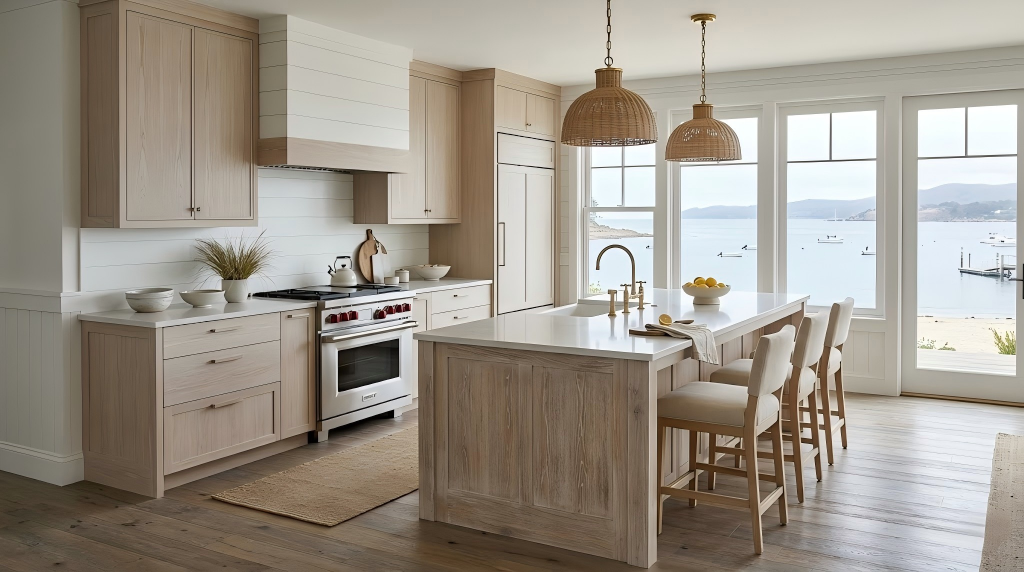
Cost Efficiency Without Visual Compromise
Veneer offers a look similar to solid wood, while also providing significant cost savings. For a standard custom kitchen project, the price difference between the two materials is quite substantial.
| Feature | Wood Veneer Cabinets | Solid Wood Cabinets |
|---|---|---|
Average Price |
$500 – $900 / Linear Foot |
$1,000 – $1,500+ / Linear Foot |
Visuals & Texture |
Consistent grain; allows for symmetrical pattern matching. |
Natural grain with random color variations and knots. |
Structural Stability |
Resistant to warping and cracking due to the engineered core. |
Susceptible to expansion and contraction from humidity changes. |
Material Efficiency |
High; optimizes the use of premium wood slices. |
Low; requires large volumes of premium solid timber. |
Return on Investment
When deciding whether to renovate a home or increase its value, return on investment is a key consideration.
- Minor Renovation of Wood-Paneled Cabinets: Average Cost $28,458, with a National Average ROI of 112.9%
- Complete Refurbishment: Average cost of $104,104, with an ROI of just 35.7%.
- Core Value: Wood paneling delivers a high-end visual upgrade at a lower cost, directly enhancing a home’s resale appeal.
How to Maintain Veneer Cabinets
- Top Priority for UV Protection: Install UV-blocking window film or use blackout curtains to prevent fading and cracking caused by direct sunlight within 2–3 years.
- Strict humidity control: Maintain a constant indoor humidity of 40–50% RH year-round, using a humidifier in winter and a dehumidifier in summer to prevent micro-cracks caused by low humidity or delamination caused by high humidity.
- Daily Cleaning Guidelines: Wipe in the direction of the grain using a soft microfiber cloth and a mild soap solution. Do not use abrasive cleaners, acidic cleaners, or excessive amounts of water.
- Regular maintenance: Apply wood wax or an oil-based protective finish every 6 to 12 months to preserve the wood’s luster.
- When installed correctly: The product will easily last 15–25 years, or even longer.
FAQ
A: Generally, it is more durable. Engineered wood has far greater resistance to warping than solid wood, making it particularly suitable for the high-humidity environment of a kitchen.
A: About 40% cheaper, with the same visual quality. See the price comparison above for details.
A: Absolutely. As long as you use PUR edge banding and moisture-resistant core material, the risk of delamination is virtually zero.