The Truth About Cultured Marble: What Manufacturers Won't Tell You
According to Wikipedia’s definition, engineered marble falls under the category of engineered stone, serving as an artificial substitute for natural marble and commonly used in interior spaces. However, I’ve noticed it is frequently misunderstood by many users, so I believe it’s necessary to clearly explain what engineered marble actually is and how it differs from natural stone.
What Exactly Is Cultured Marble?
Put simply, cultured marble is a man-made, cast polymer product. It is not cut from the earth like a slab of granite; it is “baked” in a mold.Think of it like a recipe. To make cultured marble, manufacturers blend:
- Stone Particles: About 75% natural marble dust (calcium carbonate).
- Pigments: To create specific colors and vein patterns
Resin: A liquid polyester resin that acts as the binder (the “glue”)
The Secret Weapon: The Gel Coat
This is the most important part that many people overlook. The mixture is poured into a mold that has been pre-coated with a clear Gel Coat.
Why does this matter?
As a professional, I always tell my clients: The gel coat is the shield. It creates a non-porous, high-gloss surface that makes the material waterproof and stain-resistant. Unlike natural stone, which is like a hard sponge that sucks up red wine or makeup, the gel coat on cultured marble seals everything out.
Cultured Marble vs. Real Marble: A Quick Comparison in 2026
Here is the breakdown I usually sketch out for my clients on a napkin:
The Secret Weapon: The Gel Coat
This is the most important part that many people overlook. The mixture is poured into a mold that has been pre-coated with a clear Gel Coat.
Why does this matter?
As a professional, I always tell my clients: The gel coat is the shield. It creates a non-porous, high-gloss surface that makes the material waterproof and stain-resistant. Unlike natural stone, which is like a hard sponge that sucks up red wine or makeup, the gel coat on cultured marble seals everything out.
| Feature | Cultured Marble | Real Quarried Marble |
|---|---|---|
Porosity |
Non-Porous (Waterproof without sealing) |
Porous (Needs sealing every 6-12 months) |
Design |
Consistent; can be molded into sinks |
Unpredictable; every slab is unique |
Durability |
High impact resistance, but surface can scratch |
Hard, but prone to chipping and etching |
Maintenance |
Very Low |
High |
Cost |
(Budget-friendly) |
(Premium) |
The Honest Pros and Cons
I believe in being 100% transparent. Cultured marble is fantastic, but it is not perfect.
The Pros
- Seamless Integration: This is my favorite feature. Because it is cast in a mold, the sink and the countertop can be one single piece. No silicone seams around the sink rim means no black mold or grime buildup over time.
- Cost-Effective: You can typically save 50-70% compared to natural slab marble.
- Easy to Clean: A little soap and water is all you need.
The Cons (Read This Carefully!)
- Heat Sensitivity: Do not use cultured marble in a kitchen. Polyester resin serves as the binder, and it can melt or scorch. In the bathroom, leaving a hot curling iron directly on the surface will leave a permanent yellow burn mark.
- Scratching: Remember that “Gel Coat” I mentioned? It’s tough, but it’s not diamond. If you use abrasive cleaners (like scouring pads or gritty powders), you will sand off the shine, leaving a dull, matte patch that collects dirt.
The “Dated” Stigma: In the 90s, cultured marble was often made with chaotic, fake-looking swirls. However, modern manufacturing has improved significantly. You can now get “Matte Finish” cultured marble that looks strikingly similar to modern quartz.
Where is Cultured Marble Used?
Cultured marble is primarily used in bathroom and kitchen renovations due to its seamless, water-resistant, and customizable properties. In over 80% of YoloDeco projects where cost-effectiveness is a priority, it is chosen to enhance both the functionality and aesthetics of spaces. Below are the most common applications:
Bathroom Vanity Tops and Integrated Sinks
One of the most common applications for engineered marble is as bathroom countertops with integrated sinks. Its non-porous surface resists moisture, soap scum, and mold growth. The seamless construction minimizes crevices where dirt and bacteria can accumulate, making daily cleaning more efficient and effortless. It also allows for custom finishes that maintain a cohesive, aesthetically pleasing appearance.
Shower Walls and Tub Surrounds
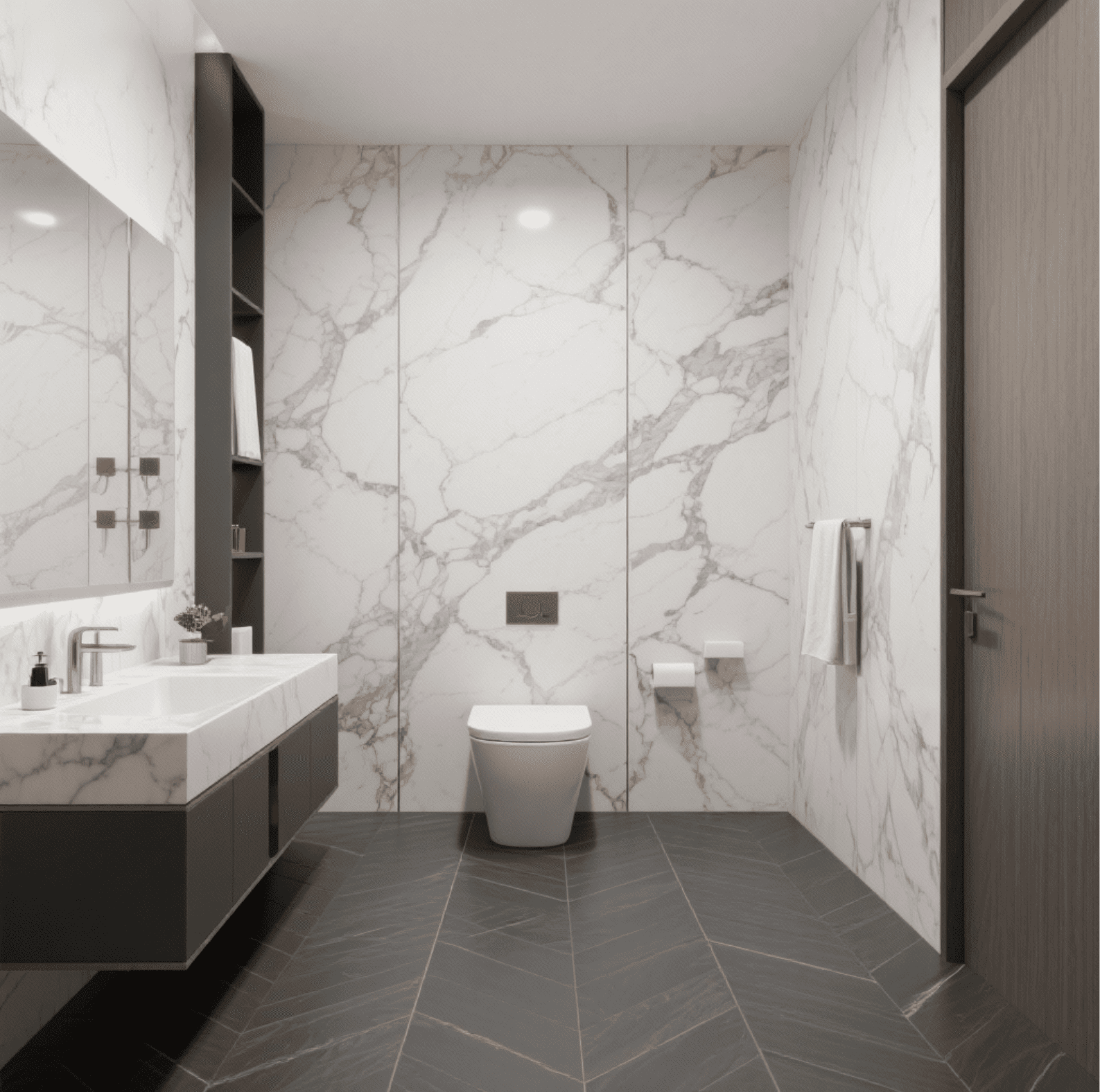
Cultured marble is commonly used for shower walls and around bathtubs. Compared to traditional tile installation, large-format cultured marble panels offer both practicality and exceptional value. They achieve the same aesthetic effect as natural marble while costing more than half as much. Therefore, cultured marble panels are an ideal choice for modern bathrooms prioritizing low maintenance costs and clean, elegant aesthetics.
Kitchen Islands and Backsplashes
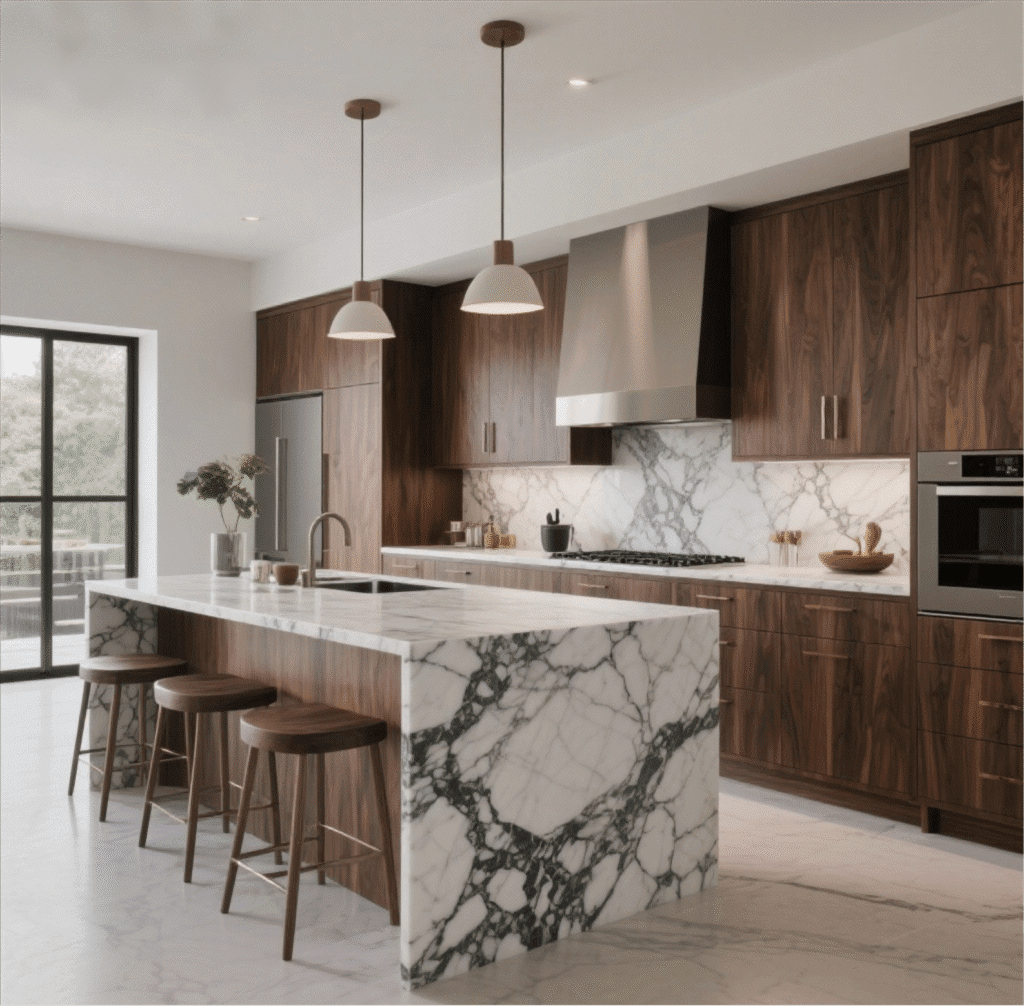
In kitchen spaces, cultured marble is typically used for backsplashes rather than primary cooking countertops. Its smooth, non-porous surface effectively prevents the absorption of grease and liquids, and is easier to clean than tiles with multiple grout lines. However, its heat and scratch resistance are average, so I generally don’t recommend it for high-traffic cooking areas like islands. When installed properly and kept away from direct heat sources, cultured marble backsplashes offer a solid, cost-effective choice.
Maintenance Tips: How to Keep It Looking New
I’ve seen 20-year-old cultured marble vanity tops that still look brand new, and 2-year-old ones that look ruined. The difference? How they were cleaned.
Maintenance Routine:
- Daily Cleaning: Use a soft cloth (microfiber is best) and a pH-neutral cleaner. Window cleaner (without ammonia) works great for shine.
- The Big No-No: Never use Ajax, Comet, or steel wool. These act like sandpaper on the gel coat.
The Secret Trick: Once a year, I recommend applying a layer of automotive wax (yes, car wax!) or a product like Gel-Gloss. This fills in microscopic scratches and restores that showroom shine.
Verdict: Should You Buy It?
If you are renovating a master bathroom or a high-traffic kids’ bathroom and want a seamless, low-maintenance look without breaking the bank, cultured marble is an excellent choice.However, if you are looking for a kitchen countertop or you absolutely need the cold, hard feel of natural stone, you should look at Quartz or Granite instead.
Have you installed cultured marble in your home? Or are you struggling to decide between Quartz and Marble?You can check out my blog, “Marble Wall Panels Guide” for more detailed information about marble. Contact us—I’d love to answer your questions!
Frequently Asked Questions
While it is technically possible to paint over old cultured marble using epoxy kits, we generally do not recommend it for a long-term finish. The paint often peels over time in wet environments.
Looking for a specific color?Instead of painting, consider replacing it. As a one-stop design and manufacturing specialist, we can custom-manufacture cultured marble in almost any color, pattern, or finish to perfectly match your design vision.
Generally, no. Because it is non-porous, it is much more stain-resistant than natural stone. However, it is not invincible.
Certain harsh chemicals like hair dye, nail polish remover, or leaving a rusty razor on the counter can leave marks. If you spill hair dye, wipe it up immediately. If a stain does happen, you can usually buff it out with a little automotive polishing compound.
Yes, our advanced cultured marble is built to withstand high temperatures.While natural marble is naturally heat resistant, our engineered marble matches that performance for daily bathroom and kitchen use. Our manufacturing process uses high-quality, heat-stable resins that resist scorching and thermal shock.
(Note: As with any premium countertop material, including granite, we still recommend using trivets for boiling hot cookware to maintain the pristine finish for a lifetime.)