Is Acacia Wood Good for Furniture? (2026 Expert Guide)
If you’re in the market for solid wood furniture, you may have noticed that more brands are using acacia wood. From IKEA’s SKOGSTA collection to Crate & Barrel’s premium outdoor line, acacia wood is rapidly gaining market share. But how does it perform? Does it really offer better value than oak and teak? Based on the latest market ata and authoritative technical specifications for 2025–2026, this article provides a comprehensive guide to help you make an informed decision when purchasing acacia wood furniture.
TL;DR: Acacia wood is an underrated high-performance hardwood — Janka hardness of 2,000–2,300 lbf (about 55% harder than white oak at 1,350 lbf), with natural water and pest resistance. Over a 15-year lifecycle, its cost per square foot averages just $13.20 — lower than pine ($25.68) or MDF ($22.50). It’s one of the best long-term value woods on the market.
What is Acacia Wood?
Acacia wood comes from the genus Acacia in the Fabaceae family, which includes 1,000–1,300 species worldwide. It is primarily native to Australia but is also widely distributed across Africa, Asia, Hawaii, and the Americas. Because of its rapid growth—it matures in just 4–5 years—acacia wood is a sustainable, high-performance timber option.
Historically, the Royal Navy used acacia wood to build ships for its exceptional strength and water resistance. Today, it is widely used in flooring,custom kitchen cabinets, kitchenware, musical instruments, and outdoor furnishings.
Key Characteristics of Acacia Wood
Acacia wood stands out for these 7 core characteristics:
Extreme Hardness & Wear Resistance
Acacia wood has a Janka hardness of approximately 2,000–2,300 lbf, significantly higher than that of white oak (1,350 lbf) and hard maple (1,450 lbf), and even exceeds that of hickory (1,820 lbf), which is often called “America’s hardest hardwood.” This means it is highly resistant to scratches and dents, making it ideal for furniture that sees heavy use.
Natural Water Resistance
Acacia wood fibers contain natural oils that give the wood excellent resistance to water and moisture. This natural barrier helps prevent water absorption and warping, but it also means the wood is not completely waterproof—prolonged exposure to standing water may still cause it to warp.
Pest and Rot Resistance
Some African species (e.g., Acacia nigrescens) rate at durability class 1–2 (the highest rating). This natural resistance means acacia can repel termites, fungus, and rot without chemical treatment — a major advantage for outdoor use.
Unique Grain and Color
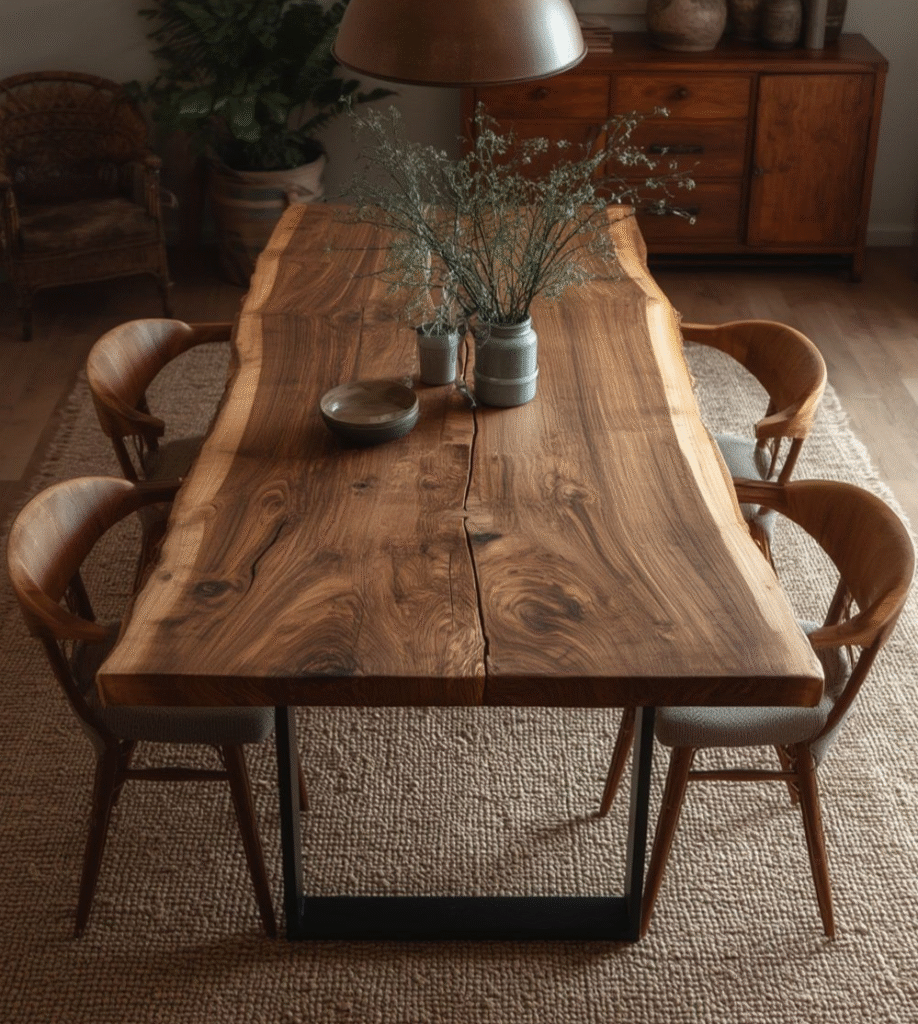
Acacia ranges from pale golden yellow to rich reddish-brown, with striking interlocking or wavy grain patterns. Every piece is unique — something no synthetic material can replicate. It also darkens naturally over time with UV exposure, developing a distinctive patina.
Good Dimensional Stability
With a radial shrinkage of just ~3.1% and volumetric shrinkage of 11.9–12.4%, acacia offers solid dimensional stability. This means it resists cracking and warping under normal indoor humidity changes.
Antibacterial Properties
Acacia wood has natural antibacterial properties, making it an excellent material for kitchen items such as cutting boards and utensils. Studies have shown that acacia cutting boards outperform bamboo and maple in antibacterial performance.
Difficult to Work
Its extreme hardness and interlocking grain mean acacia dulls tools quickly and can tear out during planing. This is why solid acacia furniture costs more — skilled labor and specialized tools are required.
Why Acacia Wood Works for Furniture
Here’s how acacia’s characteristics translate into real-world furniture performance:
Indoor Furniture
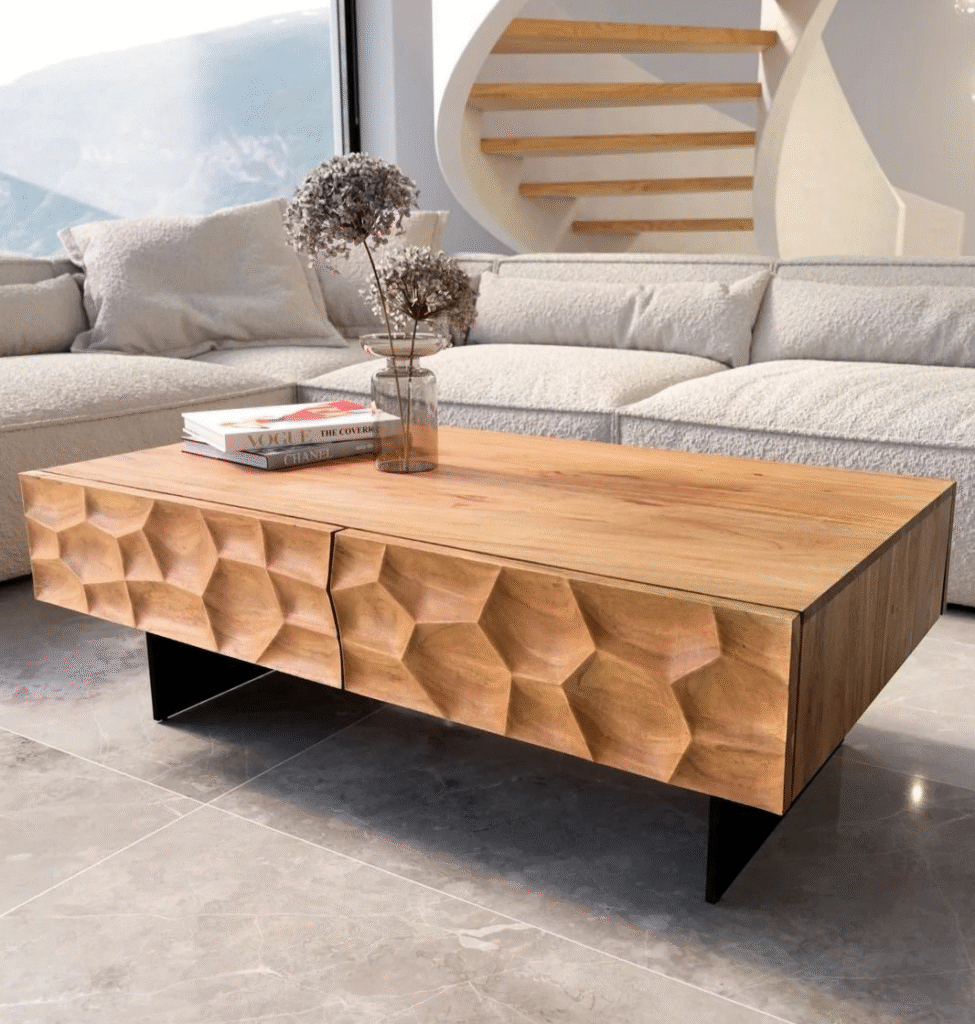
Dining Tables & Coffee Tables — Extreme hardness and natural antibacterial properties make acacia a superb dining table choice. Knife marks, hot plates, and daily wear are non-issues. A solid acacia 67″ dining table (e.g., Maison Vogue Bellona) runs about $3,260 and can last 25+ years.
- Cabinets & Shelves — Excellent dimensional stability ensures cabinet doors stay aligned over time. A solid acacia 48″ console table sells for approximately $1,499.
- Bed Frames and Nightstands — The interlacing grain creates a distinctive visual effect, making each piece of furniture a one-of-a-kind work of art. Acacia’s load-bearing capacity also ensures the structural integrity of the bed frame.
- Flooring — With a hardness more than 1.5 times that of oak, acacia flooring can withstand the wear and tear of daily use. Solid acacia flooring costs about $8 per square foot (compared with about $3 per square foot for oak), but it lasts much longer.
Outdoor Furniture
- Patio Dining Sets — Natural water and pest resistance make acacia a star outdoor material. An 8-seat certified acacia garden set (e.g., Beliani SASSARI PREMIUM) is priced at $1,085
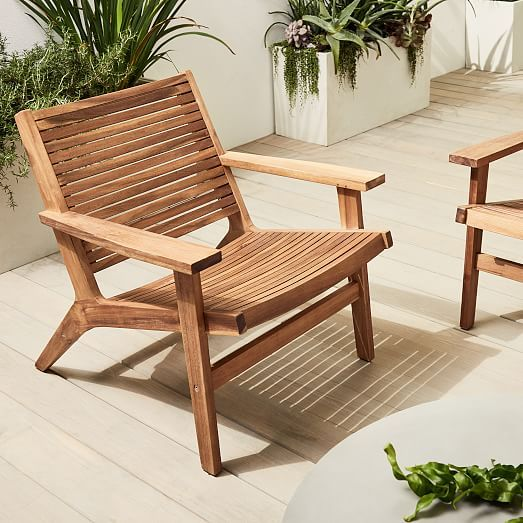
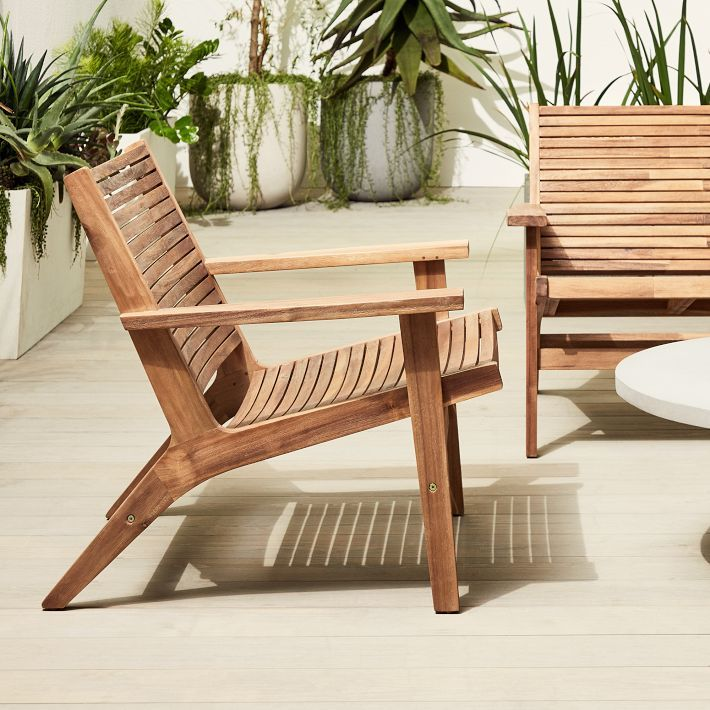
- Patio Loungers and Recliners — Unlike teak, which requires frequent oiling, acacia needs to be treated with a protective sealant only once a year to maintain its condition.
Planters & Garden Benches — Affordable and durable, acacia is a favorite for DIY outdoor projects.
Recommendation: If your budget is $1,000–$1,500, acacia offers the best value for outdoor furniture — close to teak’s durability at one-third to one-half the price.
Pros and Cons of Acacia Wood Furniture
Here’s a balanced look at what acacia furniture brings to the table:
Exceptional Durability
Acacia furniture can last 25–30 years with proper care — comparable to walnut and white oak, and significantly longer than cherry or maple. Its Janka hardness of 2,000–2,300 lbf means it’s roughly 2x harder than walnut or cherry, and 60% harder than white oak or maple. This translates to far better scratch, dent, and wear resistance in daily use.
Natural Weather Resistance
Acacia contains natural oils that make it water- and insect-resistant without the need for chemical treatment. Few woods are suitable for both indoor and outdoor furniture, but acacia is one of them.
Eco-Friendly & Fast Growing
Harvestable in 4–5 years (vs. 20–30+ for oak, walnut, or cherry), acacia is one of the most renewable hardwood choices available.
Disadvantages
- The color will darken over time — exposure to UV light causes acacia to gradually fade. If you want your furniture to retain its original color year-round, this may be a concern for you.
- Prone to cracking in dry environments — In dry climates with humidity below 40% or in rooms with constant air conditioning, acacia may crack and will require humidification or regular oiling to maintain its condition.
- Limited color range — Acacia is predominantly warm brown with golden/reddish tones. If you prefer the cool tones of maple or the deep chocolate of walnut, you won’t find them in acacia.
- Heavy — With a density of 62–73 lbs/ft³, acacia furniture is significantly heavier than walnut or cherry. Moving and rearranging requires more effort.
Acacia vs. Other Common Furniture Woods
Here’s how acacia compares to walnut, cherry, maple, and white oak — four of the most popular hardwoods for furniture:
| Property | Acacia | Walnut | Cherry | Maple | White Oak |
|---|---|---|---|---|---|
Janka Hardness |
2,000–2,300 lbf |
1,010 lbf |
950 lbf |
1,450 lbf |
1,350 lbf |
Water Resistance |
High (natural oils) |
Moderate |
Low–Moderate |
Low–Moderate |
High (ray structure) |
Price (per sq ft) |
$22 |
$12–$25 |
$8–$15 |
$6–$12 |
$5–$12 |
Furniture Lifespan |
25–30 years |
20–30 years |
15–25 years |
15–25 years |
20–30 years |
Choosing between them: If you need one wood that works both indoors and outdoors, acacia is unmatched. For fine indoor furniture where you value workability and a classic look, walnut and cherry are time-tested favorites. Maple offers a clean, uniform look for modern interiors, while white oak rivals acacia for outdoor use with a more subtle grain. Your choice should balance aesthetics, maintenance commitment, and where the piece will live.
Acacia vs Oak: Which Wood Is Better?
Acacia and oak are both durable hardwoods, but they suit different furniture and interior design needs. Acacia has a richer natural color variation, showing warm browns, golden yellows, and deeper wood grain patterns. Oak, however, has a more uniform look, is easier to stain and sand, and works better with larger spaces.
| Feature | Acacia Wood | Oak Wood |
|---|---|---|
Appearance |
Rich color variation and bold grain |
More uniform and classic grain |
Durability |
Hard, dense, and suitable for daily-use furniture |
Durable and stable for long-term interiors |
Best Use |
Dining tables, benches, coffee tables, feature furniture |
Cabinets, flooring, wardrobes, wall panels |
Design Fit |
Rustic, organic modern, natural-style spaces |
Modern, farmhouse, transitional, classic spaces |
Maintenance |
Needs sealing and stable humidity |
Easier to finish and refinish |
Overall, if you want furniture with a more prominent natural grain and visual appeal, acacia wood is the better choice. But if you need to create a cleaner, more unified look for custom designs—such as cabinets, flooring, or an entire room—oak is the better option.
Acacia Wood Furniture Prices
The following data is sourced from official retailers including IKEA, Wayfair, Pier 1, Maison Vogue, Tikamoon, and Beliani (2025–2026):
| Category | Price Range | Source |
|---|---|---|
Small accent pieces (shelves, small tables) |
$85 – $500 |
Ashdeco |
Solid dining table (single piece) |
$800 – $3,500+ |
Maison Vogue / Wayfair |
Dining set (veneer, table + 4–6 chairs) |
$795 – $1,200 |
International Furniture Fresno |
Outdoor set (4–8 seat) |
$890 – $1,500 |
Pier 1 / Beliani |
IKEA entry-level (table + 4 chairs) |
~$430 |
IKEA |
Price Summary (2026):
- Small accent pieces (shelves, small tables): $85 – $500
- Solid dining tables (single piece): $800 – $3,500+
- Dining sets (veneer): $795 – $1,200
- Outdoor sets (4–8 seat): $890 – $1,500
- Raw lumber (per sq ft): ~$22
How to Care for Acacia Wood Furniture
Proper care can keep acacia furniture looking great for 20+ years. Here are the essential tips:
- Daily Cleaning: Wipe with a soft, damp cloth. Avoid products containing ammonia, alcohol, or bleach—these can strip the wood of its natural oils.
- Humidity Control: Maintain indoor humidity between 40% and 60%. Excessively dry conditions may cause cracking; use a humidifier to prevent it.
- Avoid Direct Sunlight: Prolonged exposure to UV rays will cause acacia to darken. To prevent discoloration, avoid placing furniture near south-facing windows.
- Heat Protection: Use trivets and coasters. Although acacia is hard, extremely hot cookware can still leave marks.
- Seal Outdoor Furniture Annually: Apply an outdoor wood sealer or teak oil in the spring once a year to protect against sun and rain damage.
- Regular Oiling: Apply mineral oil or wood wax oil to the furniture every 6–12 months to maintain its luster.