Basic Research on Rustic Kitchen Cabinets for 2026
In 2026, rustic-style cabinets will continue to gain momentum as homeowners increasingly prioritize texture and natural materials, seeking cabinets with an organic aesthetic appeal. According to the 2026 Kitchen Trends Report released by the National Kitchen and Bath Association (NKBA), natural finishes and wood-dominant cabinets remain dominant in mid-to-high-end renovations. Meanwhile, Grand View Research forecasts that the global kitchen cabinet market will maintain steady growth through 2030, driven by demand for high-end and custom cabinet solutions.
This basic research guide covers everything you need to know about rustic kitchen cabinets in 2026, from defining the style to analyzing costs and material trends.
What Are Cream Kitchen Cabinets?
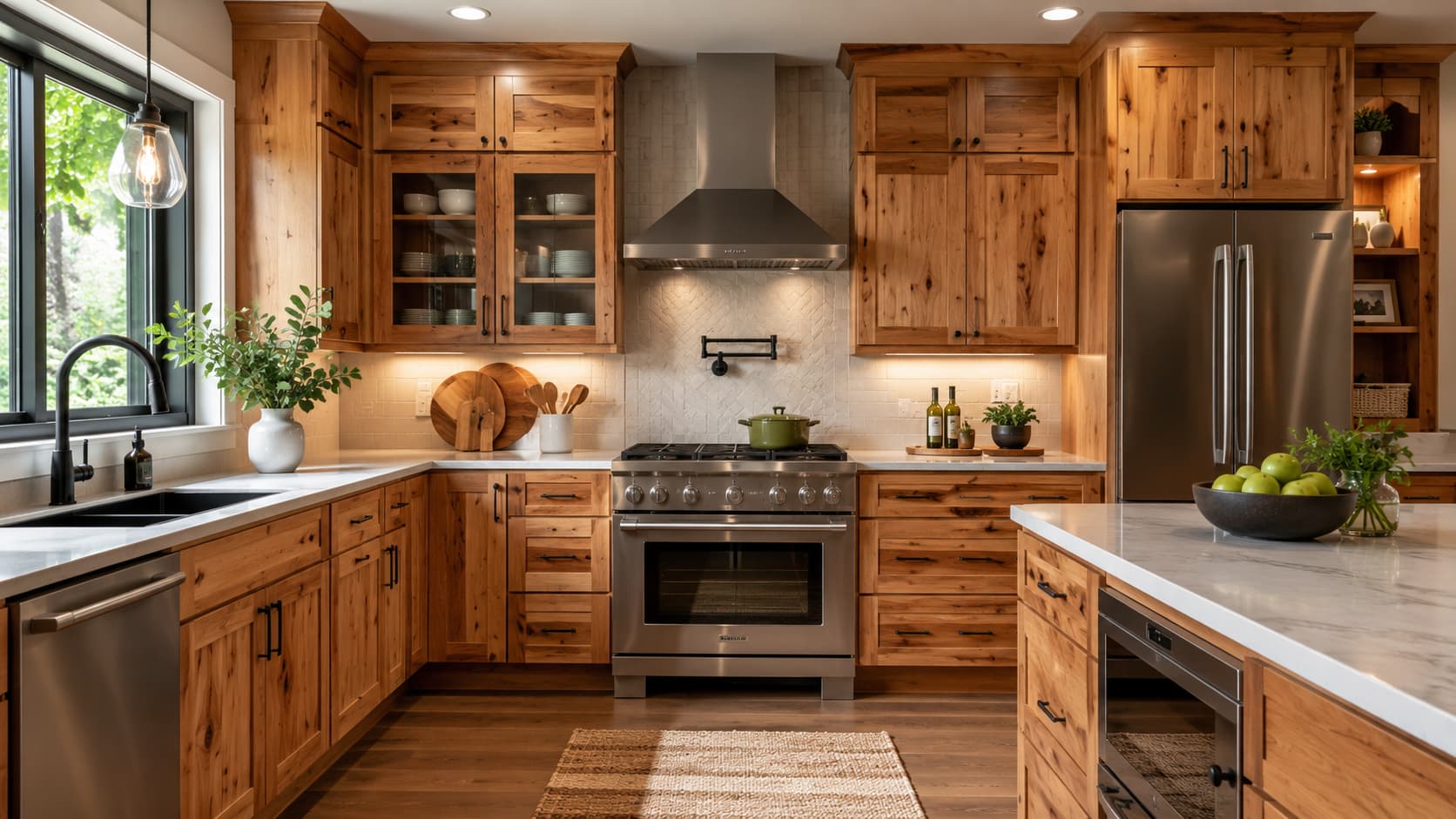
In contemporary kitchen design, it represents an aesthetic choice that emphasizes meticulously crafted natural beauty. The rustic appeal of cabinets stems not solely from their color, but more significantly from the texture and grain of the materials used. Key elements include:
- Distinct wood grain and knots
- Authentic feel of natural materials
- Distressed or hand-scraped surface finishes
- Warm and rustic tones
- Distressed or matte hardware
Based on my observations, most people who choose country-style cabinets are highly individualistic. Unlike modern minimalist cabinets that prioritize uniformity, country-style cabinets embrace natural textures, layered dimensions, and tactile appeal.
Pros and Cons of Rustic Style Cabinets
Before choosing custom furniture catalog in this style, it is essential to weigh its aesthetic advantages against the practicalities of interacting with textured wood in daily life.
The Pros
- Natural Visual Warmth: Rustic solid wood cabinets create a visual depth and warmth unmatched by painted cabinets. This warmth enhances comfort and home ambiance.
- Durability: Common rustic woods like oak and hickory rank high on the Janka hardness scale, offering exceptional wear resistance.
- Elegant Aging: Natural wood develops a patina over time, often enhancing its texture and elevating the overall cabinetry aesthetic.
- Design Flexibility: Rustic cabinets can be customized to complement farmhouse, cottage, transitional, industrial, and modern rustic interior styles.
The Cons
- Visually heavy: Dark wood cabinets may make a small kitchen feel cramped unless paired with light countertops and ample lighting.
- Higher material costs: Solid wood cabinets are typically more expensive than painted MDF or laminate cabinets, but offer superior quality.
- Textured maintenance: Distressed or textured finishes tend to accumulate dust or grease more easily than smooth surfaces, making them less easy to clean.
- Design Limitation Risk: Rustic cabinets rely heavily on material texture. Poor coordination with countertops or flooring may create visual clutter instead of warmth.
- Lighting Dependency: Dark rustic woods absorb light. Kitchens with insufficient natural lighting often require layered lighting design to avoid a heavy appearance.
Most Popular Woods and Finishes in 2026
To avoid discovering after customizing your kitchen that it isn’t your preferred style, selecting the right wood is crucial. According to Houzz’s 2026 U.S. Kitchen Trends Study, the following woods are market leaders for rustic designs:
White Oak:
- Data Insight: 51% of homeowners and designers renovating kitchens choose white oak.
- Characteristics: White oak features straighter, tighter grain than red oak and exhibits beautiful light sandy tones. When finished with a clear matte sealer, it becomes the standard choice for modern rustic styles.
Walnut
- Characteristics: Walnut is renowned for its rich chocolate tones and abundant grain variation. In 2026, walnut is rarely stained; its natural color contrast adds a touch of understated sophistication to rustic designs.
Knotty Alder
- Characteristics: Alder is a softer wood that stains easily. Its naturally abundant knots and grain make it ideal for crafting classic, textured rustic farmhouse kitchens.
How Much Do Rustic Kitchen Cabinets Cost?
Authentic rustic-style cabinets typically cost more than standard painted flat-panel cabinets. This is because selecting wood with the right grain and applying a hand-distressed finish requires skilled craftsmanship at every stage of production. Below is the average cost breakdown for 2026 (per linear foot, materials only):
| Tier | Material Focus | Estimated Cost | Best Suited For |
|---|---|---|---|
Budget |
Textured TFL / Laminate |
$150 – $350 |
Budget flips, rental properties, or high-wear family kitchens. |
Mid-Range |
Stock Knotty Oak / Alder |
$500 – $900 |
The “sweet spot” for most homeowners wanting real wood character. |
Luxury |
Premium White Oak / Walnut |
$1,000 – $1,800+ |
Custom homes requiring precise grain matching or hand-glazed finishes. |
Investment ROI: According to the established benchmarks in the Cost vs. Value Report, a “Minor Kitchen Remodel” focusing on updating cabinetry and surfaces yields a strong ROI, typically recouping 85% to 113% of costs. Modern rustic kitchens hold broad appeal, helping homes sell faster in the 2026 real estate market.
Why Rustic Cabinets Cost More Than Standard Cabinets
Unlike painted cabinets, rustic-style cabinets prioritize consistent grain patterns over uniformity when selecting wood. Processes like hand-distressing, brushing, or wire-brushing add 20% to 40% to labor costs, significantly impacting the final price. You can’t have your cake and eat it too—achieving a natural, high-quality distressed look inevitably comes at a premium.
Are Rustic Kitchen Cabinets Still in Style in 2026?
In 2026, rustic design remains highly adaptable. The following rustic cabinet styling ideas may catch your eye:
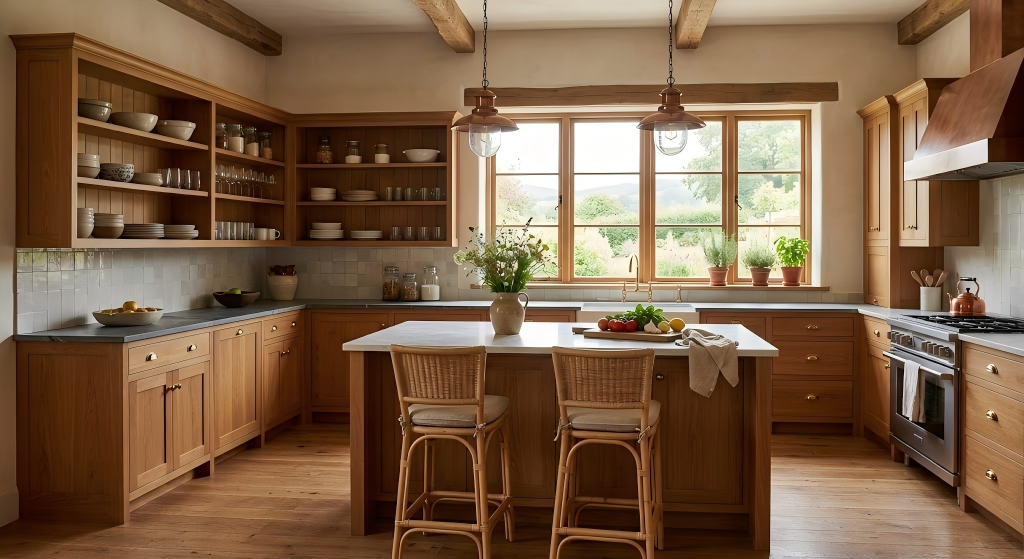
Modern Rustic
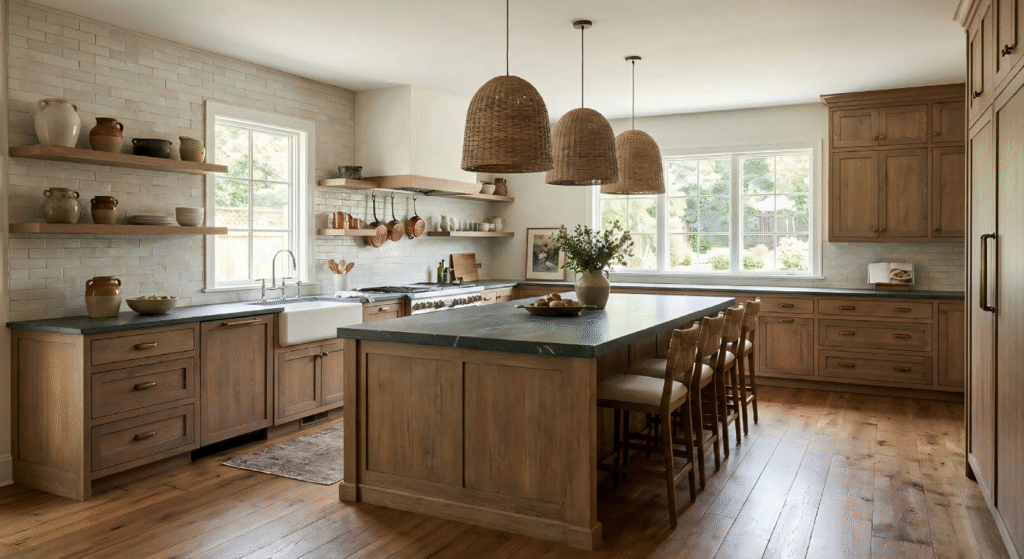
The modern rustic style blends contemporary minimalism. This design establishes the space’s foundation with textured reclaimed wood base cabinets. Paired with clean-lined island countertops and hardware, it creates an exquisitely elegant aesthetic.
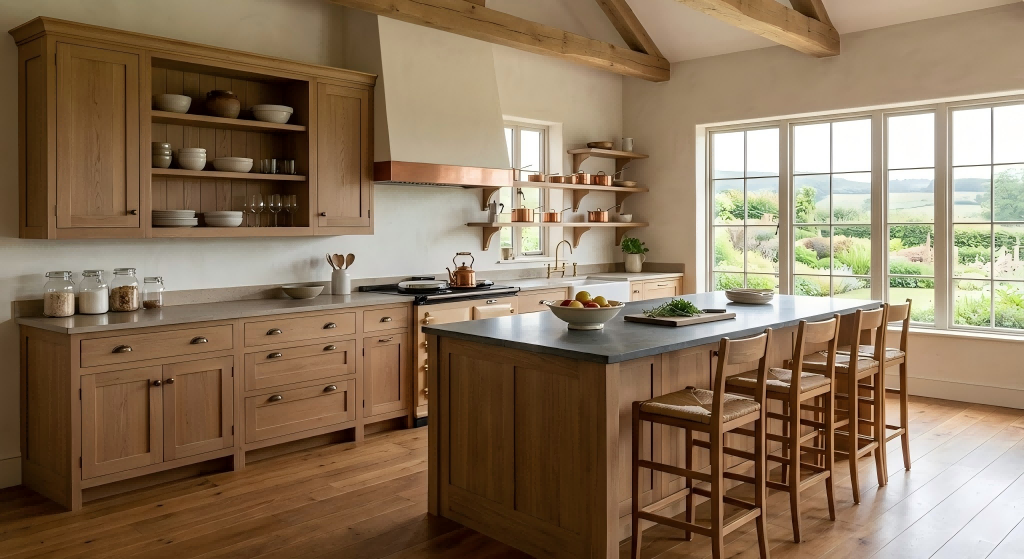
Farmhouse Rustic
This farmhouse style design blends aesthetic appeal with practical functionality. It features richly textured distressed wood cabinets with a classic white sink and nature-inspired marble splashback. A solid wood island with a marble countertop adds rustic
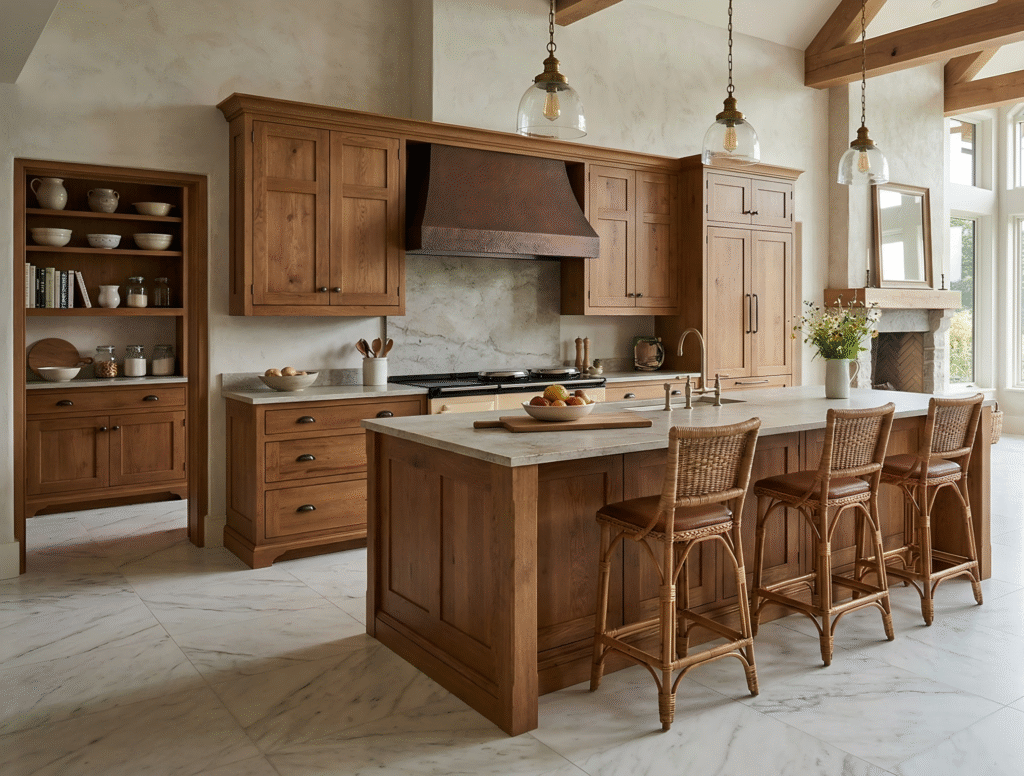
Lodge Rustic
A spacious kitchen with a mountain home feel, complete with brown effect wooden cabinets and huge exposed wooden trusses for a natural feel.
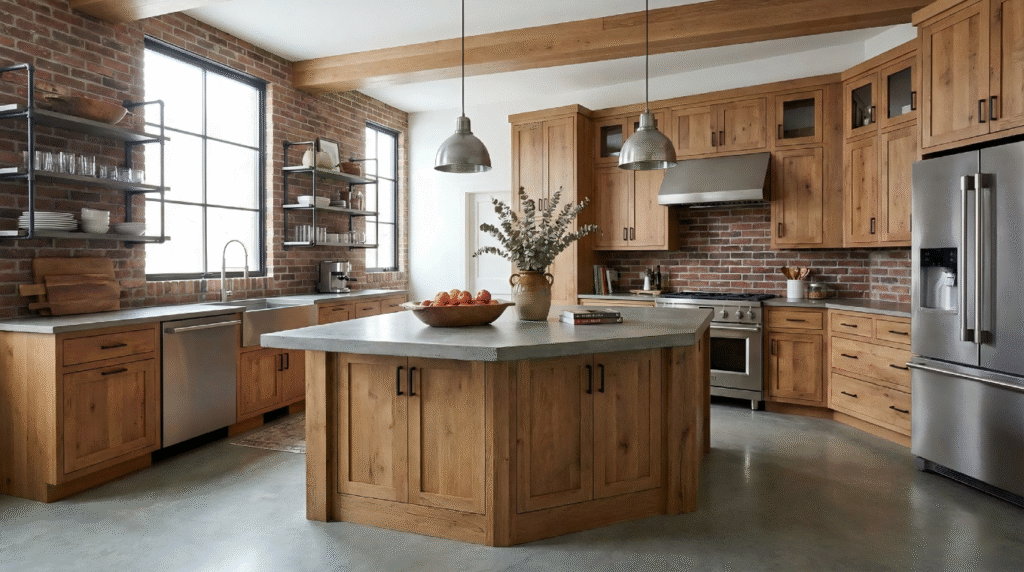
Industrial Rustic
The industrial rustic style blends the warmth of natural wood. This kitchen features exposed red brick walls as a backdrop, with natural wood cabinets paired with heavy concrete countertops and stainless steel appliances, creating a functional space.
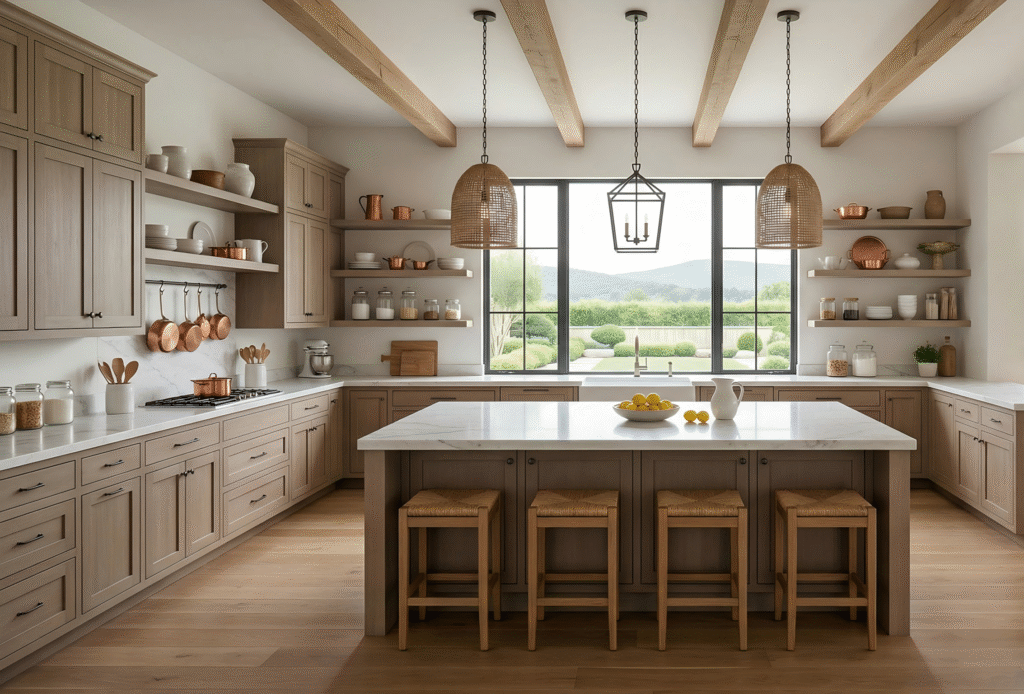
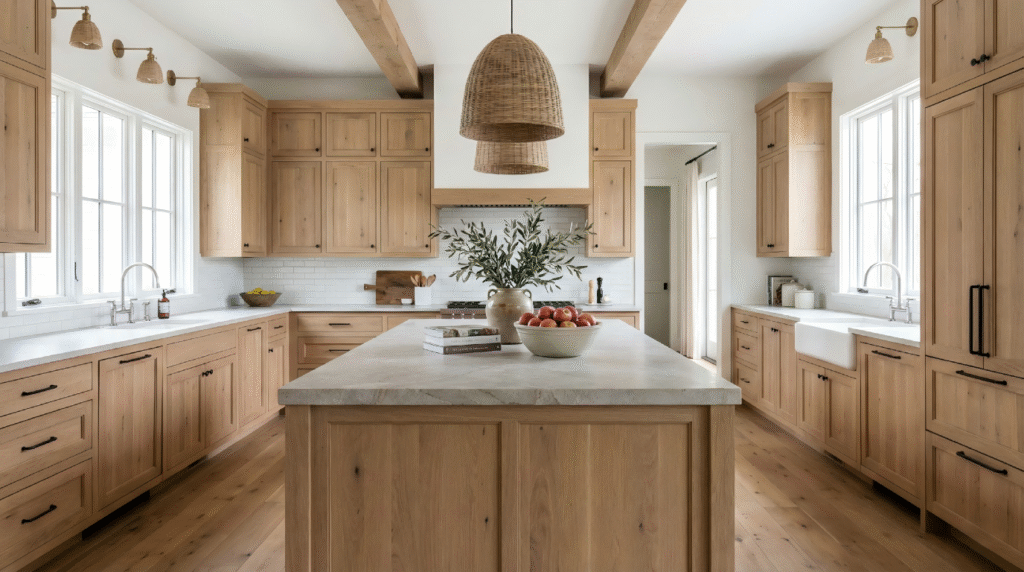
Light Rustic
The light country style reinterprets traditional cabin aesthetics with a fresh and bright approach. Featuring light-colored bleached oak cabinets paired with pristine white countertops and backsplashes, the design maximizes natural light reflection to cultivate a serene and organic ambiance.
How to Avoid a “Fake Rustic” Look
- Avoid cheap laminate finishes: Low-end wood-grain laminates look plastic, feel slippery, and peel easily. This is the quickest way to make your kitchen look fake.
- Avoid heavy dark glazes: The thick black glazes popular in the 1990s, which seeped into cabinet seams, are outdated. 2026 favors transparent matte finishes that let natural wood breathe.
- Watch for pattern repetition: Real wood grain is naturally beautiful. If you notice identical knots or repeating patterns every 12 inches on cabinet doors, it’s likely a laminate veneer rather than genuine solid wood.
- Material verification: Ensure retailers aren’t using particleboard or low-grade wood panels. The grain and texture of solid wood are unmatched—you can assess quality by tapping or examining the wood grain.
FAQ
A:No. Modern rustic remains aligned with current natural-material trends.
A:Often yes, particularly when using solid hardwood and custom finishes.
A:Textured finishes require slightly more maintenance than smooth surfaces.
A:High-quality natural wood kitchens typically maintain strong resale appeal.