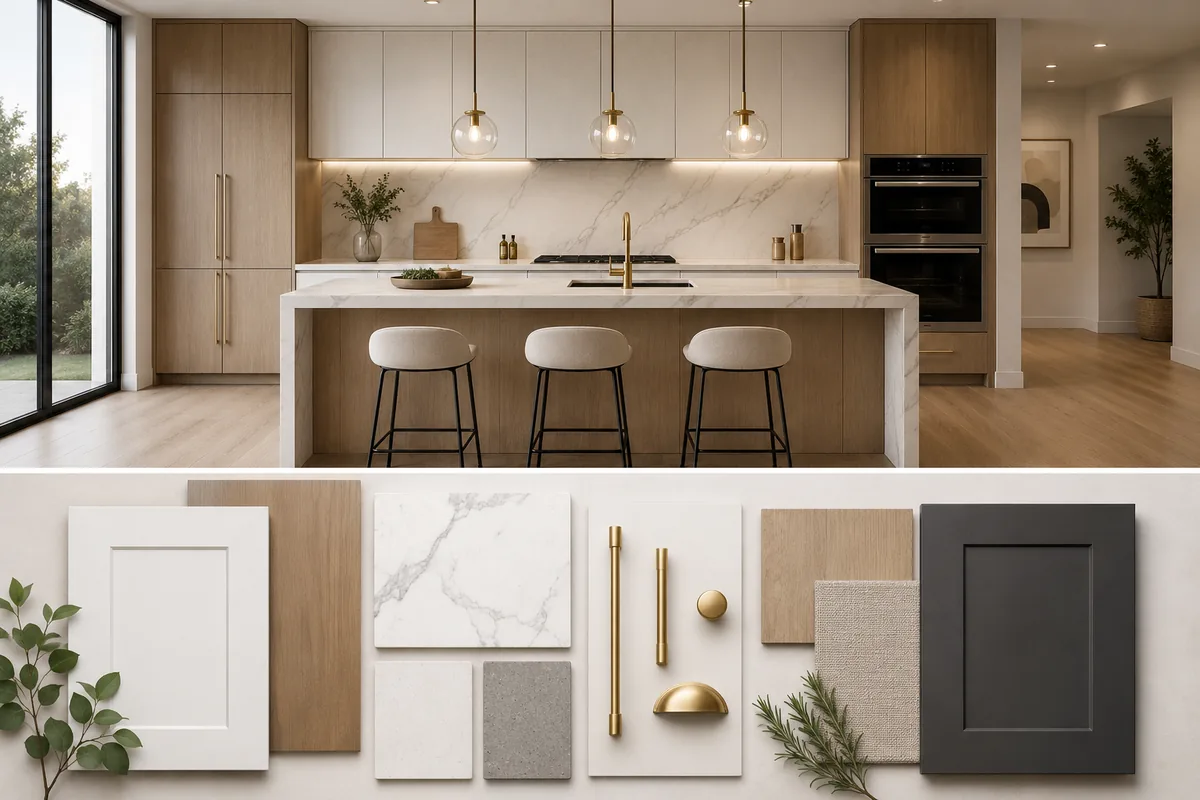
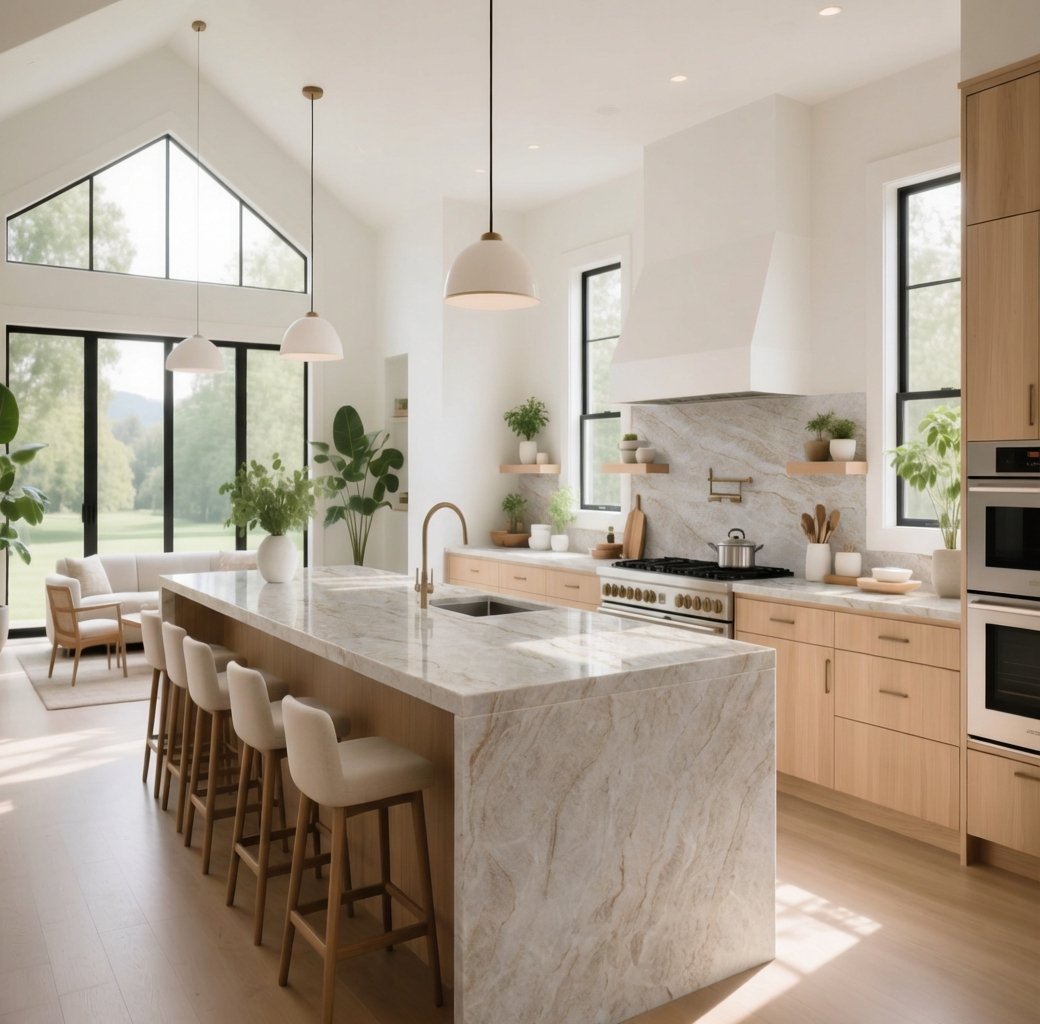
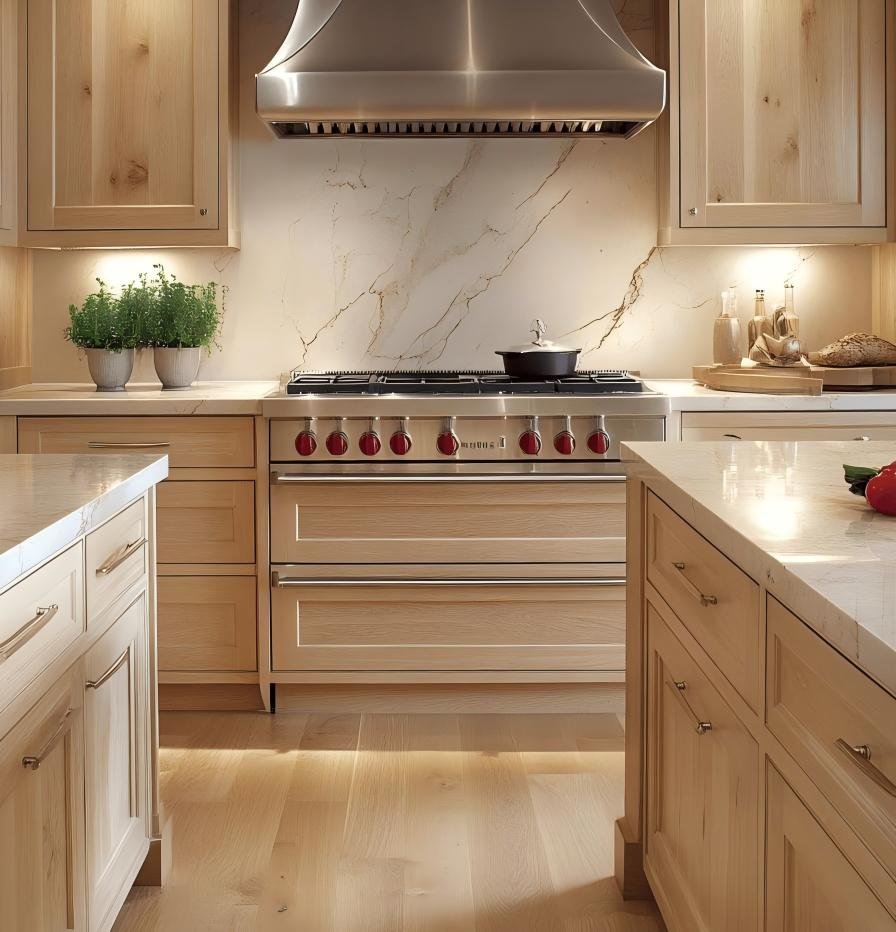
Quartz vs Granite vs Quartzite: How to Choose the Right Countertop Material
Quartz, granite, and quartzite are the three most common materials used in kitchen and bathroom projects. They are all very attractive and can last for many years, but they differ in maintenance requirements, heat and stain resistance, cost, and design consistency.
If you want a quick answer:
- If you want low maintenance, color stability, and easy cleaning: Choose quartz.
- If you want the look and feel of natural stone, heat resistance, and unique patterns: Choose granite.
- If you want sophisticated natural patterns, a marble-like effect, and a material better suited for high-end projects, choose quartzite.
This article compares the features of three countertop materials—Quartz, Granite, and Quartzite—to help you select the best one for your space, budget, and project needs.
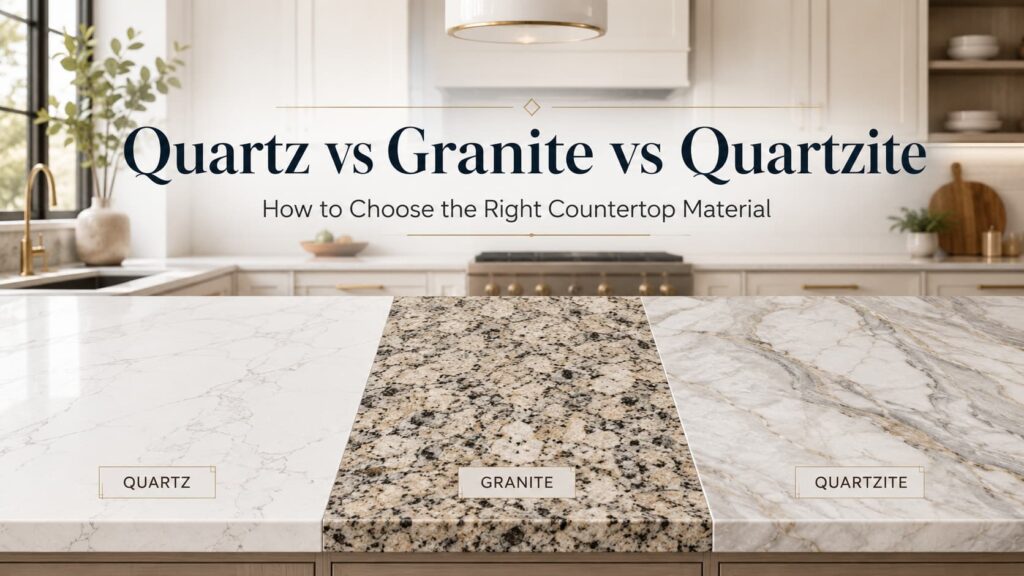
Quartz vs Granite vs Quartzite: Quick Comparison
| Factor | Quartz | Granite | Quartzite |
|---|---|---|---|
Material type |
Engineered stone |
Natural stone |
Natural stone |
Appearance |
Consistent colors and patterns |
Natural variation, often speckled or veined | |
Maintenance |
Low; no sealing required |
Medium; sealing usually recommended |
Medium; sealing usually recommended |
Heat resistance |
Good, but direct high heat can damage resin |
Strong |
Very strong |
Stain resistance |
Strong because it is non-porous |
Good if sealed |
Good if sealed |
Typical cost position |
Mid to high |
Mid to high |
Usually high |
Best for |
Busy kitchens, apartments, repeatable projects |
Natural stone kitchens and durable everyday use |
Luxury kitchens, statement islands, premium projects |
Quartz Countertops
Quartz countertops are engineered surfaces composed of quartz particles, resin, and pigments. Since quartz is manufactured, it is available in a wide range of colors and patterns, including designs that imitate marble, granite, and other natural stones.
Benefits of Quartz
- Low maintenance and easy to clean
- Non-porous surface that does not need sealing
- Strong stain resistance for kitchens and bathrooms
- Consistent color and pattern from slab to slab
- Wide design range for modern, classic, and commercial interiors
Things to Consider
Quartz isn’t the ideal choice for environments exposed to high temperatures. Hot pans, direct sunlight, or outdoor use can cause some quartz surfaces to fade, especially if the product isn’t made for outdoor use. Quartz is best suited for buyers who want a clean look, customizable patterns, and easy daily maintenance.
Granite Countertops
Granite is a natural stone that is cut into slabs and polished for use as countertops. It has been popular for many years because it is durable, heat-resistant, and available in a variety of natural colors and patterns.
Benefits of Granite
- Strong heat resistance
- Durable natural stone surface
- Unique patterns and color variation
- Suitable for kitchens, bathrooms, and some outdoor areas
- Long lifespan when properly sealed and maintained
Things to Consider
Granite is porous, so it is generally recommended to seal it. If left unsealed, oil, wine, or acidic liquids may cause stains. Granite also has natural variations, so when color matching is important, buyers should verify the slabs before they are cut. Granite is ideal for buyers who want a countertop made of authentic natural stone.
Quartzite Countertops
Quartzite is a natural stone created from sandstone through heat and pressure. It is popular because it looks like marble but offers better durability and heat resistance.
Benefits of Quartzite
- Premium natural stone appearance
- Strong heat resistance
- Unique veining and slab character
- Good option for luxury kitchens and statement islands
- More durable than marble in many countertop applications
Things to Consider
Quartzite generally costs more than many quartz and granite options. It also needs sealing to help prevent stains. Since each slab is unique, it’s important to inspect it before installation. Quartzite is ideal for buyers who want the appearance of high-end natural stone and are prepared for the extra costs and upkeep.
Cost: Quartz vs Granite vs Quartzite
Cost depends on slab quality, thickness, origin, fabrication, installation, and local market. Published reference ranges vary:
- Better Homes & Gardens reports that quartz and granite both start around $80 per square foot, with quartz reaching about $140 and granite exceeding $175 in some cases.
- House Beautiful reports quartz around $55–$90 per square foot and quartzite around $90–$150 per square foot.
- The Spruce lists quartz around $50–$150 per square foot.
- Better Homes & Gardens lists quartzite around $80–$210 per square foot.
| Budget factor | Best choice |
|---|---|
Lowest maintenance cost |
Quartz |
Broad natural stone price range |
Granite |
Premium natural stone budget |
Quartzite |
Multi-unit consistency |
Quartz |
Luxury single-stone feature |
Quartzite |
Durability and Maintenance Comparison
| Performance factor | Quartz | Granite | Quartzite |
|---|---|---|---|
Scratch resistance |
Strong |
Strong |
Very strong |
Heat resistance |
Moderate to good |
Strong |
Very strong |
Stain resistance |
Strong |
Good if sealed |
Good if sealed |
Sealing required |
No |
Usually yes |
Usually yes |
Daily cleaning |
Easy |
Easy with stone-safe cleaner |
Easy with stone-safe cleaner |
Pattern consistency |
High |
Medium |
Low to medium |
Quartz is generally the easiest to maintain. Granite is very strong, but it depends on sealing. Quartzite is durable and heat-resistant, but it still needs proper sealing and care.
Which One Should You Choose?
Choose Quartz If You Want Low Maintenance
Quartz is usually the best option for busy kitchens, rental homes, apartment projects, and buyers who want a consistent design without sealing.
Choose Granite If You Want Durable Natural Stone
Choose Granite If You Want Durable Natural Stone
Choose Quartzite If You Want a Premium Natural Look
Quartzite is ideal for luxury kitchens, villas, feature islands, and projects where natural veining is a key design point.
Best Uses by Project Type
Most countertop guides compare materials generally. For real projects, the better question is where the countertop will be used.
| Project type | Better choice | Why |
|---|---|---|
Busy family kitchen |
Quartz |
Easy cleaning and no sealing |
Natural stone kitchen |
Granite |
Durable and heat-resistant |
Luxury villa island |
Quartzite |
Premium veining and natural character |
Bathroom vanity |
Quartz or quartzite |
Quartz for low maintenance; quartzite for luxury look |
Semi-outdoor area |
Granite or quartzite |
Better heat and UV tolerance than standard quartz |
Apartment or hotel package |
Quartz |
Easier pattern consistency across many rooms |
Cost Factors Buyers Often Miss
The slab price is not the full project cost. Before choosing quartz, granite, or quartzite, check:
- Edge profile cost
- Sink and cooktop cut-out cost
- Backsplash and waterfall side panels
- Sealing requirements
- Slab matching difficulty
- Crate packing and shipping protection
- Future replacement availability
This is especially important for import projects or multi-room projects, where matching, packaging, and damage control can impact the final time and cost estimates.
Checklist Before Ordering Countertops
Before confirming production, buyers should prepare:
- Final countertop dimensions
- Slab thickness
- Surface finish
- Edge profile
- Sink, faucet, and cooktop cut-out drawings
- Slab photos or videos for approval
- Sealing requirement
- Packing method
- Installation environment: indoor, outdoor, kitchen, bathroom, or commercial use
This checklist helps avoid common problems such as mismatched slabs, wrong cut-outs, unclear edge details, and unexpected installation costs.
How YoloDeco Can Help
- YoloDeco offers free assistance to homeowners, designers, contractors, developers, and other buyers in comparing countertop materials and coordinating custom building products for kitchens, bathrooms, villas, apartments, hotels, and commercial spaces.
- For countertop projects, we can assist you with selecting materials, confirming dimensions, choosing finishes, detailing edges, matching cabinets, bathroom products, tiles, and coordinating delivery—all at no cost.
- If you’re planning a project, please send us your drawings, measurements, reference photos, quantities, and target budget. We can help recommend suitable options for quartz, granite, quartzite, marble, or other stones.
FAQ
Is quartz better than granite?
Quartz is better for low maintenance and consistent design. Granite is better if you prefer natural stone, heat resistance, and unique slab patterns.
Is quartzite better than quartz?
Quartzite is better for natural veining and heat resistance. Quartz is better for easier maintenance and consistent patterns.
Which is more expensive: quartz, granite, or quartzite?
Quartzite is often the most expensive, but prices vary by slab quality, origin, fabrication, and installation. Granite and quartz can overlap in price.
Which material is easiest to maintain?
Quartz is usually the easiest because it is non-porous and does not need sealing.
Which countertop is best for a luxury kitchen?
Quartzite is often the best choice for a luxury kitchen island or statement countertop. Quartz is better if the buyer wants low maintenance and a more consistent look.
Conclusion
Quartz, granite, and quartzite all make excellent countertop materials. The best choice depends on what matters most to you for your project. Choose quartz for low maintenance and consistent design. Opt for granite if you want a durable natural stone with strong heat resistance. Select quartzite for its high-quality natural veining and luxurious look. To make the best decision, compare not only appearance and price but also maintenance, sealing, heat resistance, slab matching, fabrication details, and installation requirements.