The Ultimate Guide: A Comprehensive Overview of Standard Door Height and Dimension
When purchasing, renovating, or replacing residential doors, many people’s first concern is the standard door height. For most homes, the standard door height is 80 inches (6 feet 8 inches), approximately 203 centimeters.
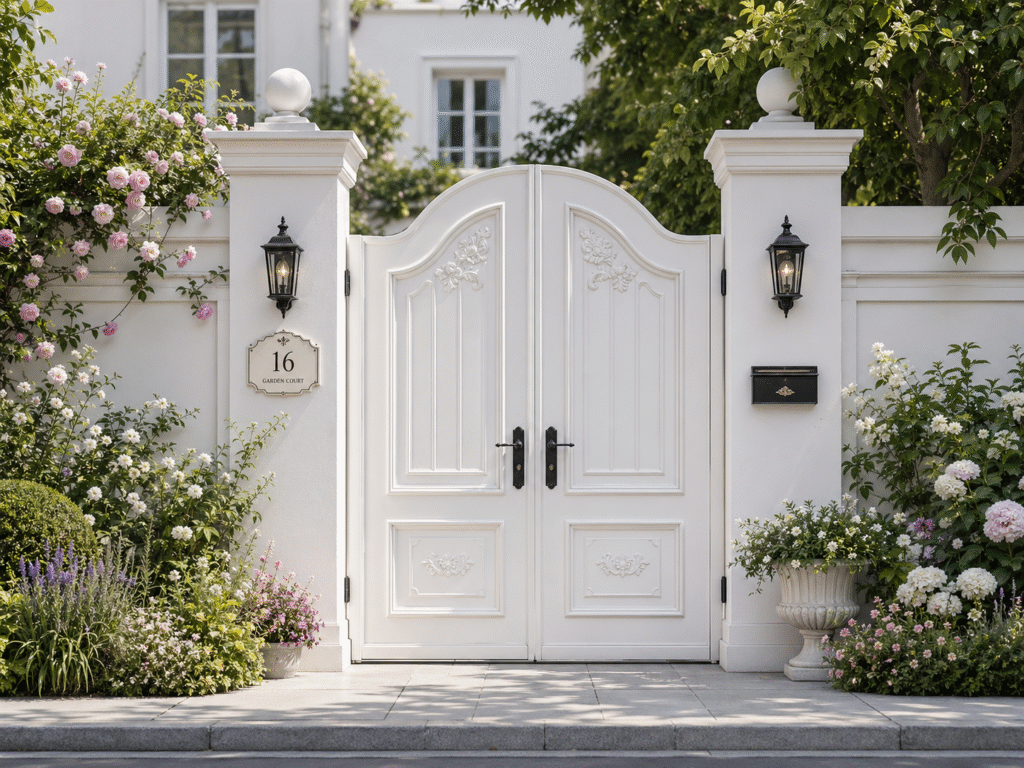
However, door dimensions are not determined solely by height. The width, thickness, opening style, building codes, and accessibility requirements for different door types all influence the final choice. This article will cover interior doors, exterior doors, specialty door types, accessibility standards, and measurement methods to help you gain a comprehensive understanding of standard door dimensions.
The most common standard sizes for interior doors
- The standard height for interior residential doors is 80 inches, or 6 feet 8 inches. This height is widely used for bedroom, bathroom, study, hallway, and closet doors, among others.
- The 80-inch height has become the standard door height because it aligns with typical home ceiling heights and meets everyday access needs. It does not feel oppressive, and it is convenient to source, transport, and install.
- Of course, not all interior doors need to be 80 inches tall. In homes with high ceilings, modern-style homes, or custom-built homes, 84-inch or 96-inch doors may be used to make the space feel more spacious and stylish.
Standard door height for interior doors
The most common width for interior doors is 30 inches. As a result, bedroom and bathroom doors in many standard homes are 30 x 80 inches. Other common interior door widths include:
- 24 inches: Commonly used for closets, small storage rooms, or narrow spaces
- 28 inches: Suitable for small bathrooms, guest bedrooms, or utility rooms
- 30 inches: One of the most common interior door widths
- 32 inches: Better suited for comfortable passage
- 36 inches: Suitable for barrier-free access, master bedrooms, or spaces where large items need to be moved
If you have elderly family members, children, or wheelchair users in your household, or if you’d like your home to be more accessible in the future, we recommend prioritizing wider doorways, such as 32- or 36-inch openings.
Standard door size for Interior Doors
In addition to standard door heights, the dimensions of interior doors are another key factor that affects functionality, traffic flow, and the overall proportions of a space. While most interior doors in residential homes adhere to standard sizes, the ideal dimensions should still be determined based on the room type and design style.
| Door Type | Standard Width | Standard Thickness |
|---|---|---|
Bedroom Door |
30”–36” |
1 3/8” |
Bathroom Door |
28”–32” |
1 3/8” |
Closet Door |
24”–30” |
1 3/8” |
Double Interior Door |
60”–72” |
1 3/4” |
The Three Main Types of Exterior Doors and Standard Door Heights
Exterior doors not only serve as entryways but also influence a home’s security, insulation, water resistance, and overall appearance. Common exterior doors fall into three main categories: entry doors, French doors, and sliding patio doors.
Entry Door standard door height
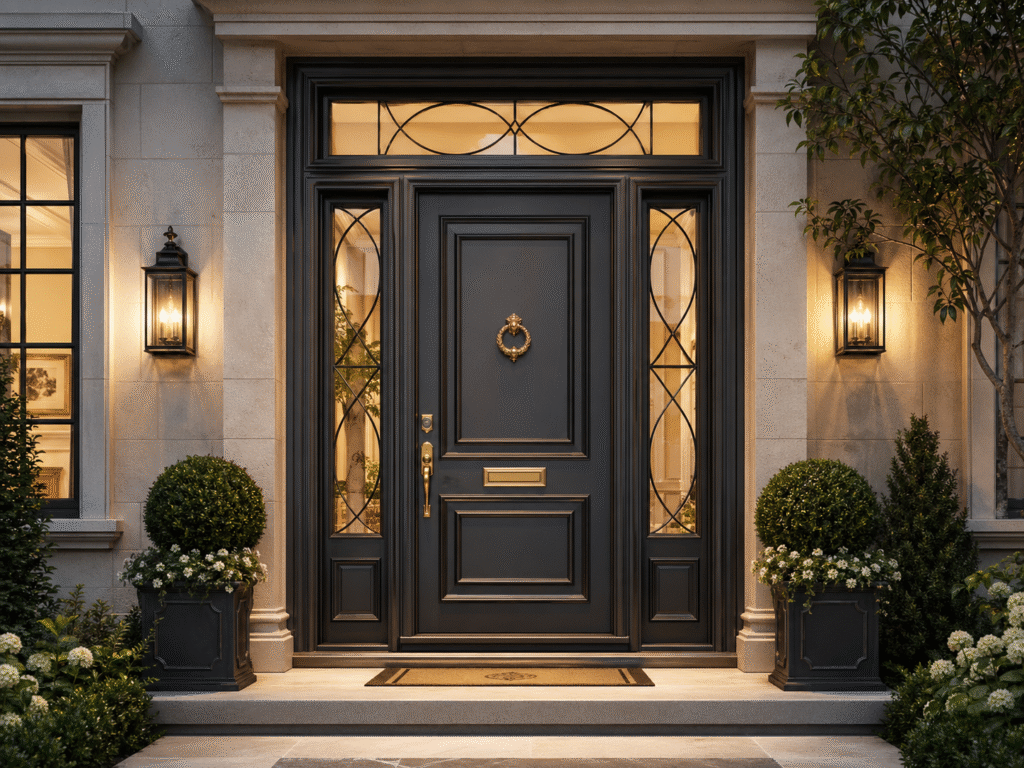
The entry door is the most important exterior door in a home. Standard entry door dimensions are 36 inches wide by 80 inches high. Compared to standard interior doors, entry doors are typically wider, thicker, and more robust. The 36-inch width provides a more comfortable passageway and makes it easier to move furniture, appliances, and large items.
French Door standard door height
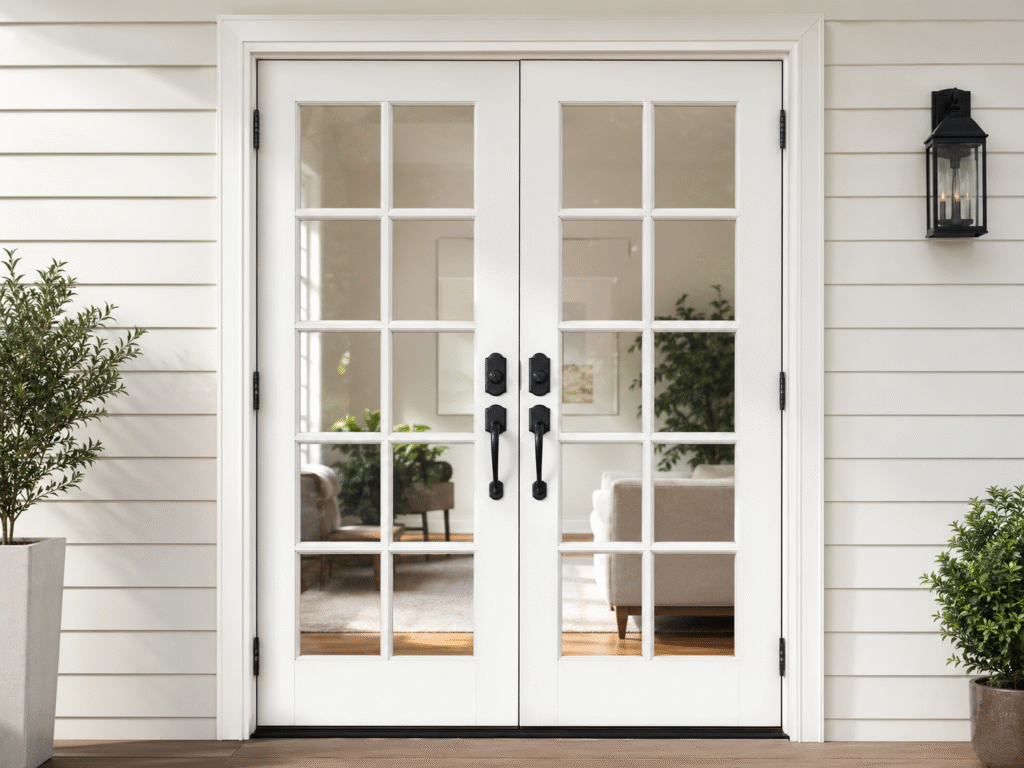
French doors are commonly used in courtyards, balconies, patios, or areas connecting indoor and outdoor spaces. When used as exterior doors, the standard dimensions for a single-panel French door are 80 inches high by 36 inches wide. For double-panel French doors, the total width is calculated based on the width of each panel.
Sliding Patio Door standard door height
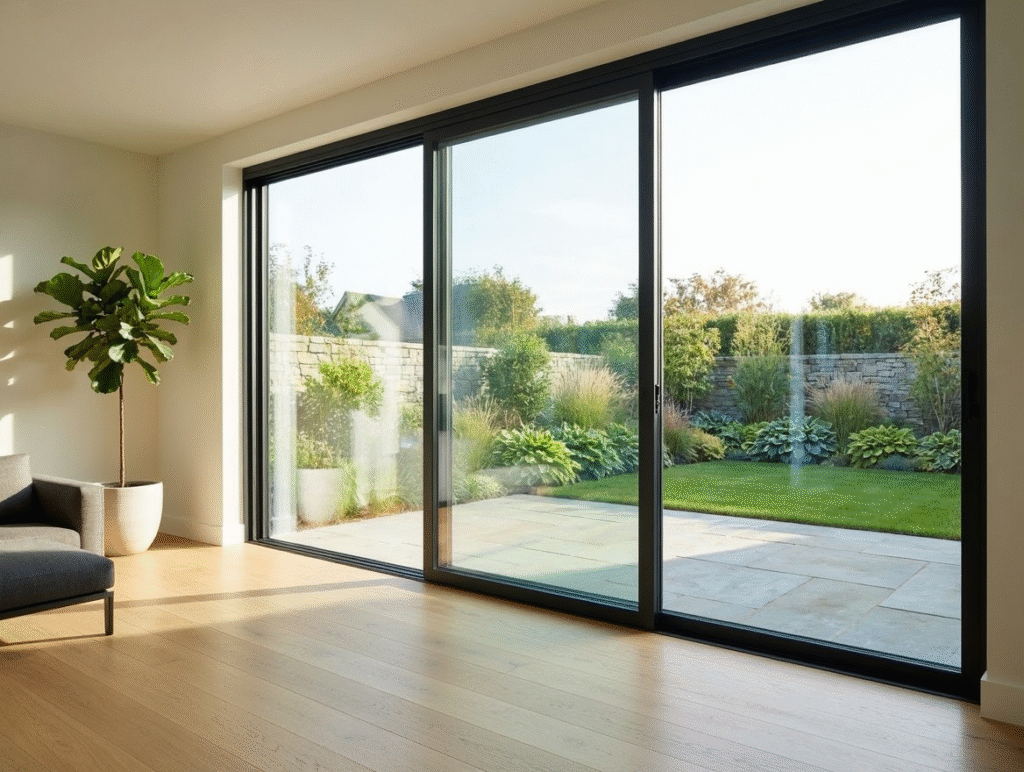
Sliding patio doors are commonly found in living rooms, dining rooms, backyard entrances, and sunrooms. Their standard dimensions are typically 6 feet wide by 6 feet 8 inches high. Sliding patio doors typically feature fixed and sliding glass panels, providing excellent natural light and an unobstructed view.
Special Types of Doors and Sizes
In addition to standard interior and exterior doors, homes also feature specialized door types, such as closet, utility room, and equipment room doors. The dimensions of these doors depend more on the actual opening and the installation method.
Standard door height for wardrobe doors
Standard wardrobe door widths typically start at 24 inches, and the height is usually 80 inches. Therefore, 24 x 80 inches is one of the most common wardrobe door sizes. However, dimensions vary by the type of wardrobe door. Common types include:
- Hinged wardrobe doors
- Folding wardrobe doors
- Sliding wardrobe doors
If you’re installing sliding wardrobe doors, you’ll also need to consider the track width and overlap. Before purchasing, measure the width and height of the wardrobe opening, as well as the wall’s vertical alignment, to ensure the doors open and close smoothly once installed.
Standard door height for the storage room
- There is typically no single standard for the dimensions of utility room doors or storage room doors; the size must be determined based on the opening dimensions and installation method. For standard flush-mounted swing doors, the size should be determined by the door frame and the rough opening.
- For sliding doors that cover the entire opening, or for utility doors resembling barn doors, the door panel typically needs to be larger than the opening. A common practice is to make the door panel about 2 inches wider and 1 inch taller than the opening. This ensures the door covers the opening more completely when closed, minimizes gaps along the edges, and enhances visual integrity.
Accessibility Features and Building Code Requirements
Door dimensions not only affect the aesthetic outcome of a renovation but may also impact accessibility and compliance with building safety codes. It is particularly important to familiarize yourself with the relevant requirements in advance for multi-unit residential buildings, rental properties, public spaces, or homes requiring age-friendly design.
Fair Housing Act Design Manual
- According to the HUD Fair Housing Act Design Manual, in housing covered by the Fair Housing Act, accessible doors in common and shared areas, as well as the main entrance doors to residential units, must comply with the applicable clear-opening width requirements.
- A commonly cited figure in the literature is 32 inches. It is important to note that the focus here is typically on the clear-opening width, not simply the door panel’s width. For swing doors, when the door is opened to 90 degrees, the door panel, door jamb, and hardware all occupy space, so the actual clear width may be less than the door panel’s nominal width.
- Therefore, to ensure better accessibility, entry doors are typically chosen to be 36 inches wide rather than 32 inches.
Residential doors comply with ADA standards
ADA standards also emphasize the clear width of doors. A common requirement is that the clear width must be at least 32 inches when the door is opened to 90 degrees. An ADA-compliant door must not only be “wide enough,” but also meet the following criteria:
- Whether the threshold is too high
- Whether there is sufficient maneuvering space in front of the door
- Whether the door handle is easy to operate
- Whether the door requires excessive force to open
- Whether a wheelchair can pass through and turn smoothly
Therefore, in accessible residential design, the height, width, threshold, hardware, and traffic flow of doors should all be planned together.
International Building Code (IBC)/International Residential Code (IRC)
- The IBC and IRC are important code systems commonly used in U.S. construction that govern requirements for residential entrances, emergency exits, door openings, and emergency access.
- For standard residential homes, main entry doors are typically wider, such as 36 x 80 inches. However, when constructing new homes, enlarging door openings, relocating exterior doors, or adjusting escape routes, one should not rely solely on standard dimensions; compliance with local building codes must also be verified.
- Since enforcement requirements may vary by state, city, or project type, it is recommended to consult with local building authorities, contractors, or professional installers before beginning construction.
How to Measure Door Dimensions
Before replacing a door, it’s crucial to take accurate measurements. It’s not enough to know that the standard door height is 80 inches; you also need to confirm the width, thickness, door frame, and opening direction.
- First, measure the height of the door panel: Measure from the top of the door panel to the bottom and record the actual height. The standard height is 80 inches, but older homes may have non-standard dimensions.
- Second, measure the width of the door panel: Measure the top, middle, and bottom of the panel separately. If the three measurements differ, use the smallest value as your reference.
- Third, measure the door thickness: Interior doors are typically about 1 3/8 inches thick, while exterior doors are typically about 1 3/4 inches thick. Door thickness affects the compatibility of hinges, door locks, smart locks, and door frames.
- Fourth, determine the direction in which the door opens. You need to determine whether it opens to the left or right and whether it opens inward or outward. This is particularly important for exterior, bedroom, and bathroom doors.
- Fifth, distinguish among door panels, pre-hung doors, and rough openings. If you are replacing only the door panel, measure the original panel’s dimensions. If you are replacing the entire door, measure the door frame and the rough opening. If the door frame is warped, it is usually better to replace it with a pre-hung door.
Rough Opening Sizes: Framing for a 36-Inch Door (and Other Widths)
Once you have picked a door size, the next job-site question is how large to frame the rough opening. For a standard prehung door, the rule of thumb is: rough opening width = door width + 2 inches; rough opening height = door height + 2.5 inches. A 36″ x 80″ door therefore needs a 38″ x 82.5″ rough opening.
- Width (+2″): 1-1/2″ of door frame (3/4″ jamb on each side) plus 1/2″ total shimming allowance to plumb and square the jambs.
- Height (+2.5″): 3/4″ top jamb, 3/4″ shimming at the head, and roughly 1″ of floor clearance so the door swings clear of carpet, tile transitions, and thresholds.
The margin is not wasted space. Studs on a real job site are rarely plumb: the shim gap lets you true the frame, keeps the frame from carrying structural load as the house settles, and leaves room for low-expansion foam to seal drafts.
Rough Openings by Door System
| Door System | Nominal Size | Rough Opening | Key Clearance Note |
|---|---|---|---|
| Common prehung wood door | 36″ x 80″ | 38″ x 82.5″ | Standard 2″ width & 2.5″ height shimming allowance |
| Masonite exterior single inswing | 36″ x 80″ | 38.25″ x 82.125″ | Check the manufacturer spec sheet |
| Hollow-metal KD (knock-down) frame | 36″ x 80″ | 38″ x 81″ | Clamps over drywall studs; tight vertical tolerance |
| Hollow-metal welded masonry frame | 36″ x 80″ | 40.25″ x 82.25″ | Extra-wide cavity for anchors and mortar joints |
Common exceptions: a 36-inch pocket door needs a much wider opening — typically 73 to 75 inches, roughly double the door width — because the panel slides into the wall; always follow the hardware kit instructions. Rough opening height is measured from the subfloor, so thick finish flooring (hardwood, or tile with underfloor heating) may require added height. If the opening sits in a load-bearing wall, a structural header is required above the span, even for an interior door.
Conclusion: How to Choose the Right Standard Door Height
For most homes, the standard door height is 80 inches, or 6 feet 8 inches. The right door dimensions should meet functional, safety, code, and aesthetic requirements. Before purchasing, be sure to measure the door height, width, thickness, door frame, opening, and swing direction to avoid buying the wrong size and ensure your new door is a perfect fit for your home.
Still confused about how height and dimensions fit together?
- Even with standard data in hand, errors can still occur during implementation. If you’re unsure how to select the right door width, thickness, or material, you don’t have to face these technical challenges alone.
- The YOLODECO team has more than a decade of hands-on experience in custom door and window design, helping you avoid costly trial and error. Whether you’re working on a single-family home or a commercial apartment complex, feel free to contact YOLODECO’s project experts at any time.
Don't know how to contact us?
Ordering doors for a project? George Group builds custom interior and exterior doors to your exact opening sizes — prehung, with jambs and hardware matched.