Complete Appliance Garage Design Guide for Kitchens
Imagine this: One morning, you simply push open an invisible wooden door to find your aromatic coffee maker, toaster, and juicer quietly waiting under the light for your use. After finishing, close the door, and the kitchen countertop and cabinets seamlessly return to their minimalist state. This isn’t just the magic of design—it’s the effortless lifestyle Appliance Garage delivers.
What Is an Appliance Garage?
An appliance garage is a specially designed enclosed storage space within kitchen cabinets. It is commonly used to store small appliances such as blenders, coffee makers, and toasters.
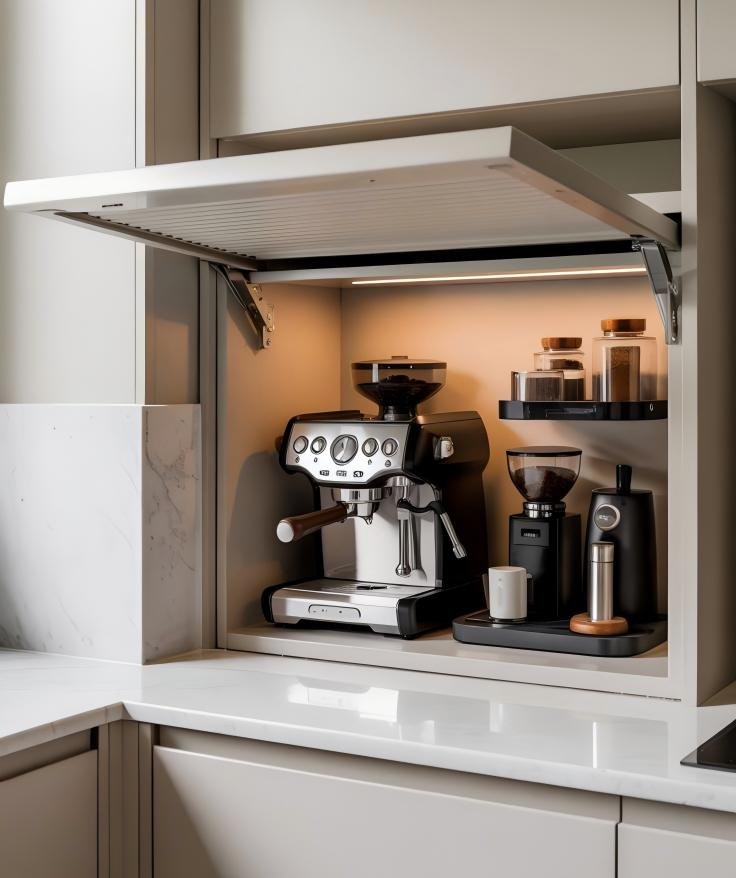
Unlike traditional open shelving, appliance cabinets feature doors—typically folding doors or electrically controlled sliding doors. This design effectively conceals items while ensuring convenient daily access. Originating from the dual demands of functionality and aesthetics in high-end kitchens, this innovative concept has evolved from simple concealment to customizable central hubs. Today, these hubs integrate power outlets, lighting, and even ventilation systems.
The Core Value of an Appliance Garage
According to the 2026 Kitchen Trends Report released by the National Kitchen and Bath Association (NKBA), over 68% of homeowners prioritize concealed appliance storage during kitchen renovations. If you happen to be among them, its value extends far beyond aesthetics:
Creating a “Hidden Kitchen” Aesthetic
The essence of high-end kitchen design lies in striking a balance between display and concealment. Mismatched appliances scattered across countertops can easily disrupt the elegant aesthetic of quartz or marble surfaces. Appliance storage cabinets can cleverly hide these cluttered items, maintaining visual continuity throughout the space.
Improving Kitchen Workflow Efficiency
Beyond aesthetics, appliance storage cabinets also enhance kitchen workflow efficiency. Placing appliances near functional zones not only makes them easily accessible but also prevents disruptions during cooking. Furthermore, concentrating small appliances in one area within a busy kitchen avoids the chaos of constant movement, ensuring high efficiency.
Enhances Protection and Longevity for Premium Appliances
For small appliances and tableware, appliance storage cabinets effectively shield items from dust and cooking grease buildup. Additionally, concealing electric heating devices within cabinets featuring soft-close doors minimizes exposure to moisture and sunlight oxidation while providing extra safety features—such as preventing children from accidentally accessing knives.
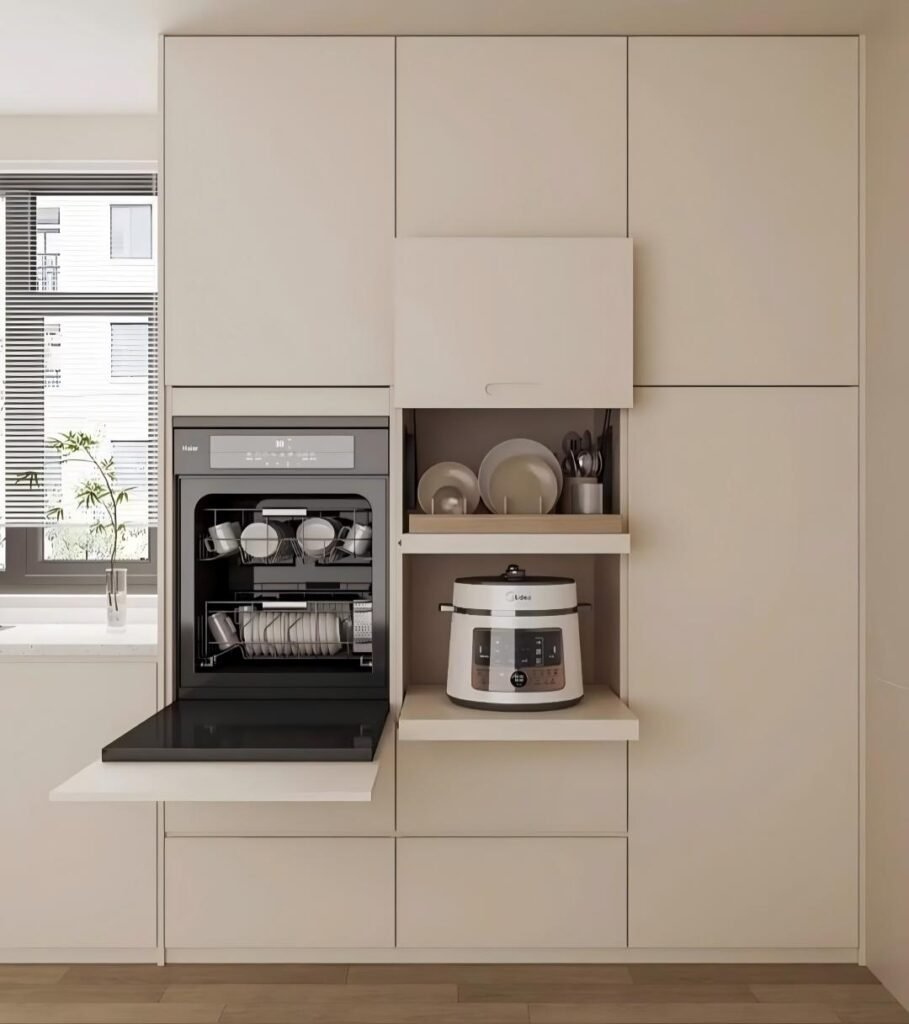
Why Use an Appliance Garage?
An appliance garage improves both the visual appearance and usability of a kitchen. It allows frequently used appliances to remain accessible while reducing countertop clutter.
Key advantages include:
- Cleaner and more organized kitchen surfaces
- Better protection for appliances from dust and grease
- Efficient use of corner or unused cabinet space
- Improved workflow in daily cooking routines
Hidden Custom Details That Impact the Cost
The true determinants of quality and primary costs lie in the structural elements concealed behind the door:
Accurate Space and Clearance Measurement
This isn’t just about the cabinet’s external dimensions; it requires precise calculations of your current and future appliances’ measurements. For instance, an espresso machine with a steam wand demands specific overhead clearance. Designing for such non-standard dimensions tests the factory’s custom manufacturing capabilities and naturally impacts costs.
Electrical Planning and Wiring
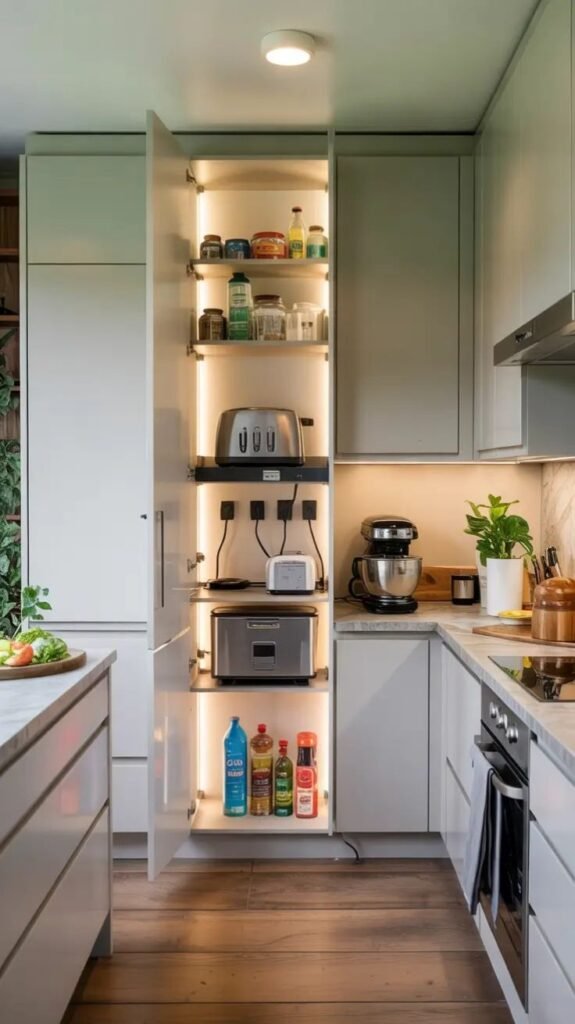
A well-designed appliance cabinet should never rely on extension cords. It requires multiple dedicated power outlets installed internally, and sometimes even plumbing connections reserved for coffee machines. This necessitates specific filtering and moisture-proofing treatments, along with customized wiring based on the cabinet’s back panel.
Crucial Details: Ventilation and Heat Dissipation
This is where many low-cost solutions primarily fail. Coffee makers and ovens generate significant heat and steam. High-quality custom solutions must incorporate concealed ventilation grilles or micro-exhaust systems within cabinet interiors to prevent wood finishes from overheating damage or internal moisture buildup that compromises overall cabinet quality.
Motorized Door Systems
Some premium appliance garages use electric lift doors or motorized tambour doors that open with a touch button or smartphone control, adding convenience but increasing hardware and installation costs.
What is the Price Range of an Appliance Garage?
Based on the three points above, we now understand the general factors influencing price. So where exactly does the price range fall? A high-quality custom integrated appliance cabinet typically costs between $1,500 and over $4,500. To help you understand where your budget goes, here’s a brief breakdown:
| Custom Feature | Basic | High-End | Est. Cost Impact |
|---|---|---|---|
Sizing & Clearance |
Fixed dimensions; wasted space |
Tailored to fit your specific appliances |
+$300 – $800 |
Door Hardware |
Exposed hinges; blocks counter |
Smooth pocket doors or manual tambour |
+$500 – $1,500 |
Motorized Systems |
Manual operation only |
Electric tambour or smart motorized lift-up doors |
+$800 – $2,000 |
Electrical Setup |
Messy extension cords |
Pre-wired internal 15A/20A outlets |
+$200 – $500 |
Ventilation |
Closed box; risk of heat damage |
Hidden exhaust grilles for safety |
+$300 – $600 |
Custom Appliance Garages by YoloDeco
High-end appliance organizers equipped with sliding doors or motorized lifting mechanisms are often pricey.YoloDeco offers an affordable alternative to factory-direct shipments from overseas. We will customize the depth and height to meet your needs based on the size of your appliances. Plus, our free 3D design plans include built-in wiring and ventilation planning for added peace of mind.
When Is the Best Time to Plan an Appliance Garage?
The optimal time is during the initial 3D concept design and electrical planning phase. Electrical cabinets should not be an afterthought. Their placement heavily depends on in-wall wiring, outlet locations, and sometimes requires pre-installed conduits. If you’re discussing whole-house design with your architect, feel free to contact us. We’ll reserve the best structural locations for them right from your initial floor plan drafts.
Appliance Garage Design Style Ideas
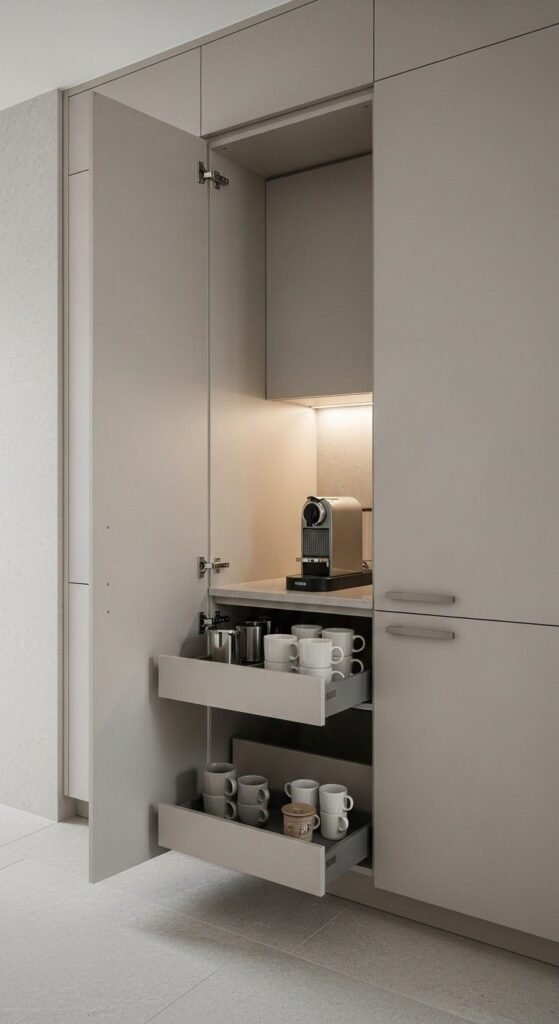
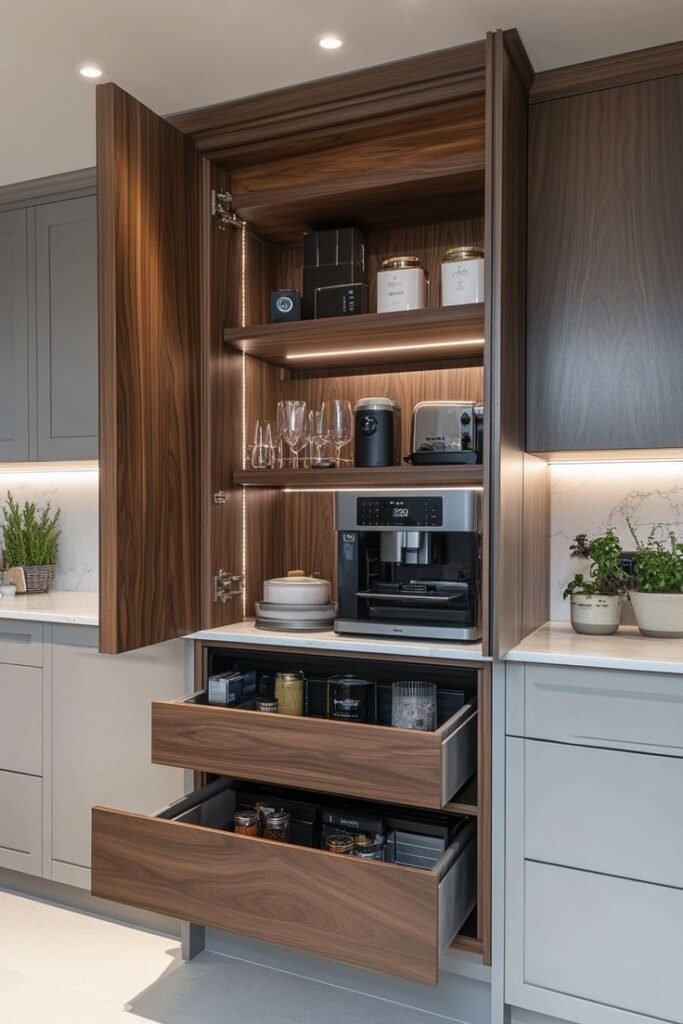
Depending on cabinet finishes and door mechanisms, appliance cabinets can adapt to various kitchen design styles. Below are some recommended pairings for styles I find particularly appealing:
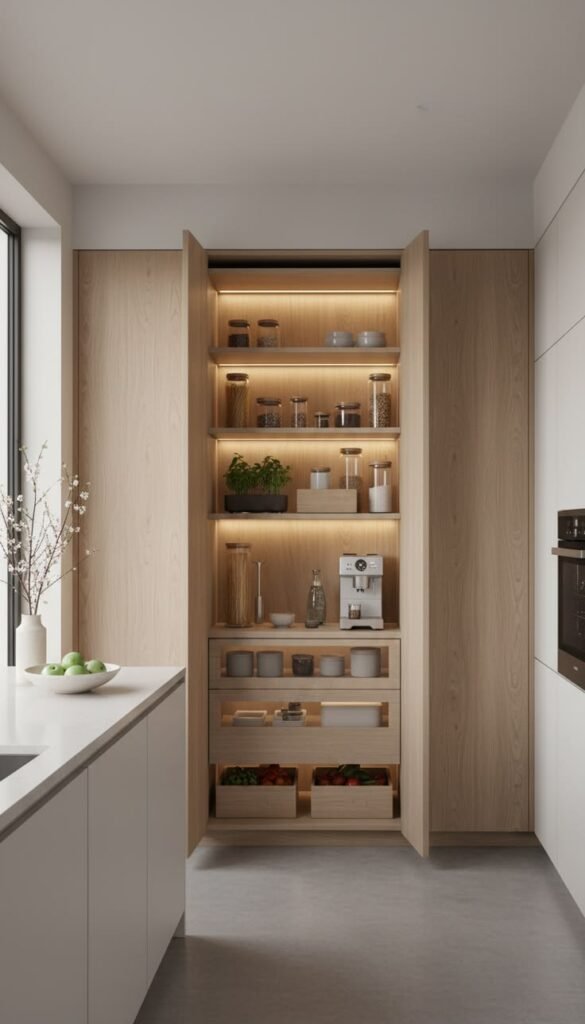
Modern Minimalist
Featuring a matte, natural-finish hinged door panel, the cabinet seamlessly blends into its surroundings when closed. When fully shut, the entire cabinet presents a clean, minimalist aesthetic.
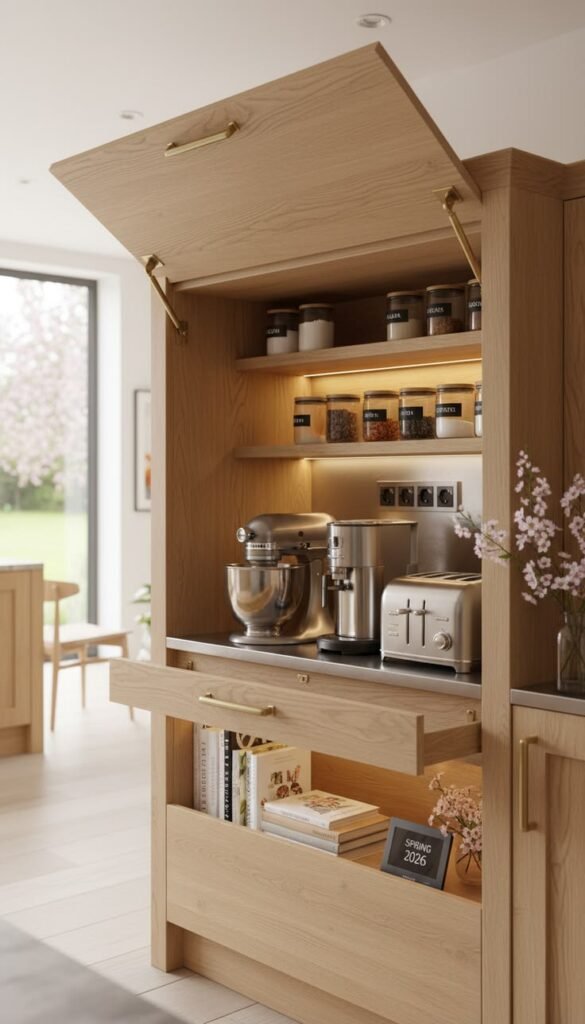
Warm Wood Veneer
The interior features walnut or oak veneer. When opened, the warm texture of natural wood grain contrasts with the metallic finish of the appliances, creating a sense of sophistication.
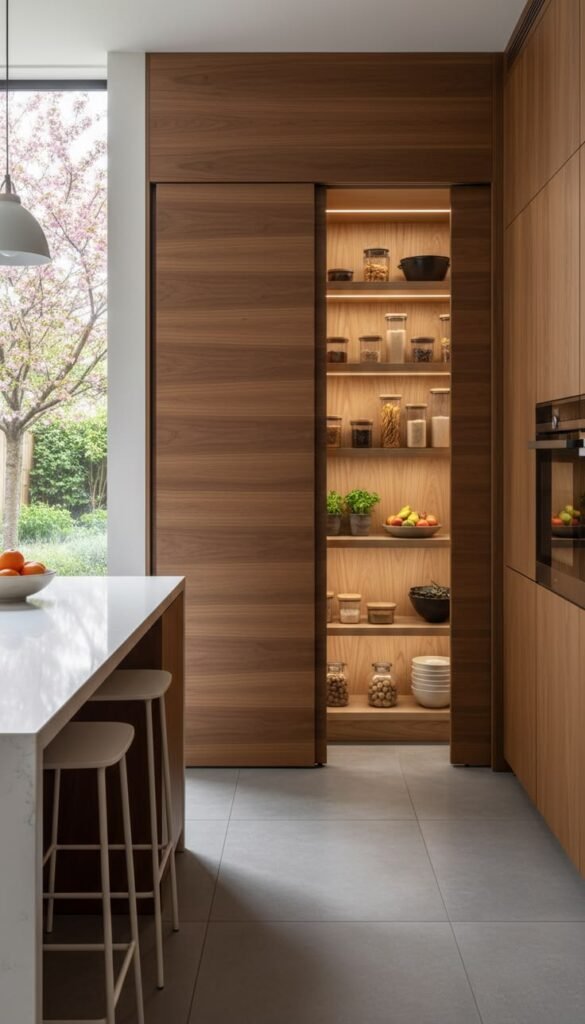
Vintage Tambour Door
Featuring a classic vertical solid wood slat door design with smooth sliding action. Its natural wood grain aesthetic makes it ideal for French vintage or mid-century modern kitchens.
Cream Style Pocket Door
Featuring a low-saturation cream-colored lacquer finish paired with robust, durable concealed sliding door hardware. When fully closed, it seamlessly integrates with the cabinet, indistinguishable from the surrounding surface.
Wabi-Sabi Natural Texture
The door panels feature a natural wood grain finish that softens the appliance’s mechanical appearance, while the sliding door design maximizes space in compact layouts.
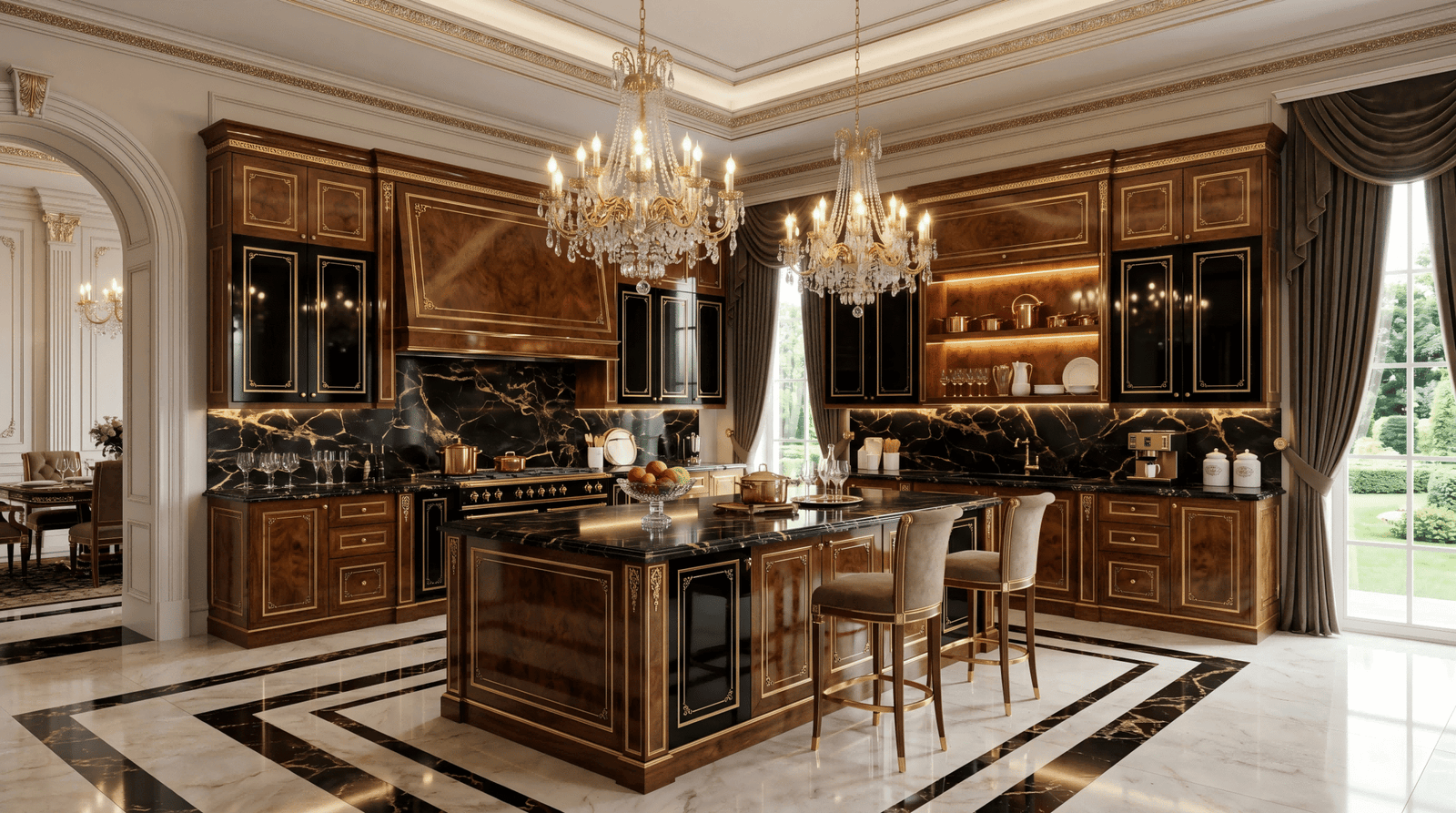
Dark Luxury Style
The appliance garage features dark oak as its core material, with its interior space illuminated by warm linear LED lighting. Upon opening the space, the light focuses on the appliances, showcasing their luxurious appeal.
FAQ
A: This depends heavily on the supply chain. YoloDeco insists on using heavy-duty concealed hinges that endure tens of thousands of opening and closing cycles in factory lab tests. With proper hardware, a lifespan of over 10 years is typical.
A: While theoretically possible, it is structurally difficult. Existing upper cabinets usually lack internal outlets and are often only 12-14 inches deep, which is not enough to house most appliances. It is highly recommended to plan this during a full renovation or custom build.
A: Regular dusting and checking vents keep it pristine. Use organizers for cords to maintain order, prolonging appliance life.
A: Everyday items like blenders, toasters, and stand mixers. Avoid heat-intensive ones without proper ventilation.