Are Double-Pane Windows Worth Installing? A Homeowner’s Decision-Making Guide
Double-pane windows are often considered the ideal replacement for old single-pane windows, but the decision is usually more nuanced. Homeowners may want to address issues such as drafts, condensation, street noise, or aging window frames. In some cases, simply replacing the insulated glass unit may be sufficient. In other cases, however, the entire window system needs to be replaced because the frame, sash, installation method, or opening mechanism no longer meets the home’s needs.
This guide is written specifically for U.S. homeowners who are comparing double-pane, single-pane, and triple-pane window options. It will help you understand what double-pane windows are, how to identify common issues, what factors affect cost, and what questions to prepare before requesting quotes.
What Are Double-Pane Windows?
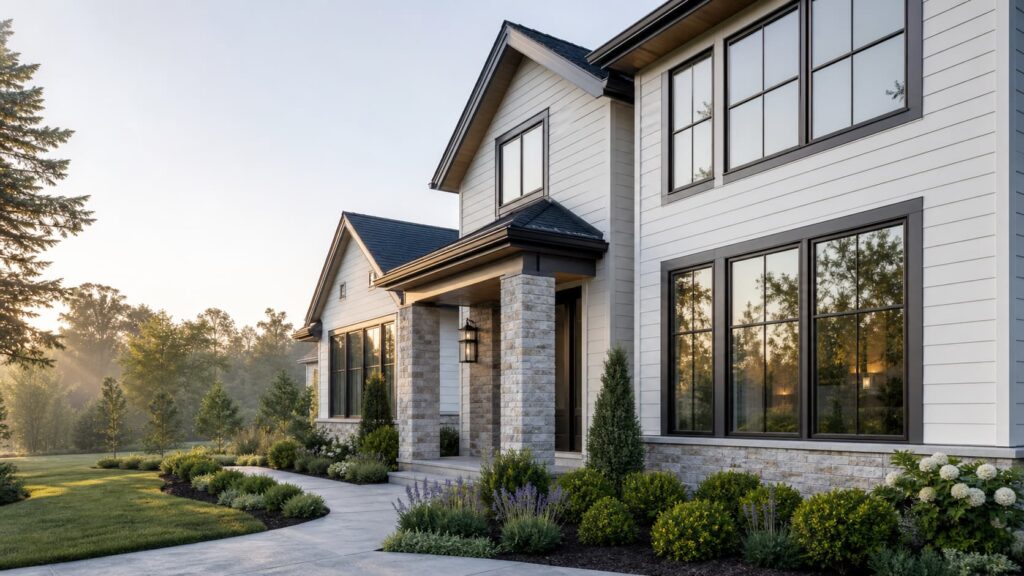
Double-pane windows consist of two panes of glass separated by a sealed space. This glass assembly is commonly referred to as an insulated glass unit (IGU). Depending on the product specifications, the space between the two panes may be filled with air or an insulating gas. Many modern double-pane windows also incorporate coatings, spacer systems, and frame details, all of which affect comfort, condensation resistance, heat transfer, appearance, and installation requirements.
It is important to note that an insulated glass unit (IGU) is not always synonymous with the entire window. A complete window includes the glass unit, sash, frame, hardware, weatherstripping, installation materials, and the surrounding opening. If the glass seal has failed but the frame and sash are still in good condition, the solution may differ from that for homes where windows are difficult to open, drafty, or where the surrounding frame has aged or become damaged.
Start With the Existing Window: Repair the IGU or Replace the Whole Window?
When windows begin to show signs of blurred vision, noticeable drafts, or difficulty opening and closing, many homeowners instinctively assume that replacing the entire set of windows is the only solution. However, accurately diagnosing the source of the problem is the first step toward saving money. If you’re unsure about the extent of the damage, we recommend having a professional inspect the windows before requesting a quote. You can always share the details of your windows with an expert to help define the scope of the renovation project.
To help you determine whether the current situation requires a localized IGU repair or a full window replacement, please carefully review the following on-site inspection checklist:
| Condition | Possible Course of Action | Items to Verify |
|---|---|---|
Moisture or fog only within the glass cavity |
Double-pane evaluation |
Glass dimensions, seal condition, sash/frame condition, warranty terms |
Drafts, poor operation, damaged window frames, water leakage |
Comprehensive window assessment |
Window frames, sashes, opening mechanisms, installation quality, flashing, product type |
Older single-pane windows causing comfort issues |
Replacement Planning |
Glass configuration, frame material, opening mechanism, climate conditions, budget range |
Renovation or design changes |
Comprehensive Project Planning |
Style, dimensions, code requirements, lead time, installation sequence, finish details |
What Fogging Between Panes Can Indicate
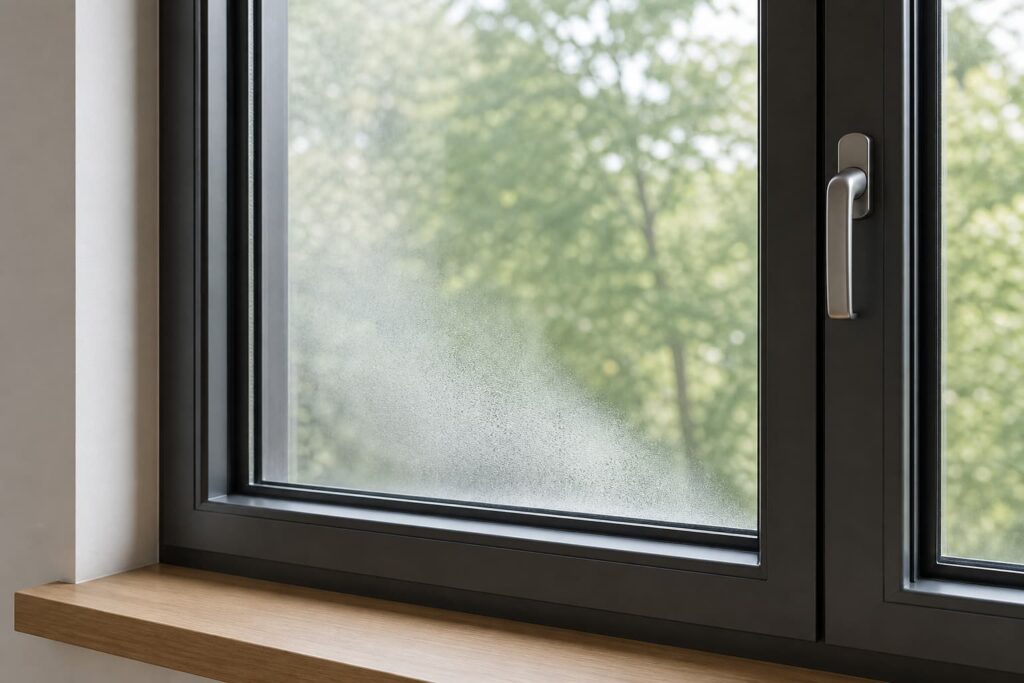
- If, in your daily life, you notice a milky-white haze between two panes of glass that cannot be wiped away, tiny water droplets, or even white mineral crystal spots left behind after moisture evaporates, this is a clear sign—from an engineering perspective—that the IGU’s edge seal has completely failed.
- Once microscopic cracks form in the structural adhesive along the edges, outside air containing moisture is continuously drawn into the insulating cavity due to daily fluctuations in air pressure, known as the “heat pump effect.”
- In contrast, if condensation appears only on the indoor side of the glass during winter, it is typically just physical condensation caused by high indoor humidity coming into contact with a cold surface, and it usually does not require replacing the windows or doors.
Questions to Ask Before Ordering a Replacement Glass Unit
If, after an inspection, an expert confirms that your window frames, sashes, and track structures remain in excellent condition and retain their structural integrity—and that only the glass seal has reached the end of its service life—then replacing the insulated glass unit (IGU) is a highly cost-effective repair. However, before contacting a manufacturer to order new glass, be sure to verify the following technical specifications with the supplier:
- The width, height, and total thickness of the entire insulated glass unit, accurate to the millimeter
- The thickness configuration of the original glass (e.g., 4 mm + 12A + 4 mm)
- Whether the installation location is subject to mandatory local building codes regarding safety glass (e.g., mandatory tempered glass)
- And the warranty period for the edge sealing of the newly fabricated insulated glass unit.
Double Pane vs. Single Pane Windows: When an Upgrade Changes the Decision
For homeowners still using old-style single-pane windows, the motivation to upgrade often stems from unbearable indoor cold, sweltering heat, and high energy bills. Although single-pane glass was the industry standard decades ago, its performance shortcomings become immediately apparent when compared with modern double-pane insulated glass. As you browse the Windows and Doors product category, consider the following multidimensional comparison:
| Factor | Single Pane | Double Pane |
|---|---|---|
Construction |
One layer of glass, no sealed air space |
Two layers of glass with a sealed, spaced air gap (IGU) |
Condensation tendency |
More prone to surface condensation in cold weather |
Reduced surface-condensation risk in most conditions, but not eliminated |
Comfort near the glass |
Colder to the touch in cold climates |
Generally more comfortable, depending on frame, coating, and installation |
Sound expectations |
Minimal sound barrier |
Some improvement over single pane, but not soundproof |
Typical project |
Usually a full window replacement |
Standard for new construction and most replacement projects |
Any specific comfort, condensation, or sound performance claim should be checked against the manufacturer’s documentation for the exact product you’re considering — construction type alone doesn’t guarantee a particular result. You can browse current options in YoloDeco’s doors and windows category as a starting point for comparison.
Double Pane vs. Triple Pane Windows: Match the Package to the Project
Triple-pane windows add a third pane of glass and a second air seal to a double-pane configuration. Whether this additional layer is worth considering—rather than assuming every home should upgrade to it—depends on the following factors:
- Climate exposure. Homes with more extreme heating or cooling needs may see greater relative benefits from a triple-pane configuration, but this depends on the official certification data for the specific product and your home’s actual conditions.
- Sound insulation is the top priority. More glass layers and wider air gaps help reduce outdoor noise, but there is no such thing as a truly “soundproof” window, whether double- or triple-pane.
- Window size and weight. Triple-pane units are heavier, a factor to consider for large openings, older window frames, and hardware designed only for lightweight glass.
- Budget and lead time. Special glazing configurations often involve different ordering processes and longer wait times compared to standard double-pane replacements.
| Consider triple pane when... | Consider double pane when... |
|---|---|
Noise or extreme climate exposure is the top priority, and product ratings plus local professional input support the upgrade |
Standard performance and lower project weight or cost are the priorities |
The frame, hardware, and opening size are confirmed to support the added glass weight |
The existing frame or opening favors a lighter glass package |
Budget and lead time allow for a specialty order |
Faster sourcing and a more standard installation matter more |
Climate, Orientation, and Noise: Inputs, Not Shortcuts
Climate zone, sun orientation, and nearby noise sources are all real inputs into this decision — but they’re inputs, not shortcuts to a universal answer. A verified product rating label and a local professional’s read on your specific home and orientation will tell you more than a general “cold climates need triple pane” rule of thumb. If you’re weighing this alongside other renovation decisions, it can help to plan window choices with the design team or look at how a configuration compares on a specific product, such as this uPVC casement window, before requesting quotes.
A Five-Question Brief for Choosing Double Pane Windows
Once you know roughly what you’re solving for, organizing that into a short brief makes it much easier to get comparable quotes from more than one supplier. Five questions cover most of what a supplier needs:
| Question | What to bring to the conversation |
|---|---|
What’s the primary problem? |
Drafts, noise, fogging or failed seals, appearance, or a full renovation |
What’s the home and environment like? |
Climate exposure, orientation, and any known noise sources near the affected openings |
What are the openings and how do they operate? |
Exact sizes, number of units, operable style (casement, sliding, hopper, etc.), and any locations requiring safety glazing |
Which glass and frame features matter to you? |
Coating options, gas fill, spacer type, and frame material/finish — requested as documented specs, not assumed defaults |
What’s the scope, timing, and installation plan? |
Full window vs. glass-only, who handles removal, installation timeline, and warranty coverage |
Low-E Glass, Gas Fill, Spacers, and Frames: What to Verify
Product spec sheets for double pane windows tend to reference the same handful of features. Here’s what each one affects and what to ask a supplier for, rather than assuming any one option is automatically right for your home:
| Feature | What It Affects | What to Ask For |
|---|---|---|
Low-E coating |
How the glass manages heat and light transfer |
The manufacturer’s specific coating type and its documented performance rating |
Gas fill (e.g., argon) |
Insulating performance of the sealed air space |
Whether gas fill is included, and current fill-retention documentation |
Spacer type |
Seal durability and edge-of-glass performance |
The spacer material used and its expected service life per the manufacturer |
Frame material (vinyl, wood, aluminum, fiberglass, uPVC) |
Durability, maintenance needs, and compatibility with glass weight |
Frame warranty terms and manufacturer specs appropriate to your climate |
When comparing quotes from more than one supplier, ask for these details in writing and compare like-for-like documents rather than marketing summaries. Where ratings like U-factor or SHGC are involved, confirm them against current NFRC or ENERGY STAR listings for that exact product.
Internal Planning: Window Types and Related Options
- The number of glass panels is just one factor to consider when selecting windows. The opening mechanism is equally critical. Casement windows, sliding windows, bottom-hung windows, double-hung windows, and fixed picture windows all use different hardware and are suited for different spaces.
- For example, bottom-hung windows may be suitable for basements or compact storage rooms, while sliding or casement windows may be better suited for larger openings, depending on ventilation, views, and design objectives. If your project involves multiple rooms, the window list may include various opening styles but feature similar glass configurations.
Common Misconceptions to Avoid
- The first misconception is treating the number of glass panes as the sole basis for decision-making. Improperly installed or ill-fitting window frames can limit the benefits of high-quality glazing configurations.
- The second misconception is assuming that fogged glass requires a complete replacement. While replacement may be necessary, a more detailed evaluation of the insulated glass unit (IGU) might be required. Before determining a course of action, inspect the window frame, sash, and operating mechanism.
- The third misconception is comparing quotes with inconsistent scopes. One quote may include complete removal and replacement, while another may cover only the glass or a different window series. Ask each supplier to clearly specify what is included in their quote.
- The fourth misconception is using average costs instead of project-specific quotes. While average prices can help gauge market conditions, they do not account for your window dimensions, materials, on-site conditions, product requirements, or installation details.
- The fifth misconception is expecting double-pane windows to solve all comfort issues on their own. Airflow, humidity, thermal insulation, wall leaks, HVAC balancing, and installation details all affect living comfort.
Frequently Asked Questions
What is the difference between double-pane windows and double-glazed windows?
In many homeowners’ discussions, “double-pane windows” and “double-glazed windows” refer to similar concepts: two panes of glass separated by a sealed space. In the United States, “double-pane windows” is the more common search term, while “double-glazed windows” is also used in certain markets and technical discussions.
Are 20-year-old double-pane windows still usable?
Possibly, but you can’t judge based on age alone. Check how smoothly the window opens and closes, the condition of the seals, whether there is any visible fogging, the condition of the window frame, drafts, water leakage, and whether the window still meets your comfort and renovation goals.
Can condensation between double-pane windows be fixed?
If the window frame and sash are still in good condition, it is sometimes possible to replace the insulated glass unit. In other cases, replacing the entire window may be recommended. You should consult a local professional to determine the cause and extent of the problem.
How effective are double-pane windows at blocking noise?
They can reduce some noise, but they are not a complete soundproofing solution. If noise control is a primary goal, consult options such as acoustic glass, laminated glass, frame seals, and installation details.
Should I choose double-pane or triple-pane windows?
Please base your choice on your region’s climate, comfort needs, window size, frame system, budget, and specific product recommendations. For situations requiring higher performance, triple-pane windows are worth considering; however, for many replacement projects, double-pane windows are typically the more practical choice.
Ready to Compare Double-Pane Window Options?
Before you commit to production, YoloDeco can help you review window styles, frame materials, glazing configurations, finish options, and project requirements. Please provide your project details, photos, dimensions, and goals to request a professional window consultation and develop a specification plan tailored to your home.
Don't know how to contact us?
Sourcing windows from China? George Group manufactures custom aluminum windows — double or triple glazed, built to your schedule of sizes.